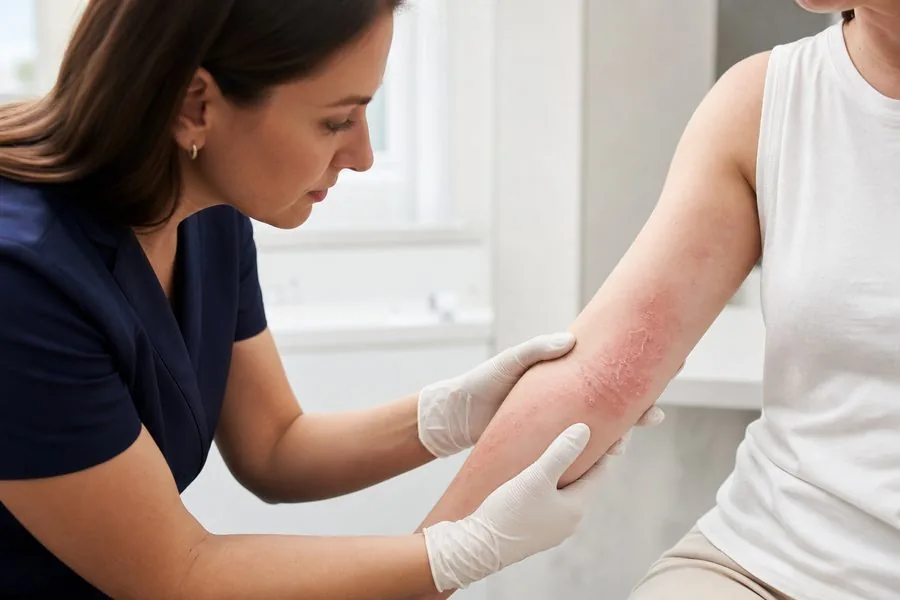
What's happening during a flare — and why it's not your fault
A flare-up is a stretch where your eczema becomes more active: the skin gets redder (or more inflamed and darker on brown and black skin), itchier, hotter and sometimes weepy or cracked. It happens because the skin barrier — the layer that holds moisture in and irritants out — has become leaky and inflamed, so the skin dries out and reacts more easily.
Flares often arrive after a trigger such as cold or dry weather, a new soap or detergent, stress, sweat, or a viral cold. Sometimes there is no obvious reason at all, and that is completely normal. The aim during a flare isn't to find someone to blame — it's to rehydrate the skin, settle the inflammation and break the itch-scratch cycle as gently as you can.
First steps to calm a flare at home
The single most useful thing you can do is moisturise more often than usual. During a flare, applying a fragrance-free emollient (moisturiser) several times a day — and within a few minutes of bathing, while the skin is still damp — helps trap water in and ease the tightness and itch. Use it generously and smooth it on in the direction the hair grows rather than rubbing in.
Keep the rest of your routine gentle. Short, lukewarm showers or baths are kinder than hot water, and a soap-free wash or an emollient used in place of soap avoids stripping the skin further. After washing, pat dry rather than rub. If your doctor has previously prescribed a treatment for flares, use it as they advised.
Easing the itch without making things worse
The itch is often the hardest part, and scratching brings a moment of relief but then inflames the skin further — the well-known itch-scratch cycle. Cool the area instead: a cold, damp flannel held against the skin, a moisturiser kept in the fridge, or gently pressing rather than scratching can all take the edge off.
Try to notice the everyday irritants that keep the itch going. Fragranced products, biological washing powders, overheating at night, and rough fabrics are common culprits. Keeping bedrooms cool and switching to a non-biological, fragrance-free detergent are simple changes that often help.
Spotting and avoiding your triggers
Eczema triggers are very individual, so it's worth becoming a bit of a detective. Keeping a short note of when flares start and what was different — a new product, a stressful week, a change in weather, a particular food or fabric — can reveal patterns over time.
Sometimes a flare is driven by a contact allergy: an ingredient in a cosmetic, hair product, fragrance or even a moisturiser the skin has become sensitised to. If your eczema keeps returning in the same spots, or started after a new product, a dermatologist can investigate this with patch testing to help pinpoint specific allergens.
When to seek help — and the signs not to ignore
Most flares can be managed at home, but it's sensible to see your GP or a dermatologist if your eczema isn't settling with your usual care, keeps coming back, is disturbing your sleep, or is affecting your confidence and daily life. A review can confirm the diagnosis, check your routine and tailor a plan so flares become less frequent and easier to handle.
Some signs point to a skin infection, which needs prompt attention rather than waiting it out. Please contact your GP or NHS 111 the same day if a flare becomes increasingly painful, swollen, or weepy with yellow crusting or pus, or comes with a fever or feeling generally unwell. Widespread small blisters, a rapidly spreading rash, or feeling seriously ill warrant urgent advice — call 111, or in an emergency go to A&E. These situations are uncommon, but catching them early makes them much simpler to treat.
Common questions
How long does an eczema flare-up usually last? +
It varies, but with consistent gentle care — moisturising often, avoiding irritants and not scratching — many flares settle over a few days to a couple of weeks. If a flare drags on, keeps returning, or isn't improving despite good skincare, it's worth having it reviewed so the plan can be adjusted to you.
Can I do anything to reduce eczema flares before they start? +
You can reduce how often they happen. Moisturising every day even when your skin looks calm keeps the barrier strong, and avoiding known triggers — fragranced products, biological detergents, overheating and harsh soaps — makes flares less likely. A dermatologist can help you identify your personal triggers.
When should I see a dermatologist rather than manage it myself? +
Consider a review if your eczema isn't settling with your usual routine, keeps flaring, is affecting your sleep or confidence, or you can't work out what's triggering it. At Bridge House Clinic you can see Consultant Dermatologist Dr Dalia Alsaadi, usually within the same or next week, for a £200 consultation. If a flare looks infected — increasingly painful, weepy with pus or crusting, or with a fever — contact your GP or NHS 111 the same day instead.