
Osteoarthritis
Stiff, aching joints that wear with use — what osteoarthritis is, why it happens, and how a consultant rheumatologist can help.
Also under:Pain Management
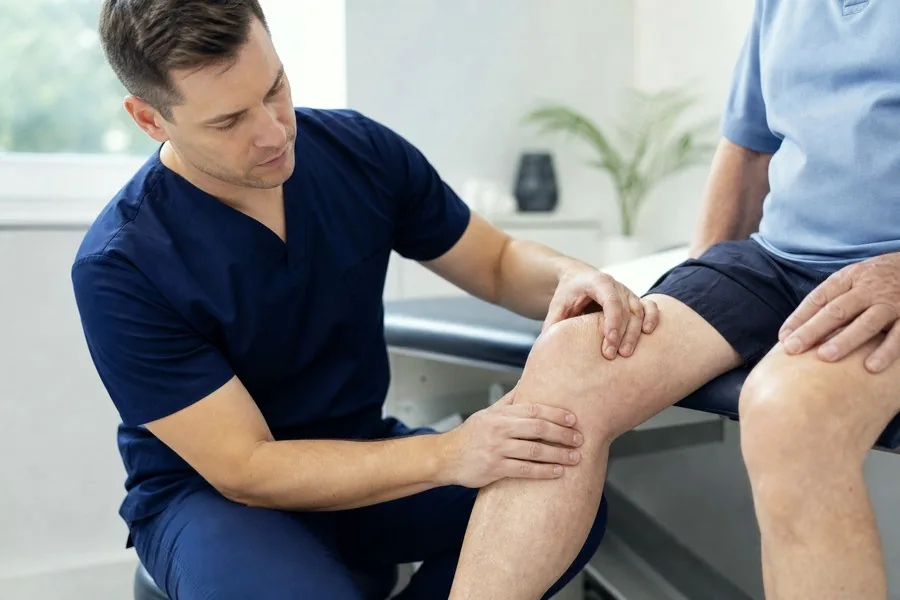
Osteoarthritis is erosion-related joint pain — it develops when the smooth cartilage that cushions a joint gradually thins, so the joint becomes stiffer and more uncomfortable to move.
It's the most common form of arthritis and usually comes on slowly, most often in the knees, hips, hands and spine. The reassuring part: with the right plan, most people keep their joints moving comfortably and stay active.
Symptoms of osteoarthritis.
They tend to build up gradually — often worse after activity, and easing with rest.
Why it happens.
There's rarely a single cause. Osteoarthritis reflects the natural wear a joint takes over time, and some things make it more likely. It can affect one or several joints.
Don't wait for it to settle.
Early assessment helps you get the right treatment sooner. See a specialist if:


Confirmed clinically and with an X-ray.
A consultant rheumatologist diagnoses osteoarthritis from your history and a hands-on examination of the joint, supported by an X-ray where helpful to confirm the picture and rule out other causes. You leave with a clear explanation and a plan.
How osteoarthritis is treated.
We start with the least invasive option that will work for you, and build from there.
A tailored programme of movement, weight and pain-relief advice to keep the joint working and ease day-to-day symptoms.
A targeted injection into a smaller joint to settle pain and inflammation when symptoms need more than self-care.
A targeted injection for a larger joint, such as a knee or hip, to ease pain and help you stay mobile.
Seen in days — not months on a list.
A named specialist, not a junior — all the way through.
Every price published and confirmed in writing.
Seen privately, without the wait.
We bill major UK insurers directly.


Does osteoarthritis get worse over time? +
It can progress slowly, but it isn't inevitable that it becomes disabling. The right management plan helps many people keep their joints comfortable and active for years.
Is walking and exercise good or bad for osteoarthritis? +
Gentle, regular movement is one of the most helpful things you can do — it keeps the joint mobile and strengthens the muscles around it. A consultant can advise what's right for your joint.
How is osteoarthritis diagnosed? +
It's diagnosed from your history and an examination by a consultant rheumatologist, supported by an X-ray where helpful to confirm the picture and rule out other causes.
What does a joint injection involve? +
It's a targeted injection into the affected joint to ease pain and inflammation. Small-area injections are £350 and large-area injections from £450; your consultant will advise whether it's suitable for you.
Related reading
Don't put up with it.
Book an assessment with a consultant and get a clear picture — and a plan.