
Allergies
If everyday things like pollen, dust or certain foods leave you sneezing, itching or feeling unwell, you may have an allergy. Our nurse-led allergy service in Rossett helps you identify your triggers and manage your symptoms, with no NHS waiting list and self-referral welcome.
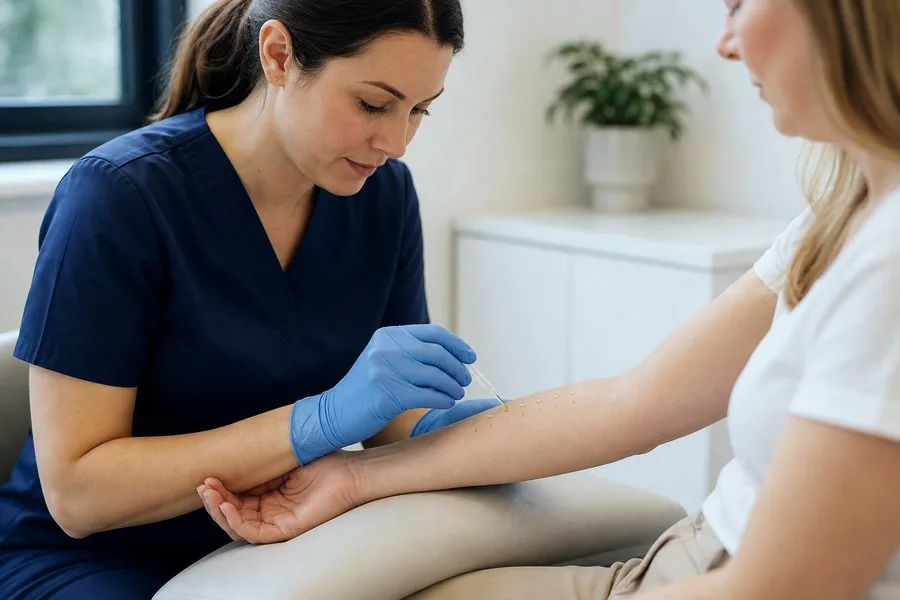
An allergy is when your immune system overreacts to a substance that is normally harmless, such as pollen, dust mites or certain foods.
When you come into contact with something you are allergic to (an allergen), your body treats it as a threat and releases chemicals to defend itself. This reaction is what causes allergy symptoms, which can range from mildly irritating to, in rare cases, severe. Common types include hayfever (allergic rhinitis), allergic skin reactions such as hives, food allergies, and reactions to insect stings or some medicines. Allergies are usually managed rather than cured, and identifying what triggers yours is an important first step.
Symptoms of allergies.
Allergy symptoms depend on the trigger and how your body reacts. They may appear soon after contact or build up over time.
Why it happens.
Allergies happen when the immune system reacts to substances that are harmless for most people. Common triggers include:
Don't wait for it to settle.
Early assessment helps you get the right treatment sooner. See a specialist if:
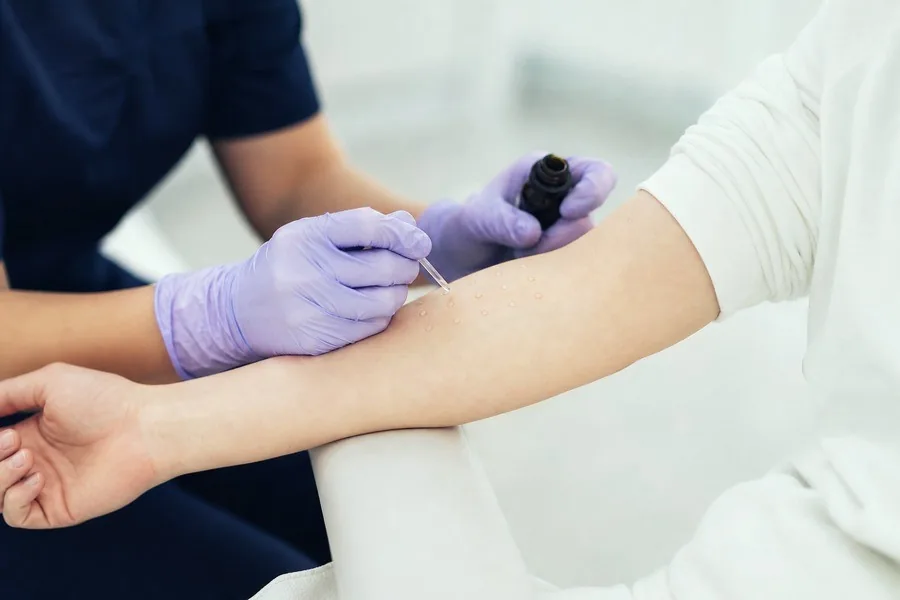

How we assess allergies
Our allergy care is nurse-led, with a private GP overseeing. At your appointment the nurse will talk through your symptoms and history to build a clear picture of what may be affecting you. Allergy testing can help identify your triggers; the method, scope and what is included are confirmed with you at the consultation.
How allergies is treated.
Allergies are usually managed rather than cured. Once your triggers are clearer, the focus is on avoiding them where possible and easing your symptoms. Options at Bridge House Clinic include:
A nurse-led appointment to help identify what triggers your symptoms. The testing details and what is included are confirmed with you at the consultation.
A nurse-led injection option for people with seasonal allergy (hayfever) symptoms. Suitability is discussed at your appointment.
Practical advice on reducing contact with your triggers and managing symptoms day to day, with guidance from a GP where needed.
Your allergy care is delivered by our nursing team, with a private GP overseeing.
Book privately at a time that suits you, without waiting for an NHS referral.
You can book directly with us. There is no need for a referral letter to be seen.
We are in Rossett, between Chester and Wrexham, with easy access for the surrounding area.
Can allergies be cured? +
For most people, allergies are managed rather than cured. Identifying your triggers helps you avoid them where possible and treat your symptoms. We will talk through realistic options for you at your appointment.
What does allergy testing involve? +
Allergy testing is nurse-led and helps identify what may be triggering your symptoms. The method, which triggers are looked at and exactly what is included are confirmed with you at the consultation. Testing starts from £190. We offer nine laboratory panels (food, inhalant, dairy, shellfish, nut and extended panels) from £190 to £815 — see the price list.
Do I need a referral to be seen? +
No. We welcome self-referral, so you can book directly with us without a referral letter and without an NHS waiting list.
What is the hayfever injection and how much is it? +
It is a nurse-led injection option for people with seasonal allergy (hayfever) symptoms. The cost is £125, and the nurse will discuss whether it is suitable for you at your appointment.
What should I do in a severe allergic reaction? +
A severe, sudden whole-body reaction (anaphylaxis) is a medical emergency. If there is trouble breathing, swelling of the lips, tongue or throat, or someone suddenly becomes very unwell, call 999 immediately. Do not wait for an appointment.
Where is the clinic? +
Bridge House Clinic is in Rossett, between Chester and Wrexham, making it convenient for patients across the surrounding area.
Don't put up with it.
Book an assessment with a consultant and get a clear picture — and a plan.