
Thread & spider veins
Fine red, purple or blue lines just under the skin — what thread & spider veins are, why they appear, and how we can help them fade.


Thread & spider veins are tiny surface veins you can see just under the skin, most often on the legs.
They show up as fine red, purple or blue lines. Also called spider veins or telangiectasia, and along with the slightly larger reticular veins they're very common and usually harmless — mostly a cosmetic concern. But they can ache, throb or itch, and sometimes they're the surface sign of an underlying vein problem (reflux). That's why it's worth having them looked at properly: treating any deeper cause first gives a better, longer-lasting result.
Symptoms of thread & spider veins.
For most people it's the look of the veins that prompts a visit — but they can cause symptoms too, and occasionally they point to something deeper worth checking.
Why it happens.
Thread & spider veins develop when these tiny surface vessels widen and become visible. Several things make that more likely, and sometimes there's a deeper vein problem underneath.
Don't wait for it to settle.
Early assessment helps you get the right treatment sooner. See a specialist if:
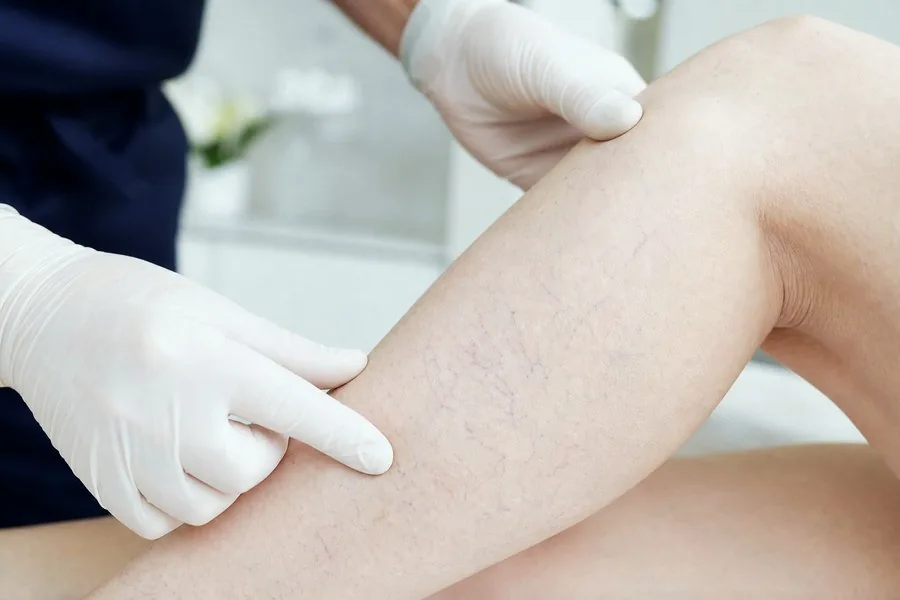

Assessed by examination, with a duplex scan where it's needed.
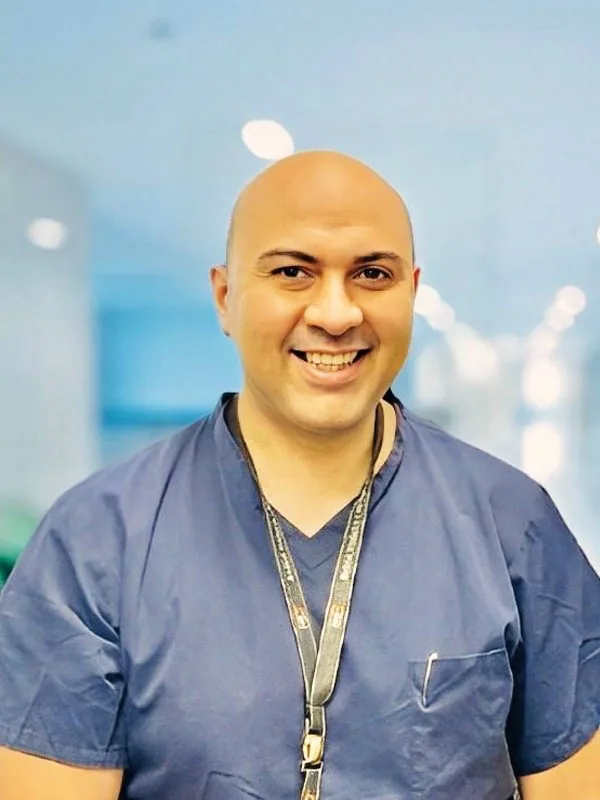
Mr Tamer Ghatwary, Consultant Vascular & Endovascular Surgeon, examines the veins and your legs and talks through what's going on. Where there's any sign of an underlying problem, he'll arrange a duplex (ultrasound) scan to check for vein reflux before treating the surface veins — because treating any underlying reflux first gives better, longer-lasting results.
How thread & spider veins are treated.
If there's an underlying vein problem, that's treated first. Treatment improves both the appearance and any symptoms, but honestly can't promise the veins will never come back — and new ones can still appear over time.
Mr Ghatwary examines the veins, checks for any underlying cause and, where needed, arranges a duplex scan — then explains your options honestly, with the price confirmed upfront.
Fine injections that irritate the vein so it gradually fades over the following weeks. More than one session may be needed, and any underlying vein reflux is treated first.
The same treatment carried out on both legs at the same visit, with the fine injections fading the veins over the weeks that follow.
Seen in days — not months on a list.
A named specialist, not a junior — all the way through.
Every price published and confirmed in writing.
Seen privately, without the wait.
We bill major UK insurers directly.
Are thread & spider veins dangerous? +
Usually not — they're very common and most often a cosmetic concern. But they can ache, throb or itch, and occasionally they're the surface sign of an underlying vein problem (reflux). That's why it's worth having them assessed, so anything deeper can be checked first.
Do I need a GP referral to be seen? +
No — you can book a consultation with Mr Tamer Ghatwary directly. There's no GP referral needed and no NHS waiting list. If you'd like your GP kept informed we're happy to write to them.
Will the veins come back after treatment? +
We'll be honest with you: foam sclerotherapy improves the appearance and any symptoms, but it can't promise the veins will never return, and new ones can still appear over time. Treating any underlying reflux first gives the best, longest-lasting result. More than one session may also be needed.
What will it cost? +
An initial consultation with Mr Ghatwary is £200, including an examination and a duplex scan where it's needed. Foam sclerotherapy is £600 for one leg or £700 for both legs treated at the same visit. Every price is confirmed before you decide to go ahead.
Don't put up with it.
Book an assessment with a consultant and get a clear picture — and a plan.