
Scleroderma
A condition that hardens and tightens the skin and can affect the blood vessels and internal organs — what it is, why it happens, and how a consultant rheumatologist can help.
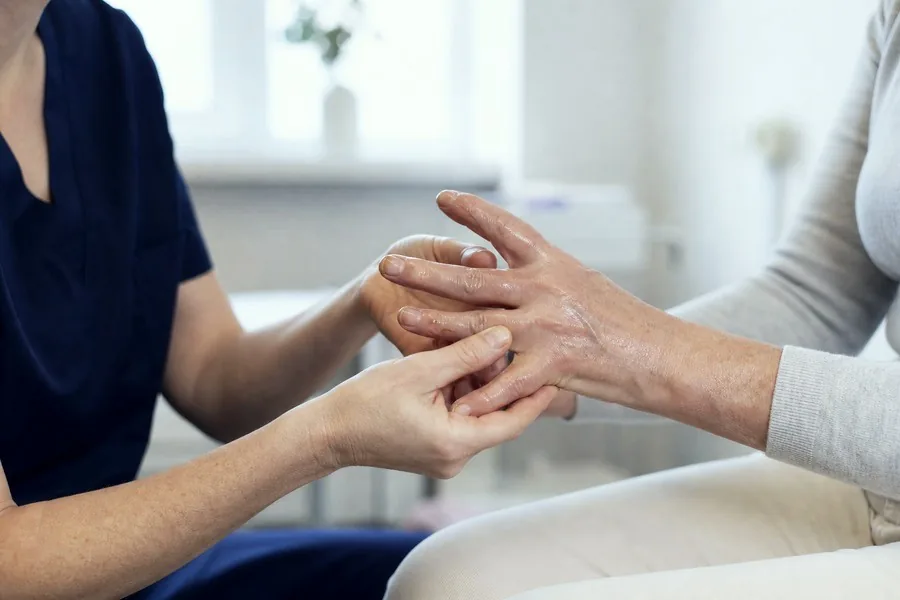
Scleroderma is an autoimmune condition in which the body lays down too much collagen, causing the skin — and sometimes the blood vessels and internal organs — to become thickened, tight and hardened.
Its name means "hard skin", but it ranges widely. Some people have a localised, skin-only form (morphea), while systemic sclerosis can affect the fingers, gut, lungs, heart and kidneys. It can't be cured, but with the right assessment and ongoing specialist care, symptoms can be controlled and complications caught early.
Symptoms of scleroderma.
Scleroderma often begins quietly — frequently with colour changes in the fingers — long before the skin itself starts to tighten.
Why it happens.
Scleroderma is an autoimmune condition: the immune system triggers small blood vessels to narrow and the body to overproduce collagen. The exact trigger isn't known, but several factors are linked to it.
Don't wait for it to settle.
Early assessment helps you get the right treatment sooner. See a specialist if:
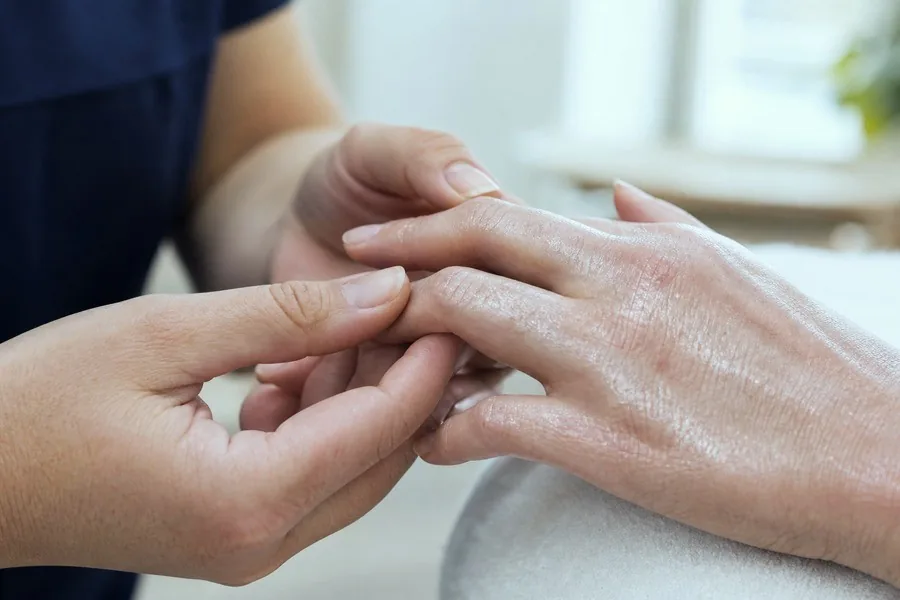

Diagnosed through examination, blood tests and targeted investigations.
Dr Subhra Raghuvanshi, Consultant Rheumatologist, will examine your skin and hands, ask about Raynaud's and other symptoms, and arrange blood tests for the autoantibodies linked to scleroderma. Nailfold capillaroscopy — a close look at the tiny vessels at the base of the nails — can support the diagnosis, and where the lungs, heart or gut may be involved, further tests are organised. The aim is a clear diagnosis and a picture of which systems are affected, so care can be tailored to you.
How scleroderma is treated.
There's no single cure, so care is built around controlling symptoms, protecting circulation and watching for organ involvement over time.
A thorough review with Dr Raghuvanshi to confirm the diagnosis, establish which parts of the body are involved, and set a personalised management plan.
Medicines to widen the blood vessels for Raynaud's, settle reflux, ease joint symptoms and, where needed, calm the immune system — alongside regular review to catch any organ involvement early.
Where scleroderma overlaps with painful, inflamed joints, a targeted steroid injection can ease a specific joint. Your consultant will advise whether it's suitable for you.
When the lungs, heart or kidneys are involved, your consultant arranges the right tests and onward referral so the whole picture is managed, not just the skin.
Seen in days — not months on a list.
A named specialist, not a junior — all the way through.
Every price published and confirmed in writing.
Seen privately, without the wait.
We bill major UK insurers directly.

How do I arrange to see the rheumatologist about scleroderma? +
You can book a private appointment with Dr Subhra Raghuvanshi directly — you don't need to be referred by your GP first. If you already have results or a GP letter, bring them along, as they help build the picture more quickly.
What does a scleroderma assessment cost? +
A rheumatology consultation with Dr Raghuvanshi is £220. Any blood tests or further investigations are quoted separately, and your consultant will explain what's needed and why before anything is arranged.
Can scleroderma be cured? +
There's no cure at present, but it's very much treatable. The right care controls symptoms such as Raynaud's and reflux, protects the circulation in your fingers, and monitors for organ involvement so problems are caught and managed early.
Is scleroderma always serious? +
Not always. Some people have a localised, skin-only form that never affects internal organs, while systemic forms vary a great deal in how they progress. A consultant assessment is the only reliable way to know which pattern you have.
Why is Raynaud's linked to scleroderma? +
Raynaud's — fingers turning white and blue in the cold — is one of the earliest signs of systemic scleroderma, because the same small-vessel changes are involved. Most people with Raynaud's never develop scleroderma, but combined with skin or other symptoms it's worth having checked.
Don't put up with it.
Book an assessment with a consultant and get a clear picture — and a plan.