
Glue Ear
Dulled, muffled hearing — most often in a child — caused by fluid behind the eardrum. What it is, why it happens, and how we can help.
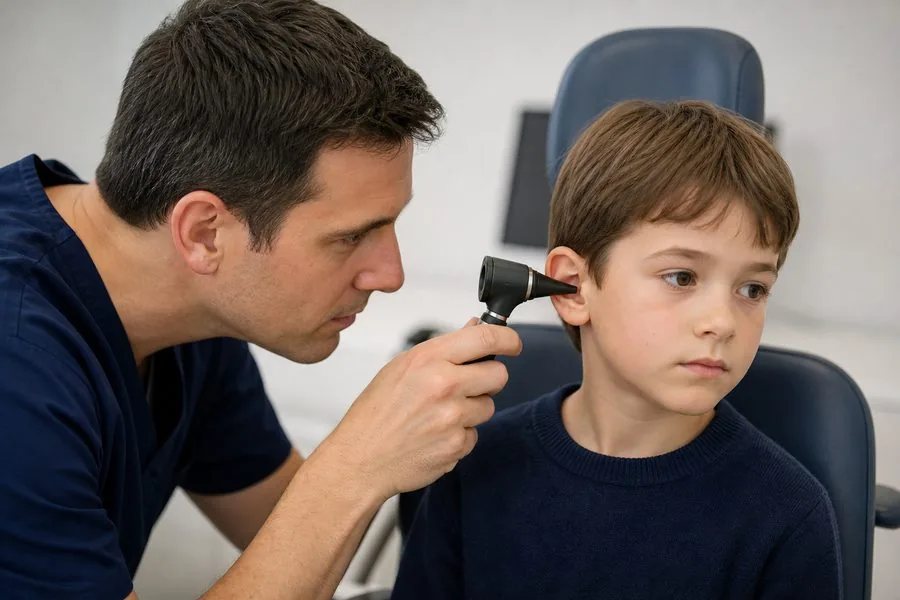
Glue ear, or otitis media with effusion, is when the space behind the eardrum fills with a sticky fluid, so sound can't pass through as clearly and hearing becomes muffled.
It's very common, especially in young children, and the good news is that most cases clear on their own within a few months. When the fluid lingers and affects hearing, speech or daily life, there are simple, well-established treatments that help.
Symptoms of glue ear.
Glue ear is often painless, so the first sign is frequently a change in hearing or behaviour rather than a sore ear.
Why it happens.
Glue ear happens when the Eustachian tube — which drains and ventilates the middle ear — doesn't work well, so fluid builds up behind the eardrum. A few things make it more likely. It can affect one or both ears.
Don't wait for it to settle.
Early assessment helps you get the right treatment sooner. See a specialist if:
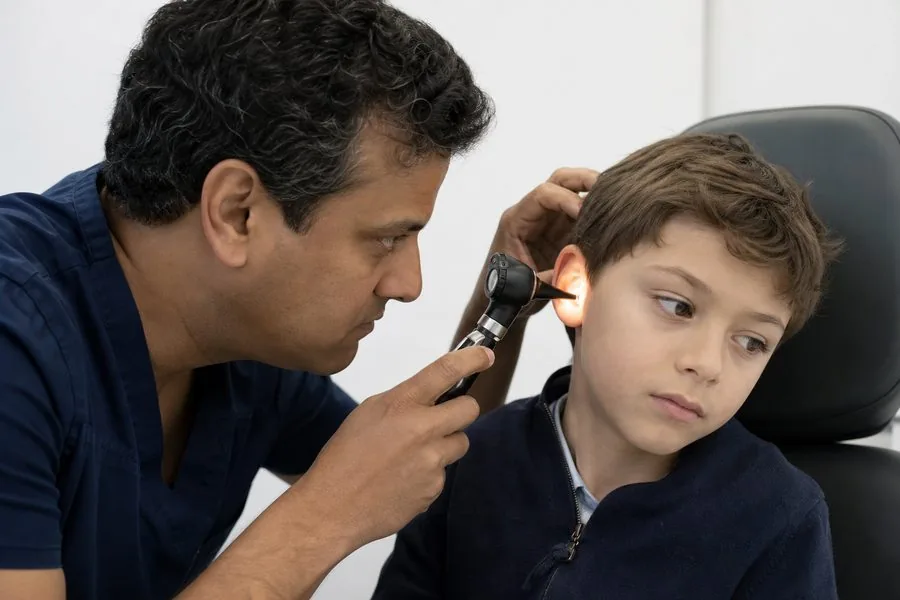

Diagnosed with a straightforward ENT examination.
Glue ear is diagnosed in clinic by examining the ear and looking at the eardrum — its appearance and movement usually make the diagnosis clear, and a hearing check helps gauge how much it's affecting you. Mr Huw Jones, Consultant ENT Surgeon (adult & paediatric), will confirm what he finds and talk through whether the fluid is best left to settle on its own or treated now.
How glue ear is treated.
We start with the least invasive approach — and for many children that simply means watchful waiting while the fluid clears on its own.
Most cases of glue ear clear by themselves within a few months. If hearing isn't badly affected, the sensible first step is often to monitor it and review, rather than treat straight away.
A small opening is made in the eardrum to drain the trapped fluid, easing the blockage and improving hearing. A simple, well-established day-case procedure.
A tiny ventilation tube is placed in the eardrum to keep the middle ear aired and stop fluid building up again — one of the most common children's ENT procedures.
Where both ears are affected, grommets can be fitted to each side in the same procedure.
Seen in days — not months on a list.
A named specialist, not a junior — all the way through.
Every price published and confirmed in writing.
Seen privately, without the wait.
We bill major UK insurers directly.

Will glue ear go away on its own? +
Often, yes. Most cases of glue ear clear by themselves within a few months as the fluid drains away, which is why watchful waiting is usually the first step when hearing isn't badly affected.
Is glue ear painful? +
Usually not. Glue ear is often painless — the main problem is muffled hearing rather than a sore ear, which is why a change in hearing or behaviour is frequently the first thing noticed.
What are grommets, and how much do they cost? +
Grommets are tiny ventilation tubes placed in the eardrum to keep the middle ear aired and stop fluid building up. At Bridge House the cost is £700 for one ear or £900 for both, with a simpler myringotomy (draining the fluid) at £450. An ENT consultation is £200, and every price is published upfront.
Does glue ear affect children's speech and learning? +
It can. Because glue ear dulls hearing, it may slow a young child's speech or make it harder to keep up at nursery or school. That's why we suggest getting hearing checked if it isn't settling — so any effect can be picked up and addressed early.
Related reading
Don't put up with it.
Book an assessment with a consultant and get a clear picture — and a plan.