Why won't my ear clear?
A feeling of fullness or pressure in the ear that just won't shift is one of the most common reasons people see an ENT specialist, and it is rarely anything to be alarmed about. In most cases something is simply getting in the way of normal hearing, whether that is wax, fluid or a tube that isn't opening as it should.
The good news is that a blocked ear is a symptom, not a diagnosis. Once the cause is identified, the path to relief is usually clear and uncomplicated. The trick is knowing which of the common causes is behind your particular blockage, and that is something a proper look in the ear can settle quickly.
Earwax and glue ear: the usual suspects
Earwax is the most everyday cause of a blocked ear. It is completely normal and protective, but sometimes it builds up or gets pushed deeper, especially by cotton buds, and forms a plug that muffles sound. Please resist the urge to dig it out yourself, as that often makes things worse. If wax is the problem, gentle professional removal often brings quick relief.
Glue ear is the name for sticky fluid that collects in the space behind the eardrum. It is very common in children but adults get it too, often after a cold. It can leave the ear feeling full and sounds feeling distant, almost as if you are underwater. Many cases settle by themselves, but when fluid lingers and affects hearing, treatment such as grommets, tiny ventilation tubes placed in the eardrum, can help drain it and improve hearing.
When the Eustachian tube won't open
The Eustachian tube is a small passage connecting the middle ear to the back of the nose, and its job is to equalise pressure, the same mechanism that makes your ears pop on a plane or in a lift. When it doesn't open as it should, a condition known as Eustachian tube dysfunction, the ear can feel persistently blocked, crackly or full, and your own voice may sound oddly loud.
This often follows a cold, allergies or hay fever and frequently eases as the underlying irritation settles. When it lingers, simple measures like managing nasal congestion can help. For more stubborn cases that don't improve, an ENT consultant can assess whether a procedure such as Eustachian tube dilatation, which gently widens the tube, might be appropriate. The right step depends entirely on what the examination shows, so it is best discussed in person.
When should I see someone about it?
A blocked ear that clears within a week or so, especially after a cold, is usually nothing to worry about. It is sensible to get your ear checked if the blockage persists, if your hearing is noticeably reduced, or if it comes alongside ear pain, discharge or a high temperature.
Some symptoms deserve prompter attention. Sudden hearing loss in one ear, severe pain, or dizziness and vertigo should be reviewed the same day, so contact your GP or call NHS 111. If you have severe pain with a high fever and feel very unwell, or any sudden severe symptoms, seek urgent care through 111 or A&E. These situations are uncommon, but acting quickly is the safest thing to do, and it is always better to have peace of mind than to wait and wonder.
What to expect at a consultation
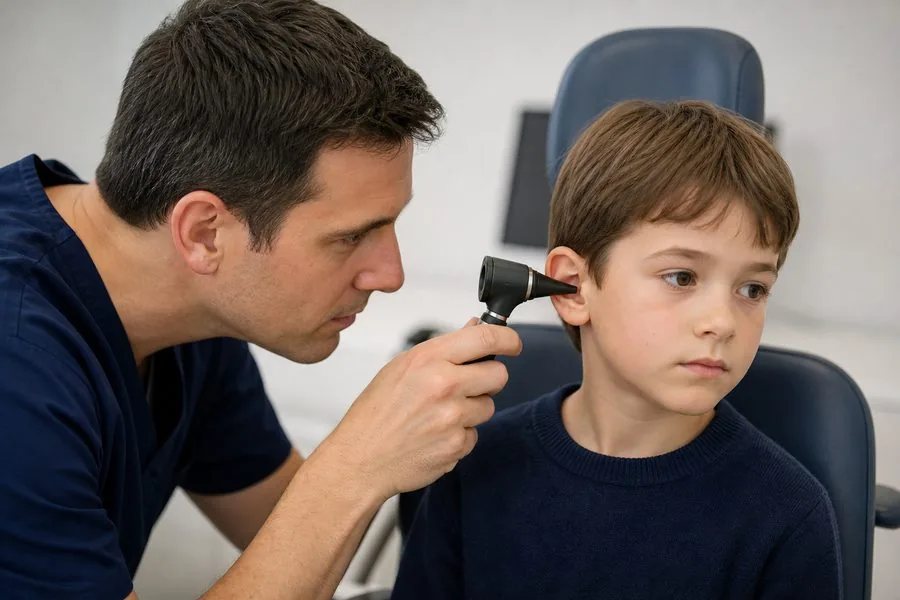
At Bridge House Clinic in Rossett, between Chester and Wrexham, a blocked ear is assessed by a consultant ENT surgeon who will look carefully in your ear, talk through your symptoms and explain what is going on in plain language. Often the cause, and the fix, becomes clear in a single visit.
If wax is the issue it can usually be removed there and then. If your ear needs a closer look, an endoscopic examination gives a detailed view of the ear canal and eardrum. Should you need a procedure such as grommets or Eustachian tube dilatation, your consultant will talk you through the options and costs openly, with no obligation. Appointments are typically available the same or next week, so you are not left waiting with a blocked ear for long.
Common questions
How long should I wait before getting a blocked ear checked? +
If your ear is still blocked after a week or two, or your hearing is noticeably muffled, it is worth getting it looked at. Don't wait if you also have severe pain, discharge, sudden hearing loss or dizziness — in those cases contact your GP or NHS 111 the same day. An ENT consultation at Bridge House Clinic is £200, and appointments are usually available the same or next week.
Can I unblock my ear at home? +
For wax, softening drops such as olive oil over a few days can sometimes help, and a blocked feeling after a cold often clears on its own. Please avoid cotton buds or trying to dig wax out, as this usually pushes it deeper and can damage the ear. If self-care doesn't work, professional ear-wax removal at the clinic is £100 and is gentle and quick.
Will I need a procedure for a blocked ear? +
Often not. Many blocked ears are due to wax or settle by themselves once a cold or congestion clears. Where fluid or a tube problem persists, options such as grommets (£700–£900) or Eustachian tube dilatation may be discussed. Your ENT consultant will examine your ear first, explain exactly what's going on and only suggest a procedure if it's genuinely the right step for you.