
Radiculopathy (Pinched Nerve Root)
Radiating pain, numbness or weakness from a compressed nerve root in the spine — and how nerve conduction studies and EMG help pinpoint which root is involved.

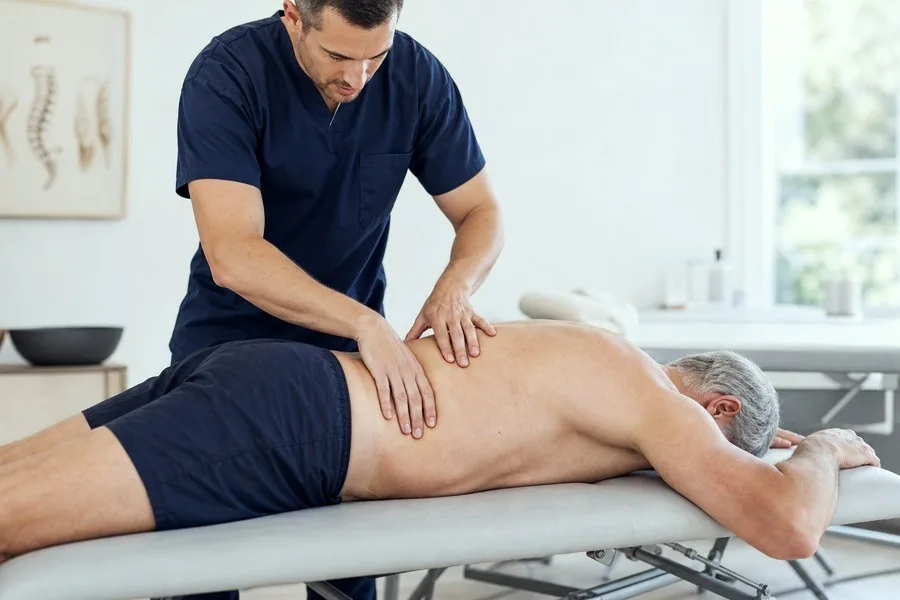
Radiculopathy is what happens when one of the nerve roots leaving the spine becomes compressed or irritated, so its symptoms are felt further down the arm or leg it supplies.
Because each nerve root serves a particular band of skin and group of muscles, the pain, numbness or weakness tends to follow a recognisable path rather than sitting in one spot. The job of neurophysiology is not to operate, but to establish whether a nerve root really is the source — and which one — so that the right next step can be chosen with confidence. Many people improve over time, and clear test results take the guesswork out of what to do next.
Symptoms of radiculopathy (pinched nerve root).
Symptoms usually run along the territory of a single nerve root, so the pattern down the limb is often more telling than the back or neck pain itself.
Why it happens.
Radiculopathy is a sign that something is pressing on or inflaming a nerve root where it exits the spine. Several things can be responsible, and a few make it more likely.
Don't wait for it to settle.
Early assessment helps you get the right treatment sooner. See a specialist if:


Confirmed by nerve conduction studies and EMG.
Imaging can show a disc or a narrowed channel, but it cannot tell you whether a nerve root is actually working poorly — and scans often reveal wear that causes no symptoms at all. That is where neurophysiology comes in. Dr Arvin Rodrigues, Consultant Clinical Neurophysiologist, carries out nerve conduction studies (NCS) and electromyography (EMG): the NCS measures how well signals travel along the nerves, while the fine-needle EMG samples the muscles supplied by each root to help identify the level involved. Crucially, this also distinguishes a pinched root from a peripheral nerve problem such as carpal tunnel — conditions that can feel similar but are managed very differently. Where an MRI or X-ray would add to the picture, this is arranged separately, as imaging is not performed on site.
How radiculopathy (pinched nerve root) is treated.
Our role here is accurate diagnosis, not surgery. The testing tells you what is wrong and how active it is, and those findings then guide the right treatment or onward plan.
A focused appointment with Dr Rodrigues to review your symptoms, examine the affected limb and decide which nerve testing will answer your particular question.
The test itself, carried out and reported by Dr Rodrigues, to confirm whether a nerve root is involved, identify the level, and separate it from a peripheral nerve cause. Priced by region: upper limb £450, lower limb £500, or both £550.
A clear written report sets out what the testing found and what it means. From there, Dr Rodrigues advises on the appropriate path — which may include onward referral for treatment elsewhere where that is needed — so you and your GP or specialist know exactly how to proceed.
Seen in days — not months on a list.
A named specialist, not a junior — all the way through.
Every price published and confirmed in writing.
Seen privately, without the wait.
We bill major UK insurers directly.

What's the difference between radiculopathy and sciatica? +
Sciatica is the best-known form of radiculopathy — pain radiating from a compressed nerve root in the lower back down the leg. Radiculopathy is the broader term and can affect roots in the neck (causing arm symptoms) just as much as the lower back. Sciatica has its own page under our pain management service if that fits your symptoms.
Why have nerve testing if I could just have a scan? +
A scan shows the structure of the spine, but many people have disc bulges or wear on imaging that cause no problems at all. Nerve conduction studies and EMG show how the nerve root is actually functioning, which level is affected, and whether your symptoms truly come from the root rather than a trapped nerve elsewhere — information a scan alone cannot give.
Do you treat the radiculopathy as well? +
Our role here is diagnosis, not surgery or injections. Dr Rodrigues uses NCS and EMG to establish exactly what is wrong, then provides a clear report and advice. Those findings guide the right treatment, and where onward referral is needed for that care we will set out the route clearly.
What does the testing cost? +
A neurophysiology consultation is from £450. Nerve conduction studies and EMG are priced by region: £450 for the upper limb, £500 for the lower limb, or £550 for both. The test and the written report are carried out by Dr Rodrigues, and the figure is confirmed before you book.
Don't put up with it.
Book an assessment with a consultant and get a clear picture — and a plan.