
Genital dermatology
Persistent itching, soreness, a rash or a lump in the genital area — what these skin problems are, why they happen, and how a consultant dermatologist can help, discreetly and in confidence.

Skin conditions affecting the genital area and surrounding skin — common, treatable, and nothing to feel awkward about.
These are skin problems that happen to be in a private area — things like persistent itching, soreness, rashes, changes in colour or texture, or a lump or split that won't settle. They are far more common than most people realise, and they often go unmentioned for years out of embarrassment. That's a shame, because the great majority respond well to the right treatment once someone takes a proper look. Because the symptoms overlap, an unhurried, confidential assessment is what tells one condition from another — so you get treatment that actually works rather than guesswork. A chaperone is always offered, and the whole appointment is handled discreetly.
Symptoms of genital dermatology.
Symptoms can be constant or come and go, and many people find them hard to raise — but they are common, and a consultant dermatologist will have seen them many times before.
Why it happens.
There isn't one single cause — the term covers several quite different problems, and identifying which one you have is the whole point of an assessment. The common groups are:
Don't wait for it to settle.
Early assessment helps you get the right treatment sooner. See a specialist if:
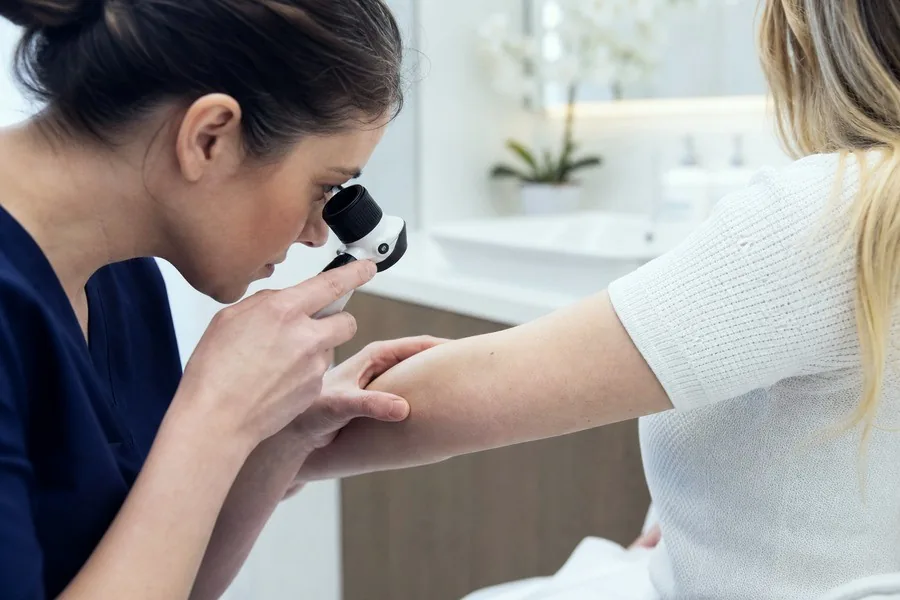

Diagnosed by a discreet examination — and a small biopsy when it's needed.
Many of these conditions can be recognised from your history and a discreet examination of the skin by Dr Dalia Alsaadi, Consultant Dermatologist. A chaperone is always offered, and the appointment is confidential throughout. Where the diagnosis isn't clear, or to confirm a skin condition, a small punch biopsy under local anaesthetic may be taken. Dr Alsaadi will explain what she finds and talk you through the options.
How genital dermatology is treated.
Treatment depends on the diagnosis — there's no single answer, which is why identifying the underlying condition comes first. Once that's clear, most problems can be managed well.
A discreet, unhurried examination with Dr Alsaadi to identify exactly what's going on, with a chaperone offered throughout — the foundation for treating it properly.
Targeted treatment for the condition behind your symptoms — for example prescription creams or ointments, or treating any infection — with ongoing review at follow-up for long-term conditions such as lichen sclerosus to keep the skin healthy.
If the diagnosis needs confirming, a small skin sample is taken under local anaesthetic and sent for analysis. Only done when it will change your care, and explained beforehand.
Seen in days — not months on a list.
A named specialist, not a junior — all the way through.
Every price published and confirmed in writing.
Seen privately, without the wait.
We bill major UK insurers directly.

I find this embarrassing — what's the appointment actually like? +
It's a calm, private and entirely routine consultation for the clinic. These problems are common and Dr Alsaadi will have seen them many times. The examination is discreet, you're in control of the pace, and a chaperone is always offered if you'd like one. There's nothing to feel awkward about raising.
Do I need a GP referral to be seen? +
No. You can book a private appointment with Dr Dalia Alsaadi, Consultant Dermatologist, directly — no GP referral and no NHS waiting list. If your GP has already examined you or sent any results, bringing those along helps, but it isn't required.
What will it cost? +
The initial skin consultation is £200 and a follow-up is £120, with transparent fixed pricing and no surprises. If a punch biopsy is needed to confirm the diagnosis, that is £100, and it will be explained before you go ahead. We also bill the major UK insurers.
Could a skin problem in this area be something serious? +
Most of the time, no — the great majority are benign, treatable skin conditions. But because a few skin changes can be pre-cancerous, anything persistent, non-healing, bleeding or changing should be checked, and a small biopsy can give a definite answer. That's exactly why it's worth having a look rather than waiting.
Don't put up with it.
Book an assessment with a consultant and get a clear picture — and a plan.