
Foot Drop
When you can't lift the front of your foot, your toes catch and you trip — here's what's behind foot drop and how nerve testing finds the exact level of the problem.

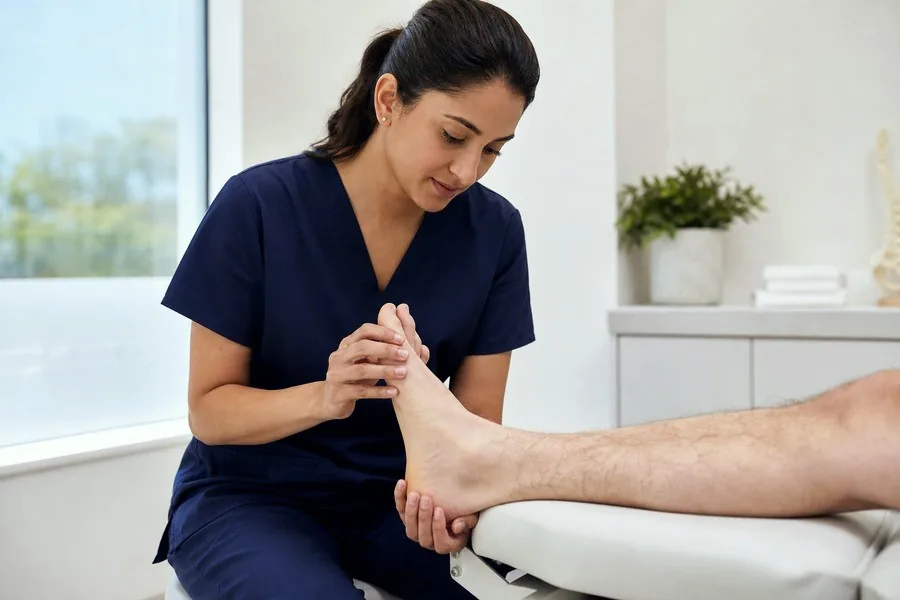
Foot drop means you struggle to lift the front of your foot, so the toes droop towards the ground and catch as you walk. It's a sign, not a disease in itself.
Something is interrupting the signal to the muscles that pull the foot upward, most often the peroneal (common fibular) nerve as it wraps around the outside of the knee. Because the same end result can come from a squashed nerve at the knee, a trapped nerve root in the back, or a problem higher up, the key question is where the fault lies. Nerve conduction studies and EMG answer exactly that — and pinning down the level is what allows the right plan to be put in place.
Symptoms of foot drop.
Foot drop can come on suddenly — say, after sitting cross-legged or a spell in plaster — or build up gradually. The give-away sign is how you walk.
Why it happens.
Foot drop appears whenever the message to the foot-lifting muscles is interrupted, and that interruption can sit at several points along the path. Testing is what separates one cause from another.
Don't wait for it to settle.
Early assessment helps you get the right treatment sooner. See a specialist if:
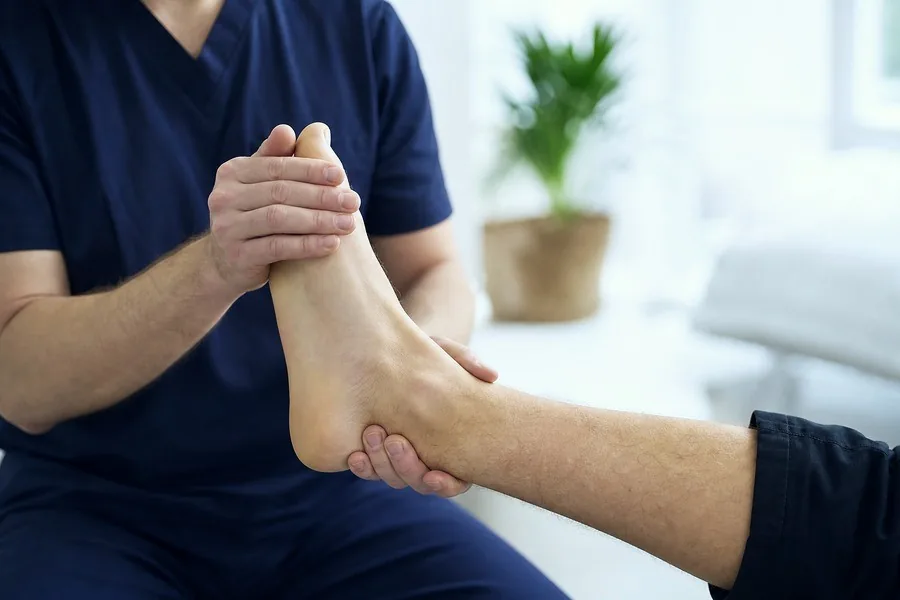

Nerve conduction studies and EMG find the exact level.
Foot drop looks the same whether the trouble is at the knee, in the lower back or higher up — so the priority is locating it precisely. Dr Arvin Rodrigues, Consultant Clinical Neurophysiologist, carries out nerve conduction studies and EMG of the lower limb himself: small electrical pulses measure how well the peroneal and neighbouring nerves are conducting, and a fine needle samples the muscles to show whether and where the signal is being lost. The study can tell a squashed peroneal nerve at the knee from an L5 nerve-root problem, gauge how severe the damage is, and give a sense of whether the nerve is likely to recover. Where a scan (MRI or X-ray) would add to the picture, it is arranged separately, as imaging is not carried out on-site.
How foot drop is treated.
The clinic's role in foot drop is precise diagnosis. Once we know where the fault sits and how severe it is, that result steers what should happen next.
A one-to-one assessment with Dr Rodrigues to take your history, examine the leg and decide which nerve testing is needed — booked directly, with or without a letter from your GP.
The test that does the detective work: it locates the level of the problem — knee, nerve root or higher — and shows how severe the nerve damage is, all in one appointment.
You leave with a clear specialist report and an explanation of what it means. Where treatment or onward care is needed, the findings point to the right path and we refer on accordingly — for example to a spinal or surgical opinion.
Seen in days — not months on a list.
A named specialist, not a junior — all the way through.
Every price published and confirmed in writing.
Seen privately, without the wait.
We bill major UK insurers directly.

What actually causes foot drop? +
Foot drop is the result of an interrupted nerve signal to the muscles that lift the foot. The most common culprit is pressure on the peroneal (common fibular) nerve where it passes the outside of the knee, but it can also come from a trapped nerve root in the lower back or a problem higher in the nervous system. Nerve conduction studies and EMG are how we tell these apart.
How does nerve testing help with foot drop? +
Foot drop can look identical whatever the cause, so treatment depends on knowing where the fault lies. A nerve conduction study measures how well the nerves are carrying signals, and the EMG part checks the muscles — together they pinpoint the level (knee, nerve root or higher), show how severe the damage is, and give an idea of whether the nerve is likely to recover.
Do I need a referral, and what does the test cost? +
You can book directly — no GP referral is needed. A neurophysiology consultation is from £450, and a nerve conduction study and EMG of the lower limbs is £500. If you've already had any scans or letters, bringing them along helps Dr Rodrigues build the fullest picture.
Can foot drop get better? +
Many cases do improve, particularly where it's caused by short-term pressure on the nerve, though recovery can take time. The nerve study helps gauge how severe the damage is and the likely outlook, and that result guides what should happen next — your report explains what it means and, where further treatment or an onward referral is needed, points to the right step.
Don't put up with it.
Book an assessment with a consultant and get a clear picture — and a plan.