
Varicose Veins
Bulging, aching, heavy legs — what varicose veins are, why they happen, and how we can help.
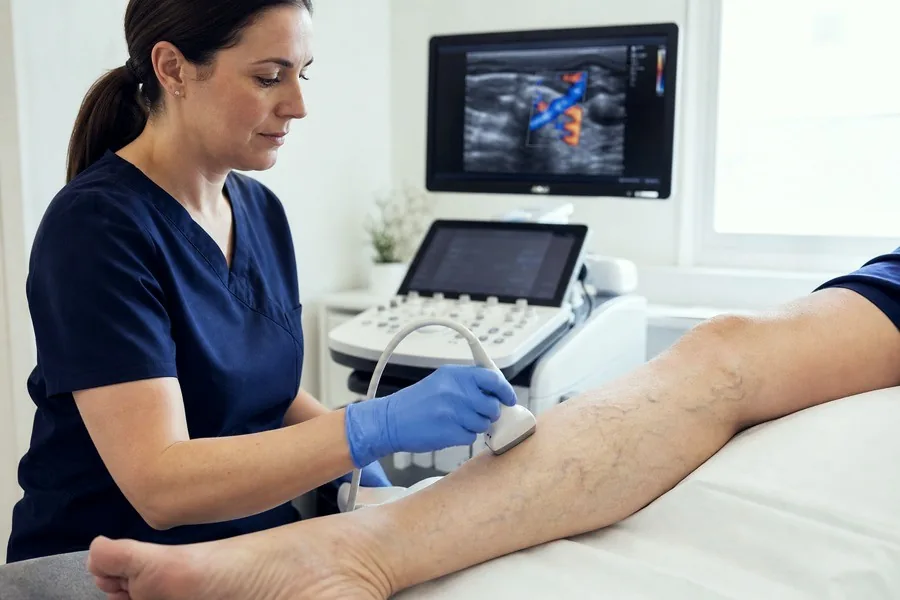
Varicose veins are swollen, twisted veins — usually in the legs — that appear when the tiny valves inside them stop working properly and blood pools instead of flowing back to the heart.
They're very common and rarely dangerous, but they can ache, feel heavy and worsen over time. The good news: they're very treatable, with minimally invasive options done under local anaesthetic — walk in, walk out.
Symptoms of varicose veins.
Many people notice the look of the veins first — but the heaviness and aching are just as common, and often worse by the end of the day.
Why it happens.
Varicose veins develop when the valves inside the leg veins weaken, so blood pools instead of flowing back up. Some things make this more likely.
Don't wait for it to settle.
Early assessment helps you get the right treatment sooner. See a specialist if:
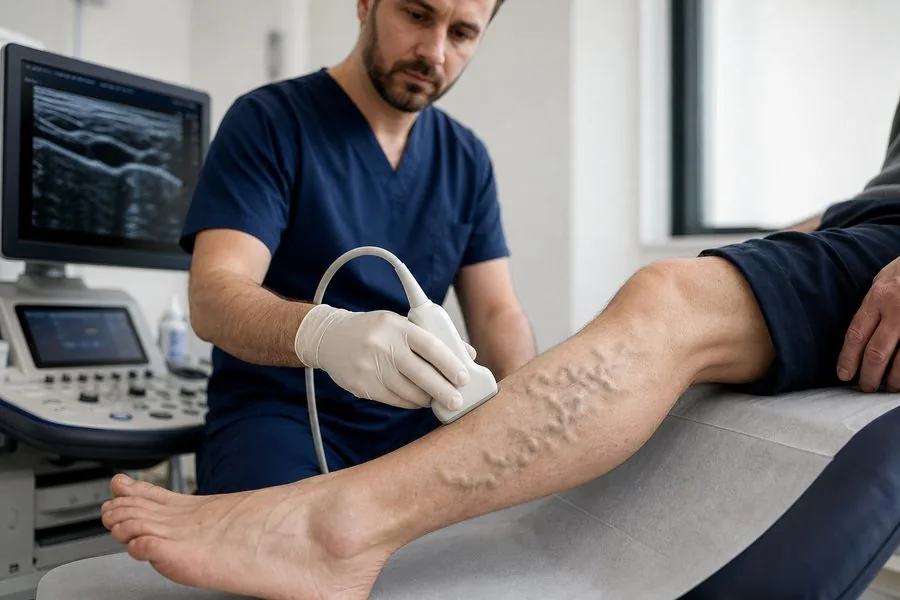

Assessed with a vascular consultation and duplex scan.
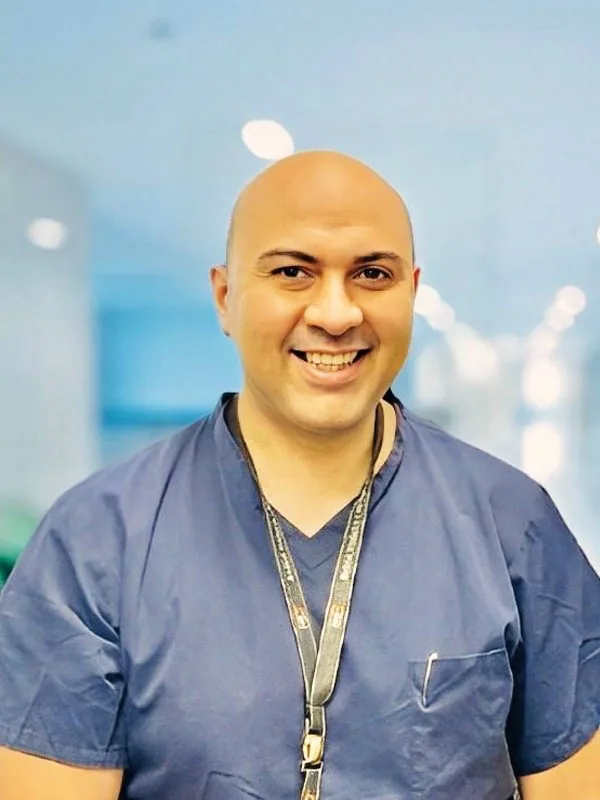
Mr Tamer Ghatwary, Consultant Vascular & Endovascular Surgeon, examines your legs and reviews the underlying veins with a duplex (ultrasound) assessment. This shows how the blood is flowing and which veins are affected, so your treatment plan is based on what's actually going on — not guesswork.
How varicose veins is treated.
We start with the least invasive option that's right for you. All treatment is done under local anaesthetic — you walk in and walk out, and most people are back to normal a day or two later.
A consultant examines your legs and reviews the veins with a duplex scan, then explains your options with a fixed price upfront.
A foam is injected to close the affected vein. Done under local anaesthetic, walk-in/walk-out, with both legs able to be treated at the same visit.
A minimally invasive treatment that closes the faulty vein through a tiny entry point — no general anaesthetic, walk in and walk out. One leg per procedure.
Seen in days — not months on a list.
A named specialist, not a junior — all the way through.
Every price published and confirmed in writing.
Seen privately, without the wait.
We bill major UK insurers directly.
Are varicose veins just a cosmetic problem? +
Not always. Many people have genuine symptoms — aching, heaviness, swelling and skin changes — which we take seriously and assess properly, not dismiss.
Will the treatment hurt? +
Treatment is done under local anaesthetic, so it's well tolerated. Most people describe it as far more comfortable than they expected, and you walk in and walk out the same day.
How long is the recovery? +
Because everything is done under local anaesthetic with no general anaesthetic, most people are back to normal a day or two after the procedure.
Can both legs be treated? +
With foam sclerotherapy, both legs can be treated at the same visit (£700 for both). ClariVein is done one leg at a time. Your consultant will confirm the right plan for you.
Related reading
Don't put up with it.
Book an assessment with a consultant and get a clear picture — and a plan.