
Vulval Conditions
Itching, soreness, a change in the skin or a lump in the vulval area — what these conditions are, why they happen, and how a consultant can help.

"Vulval conditions" is a broad term for problems affecting the vulva — the outer skin and tissue around the entrance to the vagina.
They range from skin disorders like lichen sclerosus and lichen planus to dermatitis, infections, persistent pain and, more rarely, pre-cancerous changes. Most vulval problems are not serious and respond well to the right treatment — but because the symptoms overlap, they are often misdiagnosed or simply put up with for years. A proper examination is what tells one condition from another, so you get the treatment that actually works rather than guesswork.
Symptoms of vulval conditions.
Symptoms can be constant or come and go, and many women find them hard to raise — but they are common, and a consultant has seen them all before.
Why it happens.
There isn't one single cause — the term covers several quite different problems. Identifying which one you have is the whole point of an assessment, but the common groups are:
Don't wait for it to settle.
Early assessment helps you get the right treatment sooner. See a specialist if:
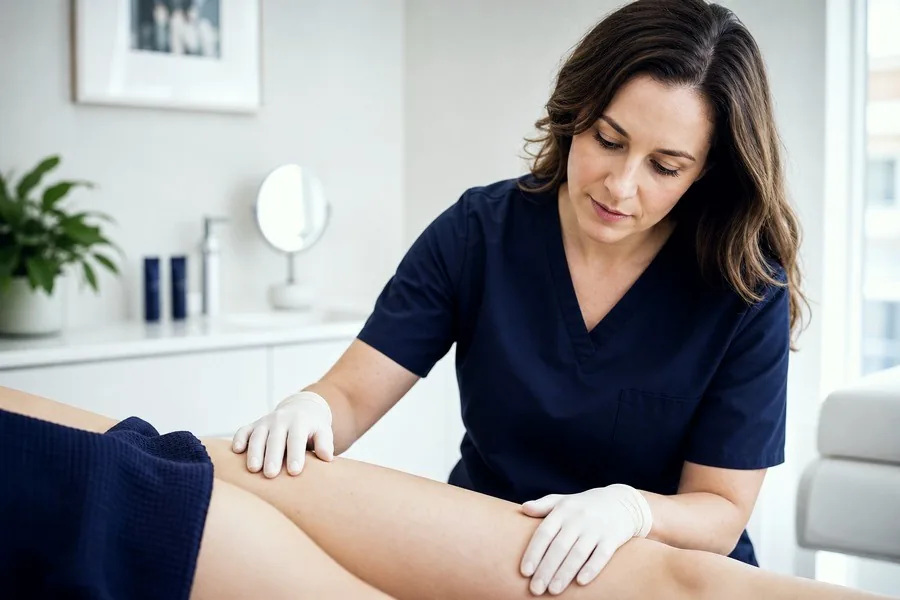

Diagnosed by a careful examination — and a biopsy when it's needed.
Many vulval conditions can be recognised from the history and a gentle examination of the skin. Where the diagnosis isn't clear, or to confirm a skin condition or rule out pre-cancerous change, a small biopsy under local anaesthetic may be taken. Mr Mohamed Mehasseb, Consultant Gynaecologist, will examine you, explain what he finds and talk you through the options at your appointment.
How vulval conditions is treated.
Treatment depends entirely on the diagnosis — there's no single answer, which is why getting the right label matters first.
An unhurried examination to identify exactly which condition you have, with a biopsy arranged if the picture isn't clear — the foundation for treating it properly.
Stopping soaps, wipes and fragranced products that irritate the skin, with a simple emollient routine, settles many cases of dermatitis and soothes sensitive skin.
Steroid ointments for conditions like lichen sclerosus, or treatment of any infection, can control symptoms and protect the skin — often with ongoing maintenance to keep flare-ups away.
For vulvodynia and similar pain conditions, a tailored plan may combine skin measures, specific medication and lifestyle advice to bring the discomfort down.
Seen in days — not months on a list.
A named specialist, not a junior — all the way through.
Every price published and confirmed in writing.
Seen privately, without the wait.
We bill major UK insurers directly.

Can I book a vulval assessment without seeing my GP first? +
Yes — you can arrange a private appointment with our consultant gynaecologist directly. If your GP has already examined you or sent any results, bringing those along helps, but it isn't a requirement to be seen.
What does a vulval consultation cost? +
You will be seen privately by Mr Mohamed Mehasseb, Consultant Gynaecologist. The gynaecology consultation is £200 (follow-up £150). Any biopsy or treatment will be discussed and priced clearly before you go ahead.
Is a vulval condition a sign of cancer? +
Almost always, no. The great majority of vulval problems are benign skin or pain conditions. But because a few skin changes can be pre-cancerous, any persistent lump, ulcer, bleeding or changing patch should be examined — and a biopsy can give a definite answer.
Will I need a biopsy? +
Not always. Many conditions can be diagnosed from the examination alone. A small biopsy under local anaesthetic is only taken when the diagnosis is uncertain or needs confirming — your consultant will explain if and why it's recommended.
I find this embarrassing — what's the appointment actually like? +
It's a calm, private and entirely routine consultation for the clinic. The examination is gentle, you're in control of the pace, and a chaperone can be present if you'd like one. These symptoms are common and there's nothing to feel awkward about raising.
Do these conditions need long-term treatment? +
Some do. Skin conditions such as lichen sclerosus are usually well controlled but tend to need ongoing maintenance to keep the skin healthy and prevent flare-ups. Your consultant will set out whether yours is a one-off treatment or something to manage over time.
Don't put up with it.
Book an assessment with a consultant and get a clear picture — and a plan.