
Melasma
Symmetrical brown or grey-brown patches across the cheeks, forehead or upper lip — what melasma is, why it appears, and how a consultant dermatologist can help you fade and control it.
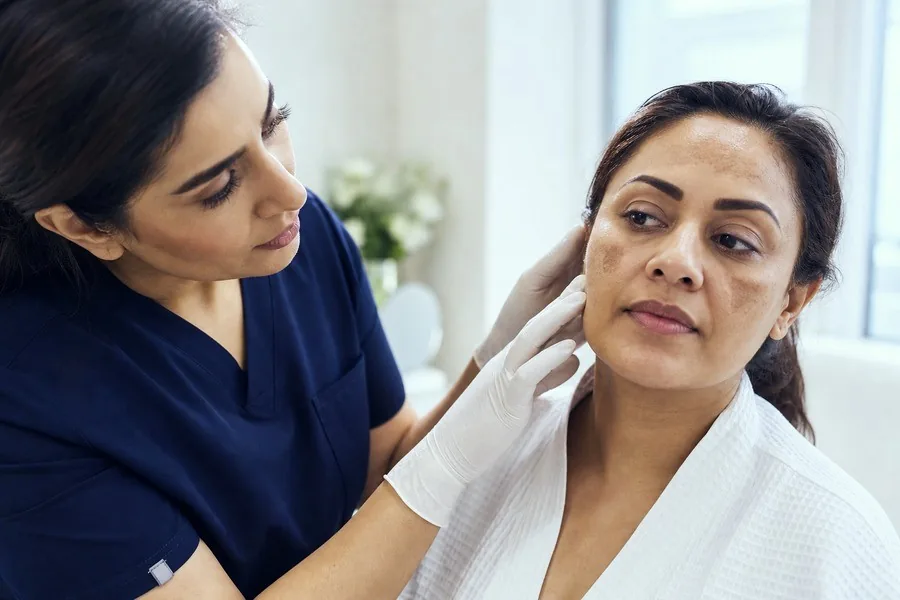
Melasma is a common pigmentation condition in which the skin produces too much pigment in certain areas, leaving flat brown or grey-brown patches.
The patches most often spread symmetrically across the cheeks, forehead, nose and upper lip. They are harmless and not contagious, but they can be stubborn and tend to deepen with sun exposure. Melasma is far more common in women and in those with naturally deeper skin tones, and it often appears around pregnancy or hormonal changes. With consistent sun protection and the right treatment plan, the patches can usually be lightened and kept under control — though it does take patience.
Symptoms of melasma.
Melasma is purely a change in colour — the patches are flat and you can't feel them. They tend to be most noticeable after time in the sun.
Why it happens.
Melasma develops when the skin's pigment-producing cells become overactive in patches. It isn't caused by anything you've done wrong, and several factors usually combine — with sunlight being the biggest driver of all.
Don't wait for it to settle.
Early assessment helps you get the right treatment sooner. See a specialist if:

Diagnosed by examining your skin.
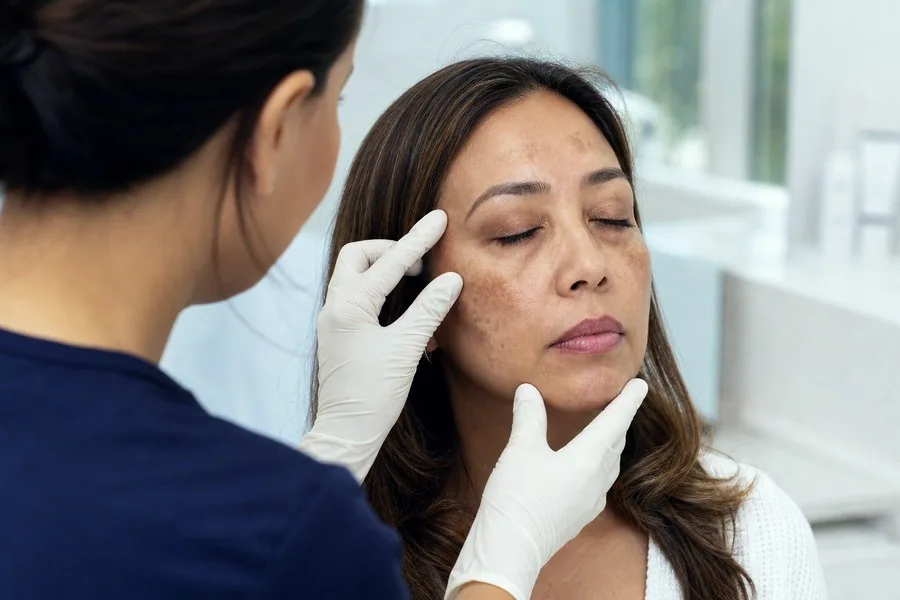
Melasma is usually diagnosed by Dr Dalia Alsaadi, Consultant Dermatologist, examining your skin and asking about sun exposure, hormones and any triggers — there's normally no need for tests. A special lamp may be used to judge how deep the pigment sits, as this helps guide treatment. If anything looks unusual, your consultant will explain the next step before agreeing a plan with you.
How melasma is treated.
Melasma responds best to a steady, layered approach rather than one quick fix — and rigorous sun protection underpins everything else.
A consultant confirms it is melasma, assesses how deep the pigment lies and explains realistic expectations before any treatment begins.
Daily broad-spectrum, high-factor sunscreen — ideally one that also shields against visible light — is the foundation of controlling melasma and preventing it from returning.
Lightening creams agreed at your consultation — such as combinations of pigment-reducing agents — applied over several weeks to gradually fade the patches.
Reviewing how your skin is responding and adjusting the plan over time, since melasma is a long-term condition that needs maintaining rather than a one-off cure.
Seen in days — not months on a list.
A named specialist, not a junior — all the way through.
Every price published and confirmed in writing.
Seen privately, without the wait.
We bill major UK insurers directly.

Can melasma be cleared completely? +
Melasma can usually be faded and kept under control, but it has a tendency to come back — especially with sun exposure or hormonal changes. Rather than promise a permanent cure, a consultant focuses on lightening the patches and helping you keep them that way over the long term.
Why does my melasma keep coming back in summer? +
Sunlight, and even visible light from screens and bright days, switches the pigment cells back on. That's why daily, year-round sun protection is the single most important part of any melasma plan — your dermatologist will recommend the right type for your skin.
Will it fade after pregnancy or if I stop the pill? +
For some people pregnancy-related melasma settles on its own in the months after giving birth, and stopping a hormonal trigger can help. For others it lingers and benefits from treatment. A consultant can advise on what's realistic in your situation.
Do I need to be referred, or can I book directly? +
You can arrange a private dermatology consultation directly — there's no need to go through your GP first. If you'd like, the clinic can send a letter back to your GP afterwards.
What does it cost to be seen and treated? +
An initial consultation with the consultant dermatologist is £200, and follow-up reviews are £120. The price of any prescribed creams is confirmed individually after your assessment, so you always know what you're paying before going ahead.
Don't put up with it.
Book an assessment with a consultant and get a clear picture — and a plan.