
Eustachian Tube Dilatation near Chester & Wrexham
A keyhole procedure to widen a blocked Eustachian tube and restore pressure balance in the middle ear — performed under local anaesthetic by an ENT surgeon in Rossett.
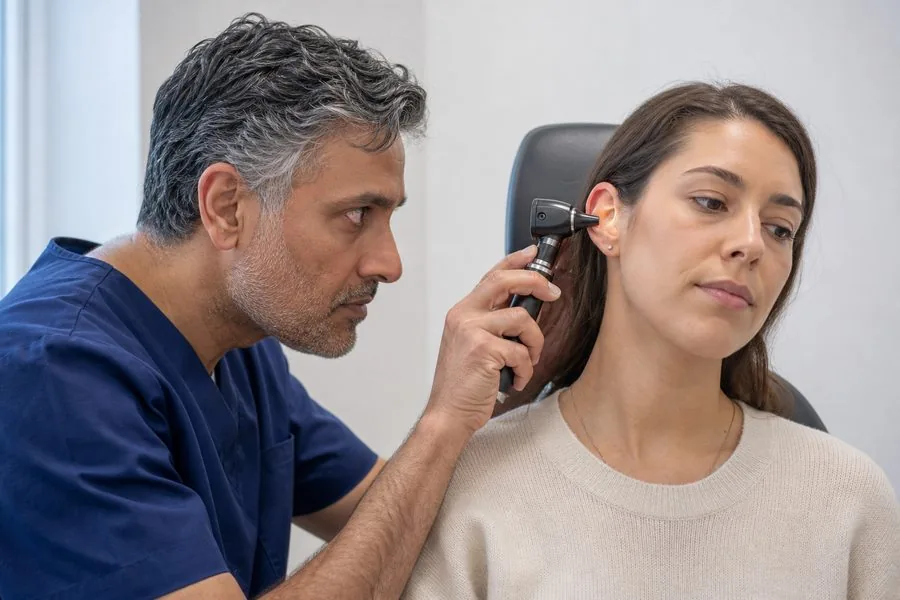
When the Eustachian tube — the narrow channel linking the middle ear to the back of the nose — fails to open properly, the result is a persistent feeling of fullness, muffled hearing, popping and discomfort that often worsens on flights or with altitude changes. Eustachian tube dilatation (balloon dilatation) addresses this by passing a small balloon through the nose into the tube and gently inflating it for a short time, helping the tube open and ventilate the ear more reliably.
At Bridge House Clinic the procedure is carried out under local anaesthetic in around an hour, so you stay awake and go home the same day.
Your clinician will confirm the most suitable method at your appointment.
Dilatation follows a consultation and examination — often including a hearing test and a look inside the ear and nose — to confirm the tube is the source of your symptoms and that you are a suitable candidate.
Because the balloon passes through the nose, tell the clinic in advance if you take anticoagulant or antiplatelet medication, as some may need pausing around the procedure.
A heavy cold, sinus infection or flare of allergic rhinitis on the day can make access difficult; mention any current nasal symptoms so timing can be reviewed.
You will be awake throughout, but arrange to travel home rather than driving straight afterwards, as your nose may feel blocked or tender for a while.
Why have it done at Bridge House

Local anaesthetic is applied to the inside of the nose and the opening of the Eustachian tube so the area is desensitised before anything is passed through.
Using a thin endoscope for vision, the surgeon guides a small balloon catheter into the narrowed Eustachian tube at the back of the nose.
The balloon is inflated for a short, controlled period to widen the tube, then deflated and removed. The same is repeated on the second side if you are having both treated.
After a brief period of observation you can go home the same day, with guidance on nasal care and what sensations to expect over the following days.
Linked to glue ear and tube dysfunction
Poor Eustachian tube function is closely tied to glue ear, where fluid collects behind the eardrum and dulls hearing. Dilatation aims to improve drainage and ventilation at the source. If you are still weighing up your symptoms, read more about the underlying condition before booking an assessment.
Learn about glue ear →
Know the cost before you book.
Every price is fixed and published upfront. A £50 deposit secures your appointment and comes off the total.
Book now→What does Eustachian tube dilatation cost? +
Treating one side is £2,100 and both sides together is £2,900. A consultation and any hearing assessment are charged separately.
Can I book without a referral from my GP? +
Yes — you can arrange a consultation directly with the clinic. The ENT surgeon will assess your ears and confirm whether dilatation is the right option for you.
Will I be asleep during the procedure? +
No. It is done under local anaesthetic, so you remain awake while the nose and tube are numbed. It usually takes around an hour and you go home the same day.
How does this help with blocked or popping ears? +
Widening the Eustachian tube helps it open and ventilate the middle ear more reliably, which can ease the fullness, muffled hearing and pressure problems caused by tube dysfunction.
Should I choose one side or both? +
That depends on which ears are affected. If symptoms are one-sided, a single-side procedure may be enough; bilateral symptoms are usually treated together, which costs less than two separate sessions.
Book eustachian tube dilatation.
From £2,100, published upfront — with no GP referral needed.