
Pelvic Pain
Persistent or recurring pain low in your tummy or pelvis — what it can mean, why it happens, and how a consultant gynaecologist gets to the bottom of it.


Pelvic pain is discomfort felt low in the abdomen, below the belly button, that can be a dull ache, a sharp cramp, pressure or a burning feeling — and in women it often has a gynaecological cause.
Pain that has lasted six months or more is called chronic pelvic pain. It can come from the womb, ovaries, bladder, bowel or pelvic muscles — sometimes from more than one of these at once. Because the sources overlap, the most useful first step is a careful assessment to work out what is actually driving it, rather than guessing.
Symptoms of pelvic pain.
Pelvic pain varies a great deal from person to person — what matters is the pattern: where it is, when it comes, and what makes it better or worse.
Why it happens.
Pelvic pain rarely has a single tidy explanation — several conditions can produce similar symptoms, and more than one can be present together. A gynaecological assessment looks for the most likely sources.
Don't wait for it to settle.
Early assessment helps you get the right treatment sooner. See a specialist if:
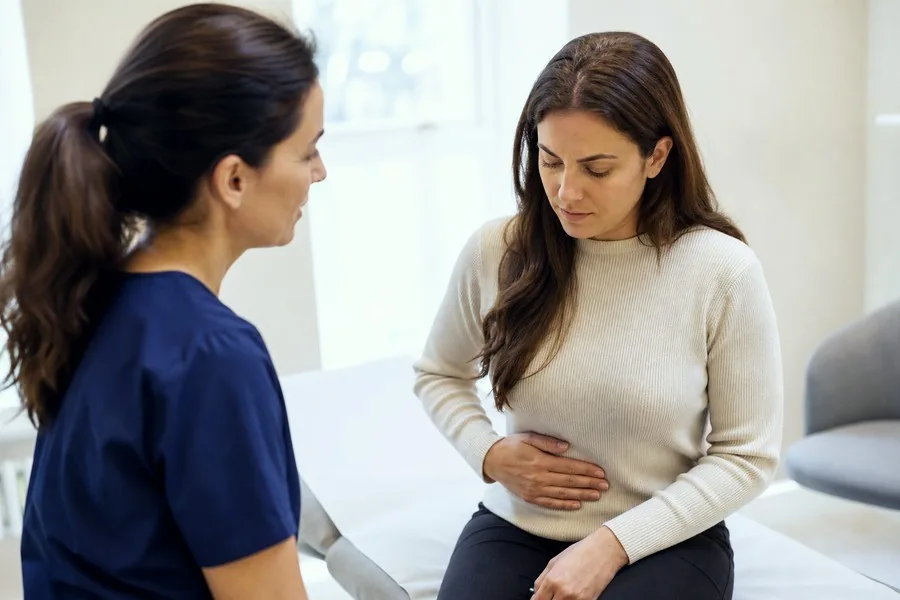

Diagnosed by a careful history, examination and the right scan.
Getting to the cause starts with an unhurried conversation about your symptoms and cycle, followed by a gynaecological examination and usually a pelvic ultrasound. Some causes — endometriosis in particular — can't always be seen on a scan, so surgery to look inside the pelvis is sometimes the only way to confirm them. Mr Mohamed Mehasseb, Consultant Gynaecological Surgeon, will assess you, explain what's likely going on, and arrange any further investigation needed.
How pelvic pain is treated.
There's no single fix for pelvic pain — the right approach depends on the cause, which is why it begins with a clear diagnosis.
A thorough appointment with Mr Mehasseb to take your history, examine you and arrange a pelvic ultrasound where needed — so any treatment is aimed at the actual cause rather than the symptom alone.
Depending on what's found, options can include pain relief, hormonal treatment to calm cyclical pain, or treatment for infection — discussed and tailored to you.
Where the cause needs looking at directly or treating surgically, Mr Mehasseb will explain the options.
Where pain is driven by fibroids, ovarian cysts, adenomyosis or endometriosis, care is directed at that specific diagnosis once it's confirmed.
Seen in days — not months on a list.
A named specialist, not a junior — all the way through.
Every price published and confirmed in writing.
Seen privately, without the wait.
We bill major UK insurers directly.

Can I book to see the gynaecologist directly about my pelvic pain, or do I need to go through my GP first? +
You can arrange a private appointment with Mr Mehasseb yourself — you don't have to wait for a GP letter. That said, if your GP has already examined you or arranged any scans or blood tests, bringing those results along helps the consultant build the fullest picture at your first visit.
What will the first appointment for pelvic pain cost? +
The gynaecology consultation is £200 (follow-up £150). Any scans or treatment that might be recommended would be discussed and priced with you separately, so you can decide with the costs clear in front of you.
Will you be able to tell me what's causing it on the first visit? +
Often a careful history, examination and pelvic ultrasound point clearly to the cause. Some conditions — endometriosis especially — can be present even when scans look normal, so occasionally surgery to look inside the pelvis is needed to be certain. Mr Mehasseb will be honest about what's known and what the next step should be.
Is pelvic pain always something serious? +
Not usually — many causes are common, manageable conditions rather than anything dangerous. But because pain that drags on can quietly affect your life, and because a few causes do need prompt attention, it's sensible to have ongoing pelvic pain assessed rather than living with it unexplained.
Does it matter that the pain comes and goes with my periods? +
It's actually a useful clue. Pain that flares with your cycle leans towards a gynaecological cause such as endometriosis or adenomyosis, and it's worth noting when in your month the pain is at its worst so you can describe the pattern at your appointment.
Don't put up with it.
Book an assessment with a consultant and get a clear picture — and a plan.