
Hair Loss
Thinning hair, a widening parting or patches of loss — what it is, why it happens, and how a consultant dermatologist can help you find the cause.
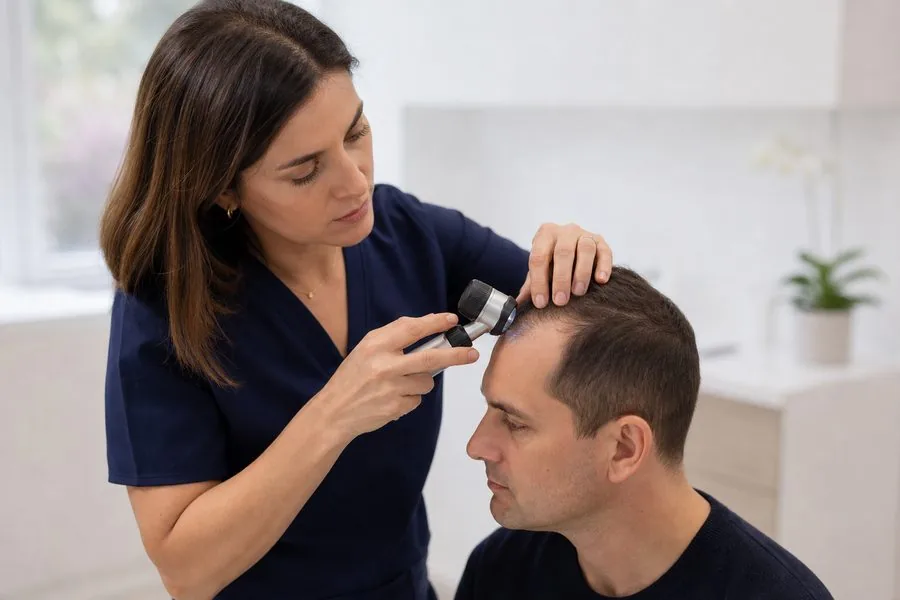
Hair loss, or alopecia, simply means losing more hair than usual — whether that shows up as gradual thinning, sudden shedding, or patches where the hair has come away.
There are many different types, and they don't all behave or respond the same way — which is exactly why a proper diagnosis matters. Some are temporary and settle once the trigger passes; others benefit from earlier treatment. Getting a clear picture from a consultant dermatologist is the first step to knowing the cause and what can be done.
Symptoms of hair loss.
Hair loss can come on gradually or quite suddenly, and the pattern often gives the first clue to the cause.
Why it happens.
Hair loss isn't one condition but many, and the cause shapes the treatment. Some types are common and harmless; a few need earlier attention to protect the hair follicles. Common contributors include:
Don't wait for it to settle.
Early assessment helps you get the right treatment sooner. See a specialist if:
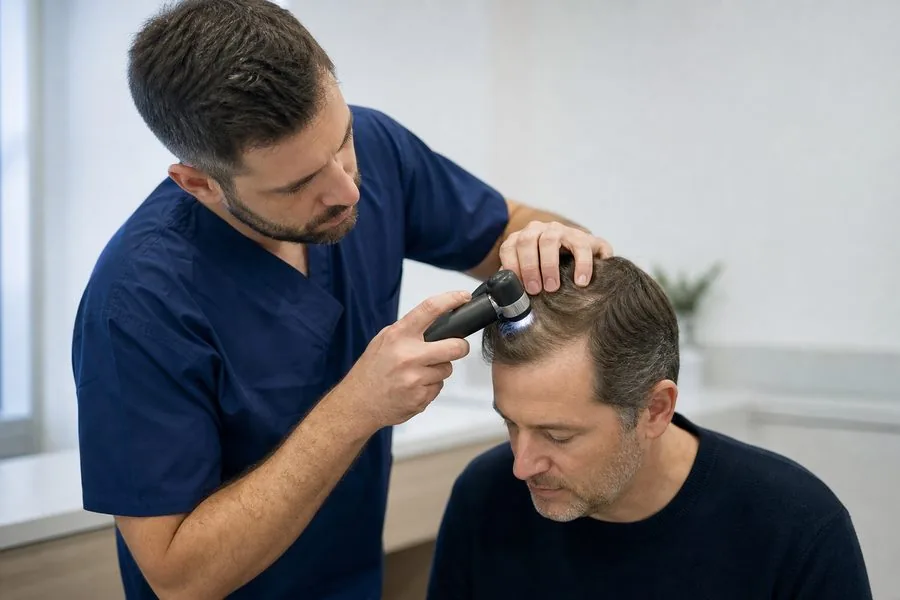

Diagnosed by a consultant scalp examination — with a biopsy where it's needed.
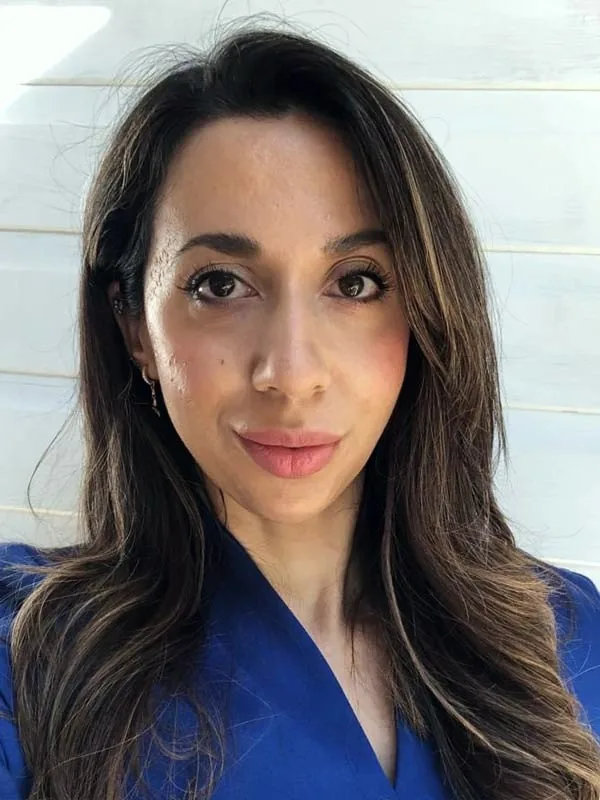
Dr Dalia Alsaadi, Consultant Dermatologist, will take a careful history and examine your scalp and hair to work out the type of hair loss. Where the cause isn't clear, or to confirm a scarring type, a small scalp biopsy (£550, including histology) lets the laboratory look at the follicles directly. Blood tests may also be arranged if a cause such as thyroid or iron deficiency is suspected. You'll leave with a clear diagnosis and a plan, not guesswork.
How hair loss is treated.
Treatment depends entirely on the type of hair loss — so it starts with a clear diagnosis, then a plan tailored to you.
It all starts with an initial hair consultation: a full history, a scalp and hair examination, and a clear explanation of what's causing the loss and what can be done about it.
A small sample of the scalp, examined under the microscope, to confirm the type of hair loss — particularly useful where the cause is unclear or scarring is suspected. The price includes histology.
Once the cause is known, your consultant will talk through the treatment options suited to your particular type of hair loss, and what to realistically expect from each.
Seen in days — not months on a list.
A named specialist, not a junior — all the way through.
Every price published and confirmed in writing.
Seen privately, without the wait.
We bill major UK insurers directly.
Will my hair grow back? +
It depends on the type of hair loss. Some types, such as shedding after illness, stress or childbirth, often recover once the trigger passes. Others are ongoing and managed rather than reversed. The most useful first step is a clear diagnosis, so you know which type you have and what to expect.
Do I need a scalp biopsy for hair loss? +
Not always. Many types of hair loss can be diagnosed from your history and a scalp examination alone. A biopsy is used when the cause isn't clear, or to confirm a scarring type — it lets the laboratory look at the follicles directly. Dr Alsaadi will only suggest one if it will genuinely help.
How much does it cost to be seen about hair loss? +
An initial hair consultation with the consultant dermatologist is £250. If a scalp biopsy is needed, that's £550 including histology. Any further treatment is discussed and its cost confirmed individually after your assessment — no hidden or escalating fees.
Should I just try products I've seen online first? +
Treating hair loss before you know the cause often means months of guesswork. Because the right treatment depends entirely on the type, a proper assessment with a consultant dermatologist first usually saves time and gives you a plan that actually fits your situation.
Don't put up with it.
Book an assessment with a consultant and get a clear picture — and a plan.