
Nerve Pain
Burning, shooting or electric-shock pain that comes from the nerves themselves — what neuropathic pain is, why it happens, and how a pain consultant can help you calm it.

Nerve pain — or neuropathic pain — is pain generated by the nerves themselves when they are damaged, irritated, trapped or compressed.
It tends to feel different from an ordinary ache — often burning, electric or tingling — and it can be stubborn because the problem lies in the wiring that carries pain signals. The good news is that nerve pain usually responds to treatment aimed specifically at the nerve, and a consultant can find what's driving yours and build a plan to quieten it.
Symptoms of nerve pain.
Neuropathic pain often appears in the area supplied by the affected nerve, and a normal touch — like clothing or bedsheets — can set it off.
Why it happens.
Nerve pain is a sign that a nerve is being damaged, compressed or irritated somewhere along its path. Several conditions can be behind it.
Don't wait for it to settle.
Early assessment helps you get the right treatment sooner. See a specialist if:
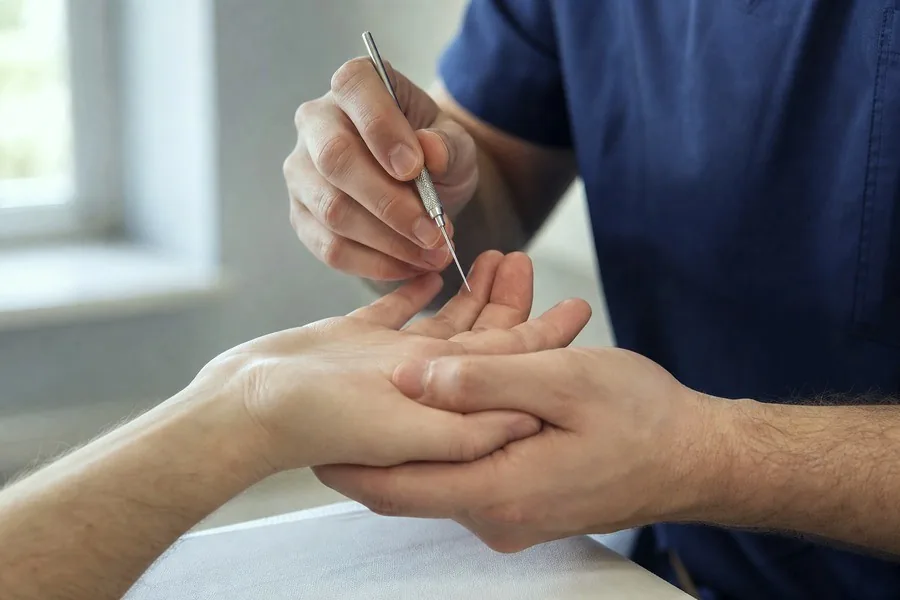

Pinpointed by examination — and nerve testing when it helps.
Nerve pain is usually identified by the character and pattern of your symptoms together with a careful examination of sensation, reflexes and strength. Dr Mohamed Khafaga, Consultant in Anaesthesia & Pain Management, takes a full history to work out which nerve is involved and what's irritating it. Where it would clarify the picture, nerve testing such as a nerve conduction study can be arranged, and he can often diagnose and begin treatment in the same visit.
How nerve pain is treated.
Treatment is aimed at the nerve itself — we start with the gentlest approach likely to help you and step up only when it's needed.
A thorough one-to-one assessment to identify the nerve involved and agree a plan. This often includes guidance on medicines used specifically for nerve pain, which work differently from ordinary painkillers.
A high-strength capsaicin patch applied in clinic to localised nerve pain — particularly useful for post-shingles pain and other well-defined areas of skin. A single treatment can ease pain for weeks to months.
A targeted injection that calms an irritated or overactive nerve, both easing pain and helping confirm which nerve is responsible.
For ongoing nerve pain, a precise treatment using radiofrequency energy to quieten the small nerves carrying the pain signal. Whether it suits you is decided together at your consultation.
Seen in days — not months on a list.
A named specialist, not a junior — all the way through.
Every price published and confirmed in writing.
Seen privately, without the wait.
We bill major UK insurers directly.

How is nerve pain different from ordinary pain? +
Ordinary pain usually comes from injured tissue — a strained muscle or a bruise — and eases as that heals. Nerve pain comes from the nerves themselves misfiring, which is why it tends to feel burning, electric or tingling and can linger. Because the cause is different, it responds best to treatments aimed at the nerve rather than standard painkillers.
How do I arrange to be seen for nerve pain? +
You can book directly with the clinic — you don't have to be referred by your GP. If you've already had tests or letters about your nerve pain, bringing them along helps Dr Khafaga build the fullest picture at your first appointment.
Can nerve pain be assessed and treated in one appointment? +
Often, yes. Dr Khafaga can assess your pain and, where it's appropriate, carry out a treatment such as a Qutenza patch or nerve block at the same visit. You pay for the consultation plus the procedure, and the cost is made clear before anything goes ahead.
What does treatment for nerve pain cost? +
An initial consultation with the consultant is £200, with a follow-up at £134. A Qutenza pain-relief patch is from £575, a nerve block injection is £450 and radiofrequency nerve ablation is £1,100. Every price is published upfront, so you'll always know where you stand.
Can the burning pain after shingles really be treated? +
Yes. Pain that persists where a shingles rash has cleared (post-herpetic neuralgia) is a form of nerve pain that often responds to focused treatment — a Qutenza patch applied to the area is one option Dr Khafaga may discuss with you, alongside medicines used for nerve pain.
Don't put up with it.
Book an assessment with a consultant and get a clear picture — and a plan.