
Psoriasis
Itchy, scaly patches of skin that come and go — what psoriasis is, why it happens, and how a consultant dermatologist can help bring it under control.
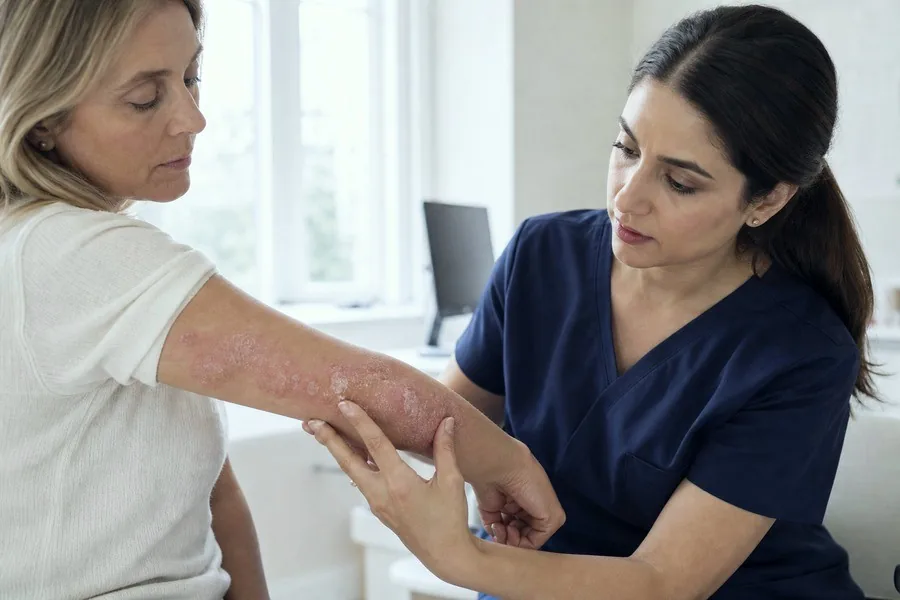
Psoriasis is a long-term skin condition where the body makes new skin cells far too quickly, so they build up into raised, scaly patches called plaques.
It's a common, non-contagious condition driven by an overactive immune response. It tends to come and go in flare-ups, and while there's no quick fix, it usually responds well to the right treatment plan.
Symptoms of psoriasis.
They often come and go in flare-ups, and can range from a few small patches to more widespread areas.
Why it happens.
Psoriasis happens when the immune system speeds up skin cell turnover. It isn't caused by poor hygiene and you can't catch it from someone else, but several things can make it more likely or set off a flare.
Don't wait for it to settle.
Early assessment helps you get the right treatment sooner. See a specialist if:
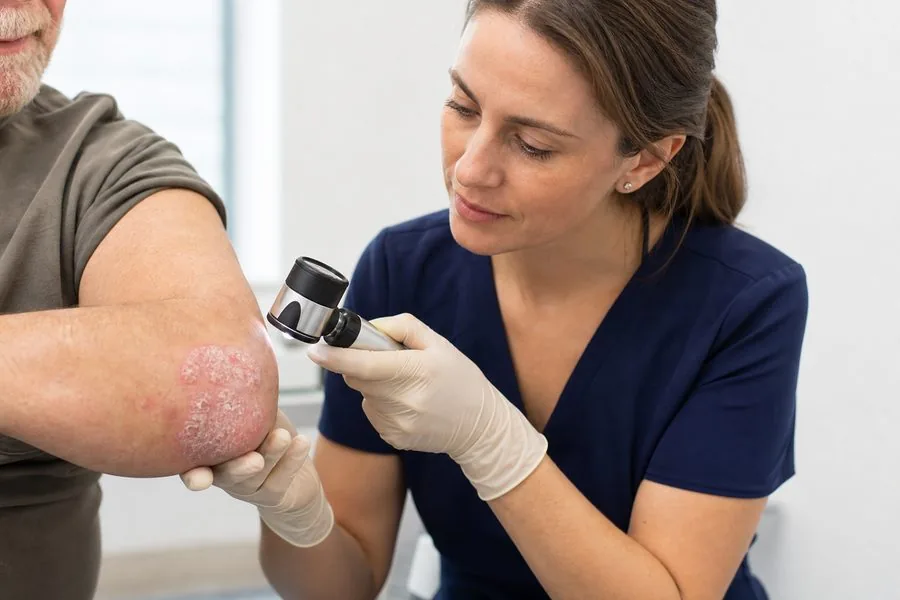

Diagnosed with a skin examination.
Psoriasis is usually diagnosed by a consultant dermatologist examining your skin, scalp and nails — there's normally no need for tests. We'll look at the pattern and type of your patches, ask about triggers and family history, and rule out other causes so you get a clear picture and a plan.
How psoriasis is treated.
We start with the simplest treatment that works for you, and build from there if needed.
Creams and ointments — such as emollients, vitamin D analogues and topical steroids — to calm the skin and ease scaling and itching. Usually the first step for milder psoriasis.
Your consultant builds a plan around the type and severity of your psoriasis, reviews how it responds, and adjusts it over time to keep flare-ups under control.
For more extensive or stubborn psoriasis that needs phototherapy or specialist systemic medication, your consultant will discuss the right next step and onward pathway.
Seen in days — not months on a list.
A named specialist, not a junior — all the way through.
Every price published and confirmed in writing.
Seen privately, without the wait.
We bill major UK insurers directly.

Is psoriasis contagious? +
No. Psoriasis is driven by your immune system, not an infection — you can't catch it from someone else or pass it on.
Can psoriasis be cured? +
There's no cure, but it can usually be managed well. With the right treatment plan, most people can get flare-ups under control and keep their skin comfortable.
What triggers a psoriasis flare-up? +
Common triggers include stress, infections, skin injury, certain medications and, for some people, smoking or alcohol. Identifying your triggers is part of the consultation.
Will I need any tests? +
Usually not — psoriasis is normally diagnosed by a consultant examining your skin and nails. Occasionally further assessment is suggested, which your consultant will explain.
Don't put up with it.
Book an assessment with a consultant and get a clear picture — and a plan.