
Rosacea
Facial redness, flushing and visible blood vessels — what rosacea is, why it happens, and how we can help you settle it.

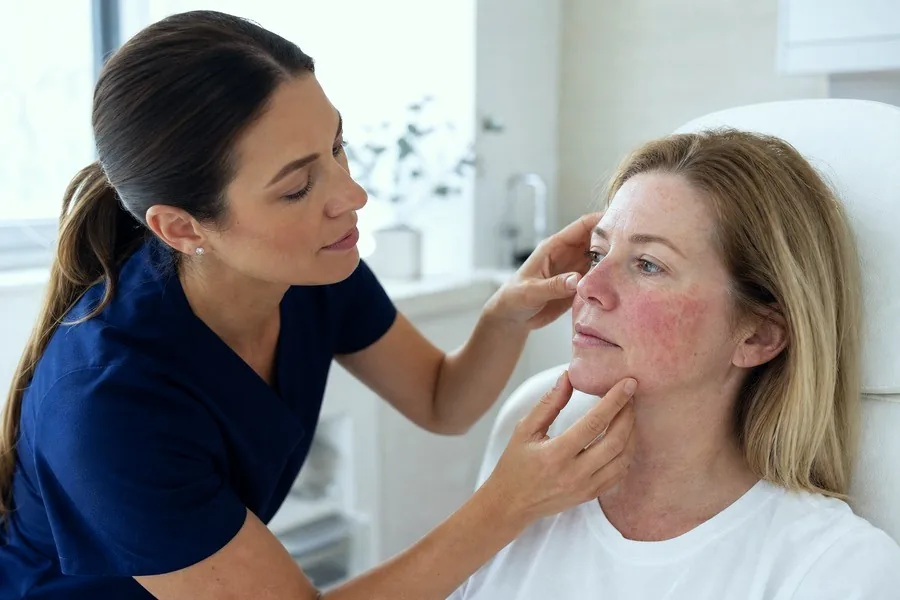
Rosacea is a common, long-term skin condition that mainly affects the central face — causing redness, flushing and, for some people, small bumps and visible blood vessels.
It tends to come and go in flare-ups and is often triggered by things like heat, sun, alcohol or stress. Rosacea can't be cured, but for most people it can be brought under good control with the right plan — and the earlier it's assessed, the easier it usually is to manage.
Symptoms of rosacea.
Symptoms can vary a lot from person to person, and tend to flare and settle over time.
Why it happens.
The exact cause isn't fully understood, but several factors can make rosacea more likely or set off a flare. It's not caused by poor hygiene.
Don't wait for it to settle.
Early assessment helps you get the right treatment sooner. See a specialist if:
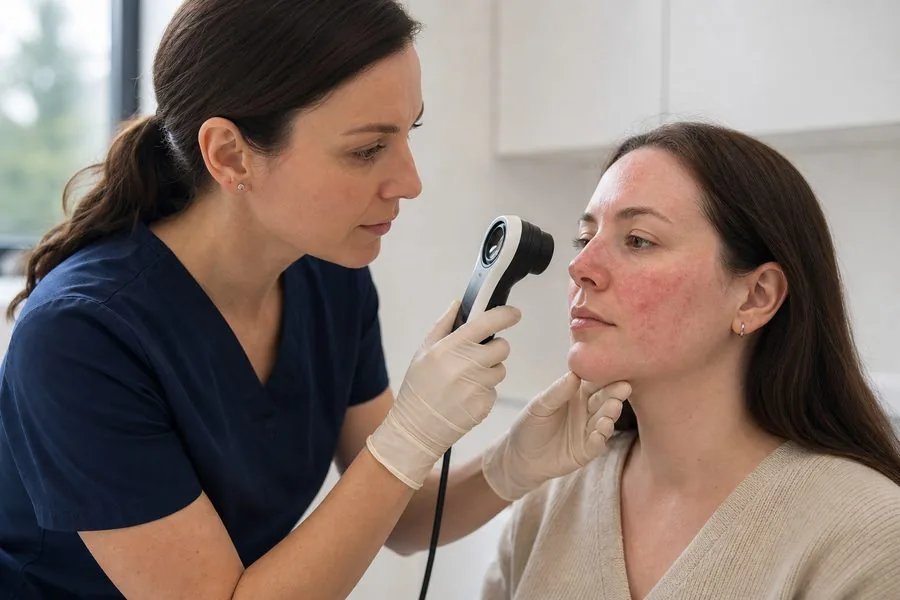

Confirmed with a skin examination.
Rosacea is usually diagnosed from the appearance and pattern of your skin during a consultation — there's no blood test for it. Dr Alsaadi will examine your skin, ask about your triggers and history, and rule out conditions that can look similar, such as acne or other rashes, so you leave with a clear diagnosis and a plan.
How rosacea is treated.
We start with the simplest approach that helps, and build from there.
Identifying your personal triggers, plus gentle skincare and daily sun protection to calm the skin and reduce flare-ups.
Where it's needed, a consultant can prescribe topical or oral treatment tailored to your type of rosacea and how it's affecting you.
A clear, personalised plan with consultant follow-up to keep rosacea settled over the longer term.
Seen in days — not months on a list.
A named specialist, not a junior — all the way through.
Every price published and confirmed in writing.
Seen privately, without the wait.
We bill major UK insurers directly.

Can rosacea be cured? +
There isn't a cure for rosacea, but it can usually be brought under good control. With the right management — avoiding your triggers and, where needed, prescription treatment — most people are able to keep their skin settled.
Do I need a referral to be seen? +
No — you can book directly with Dr Alsaadi, our consultant dermatologist. No GP referral is needed, and you'll usually be seen the same or next week.
Is rosacea the same as acne? +
No, though they can look similar and be confused — which is part of why a proper diagnosis matters. Rosacea and acne are treated differently, so getting the right diagnosis helps you get the right treatment sooner.
What does an appointment cost? +
An initial skin consultation with the consultant dermatologist is £200. If any treatment is recommended, the fees are confirmed individually and in writing before you decide to go ahead.
Don't put up with it.
Book an assessment with a consultant and get a clear picture — and a plan.