
Eczema
Dry, itchy, inflamed skin that comes and goes — what eczema is, why it flares, and how our consultant dermatologist can help.

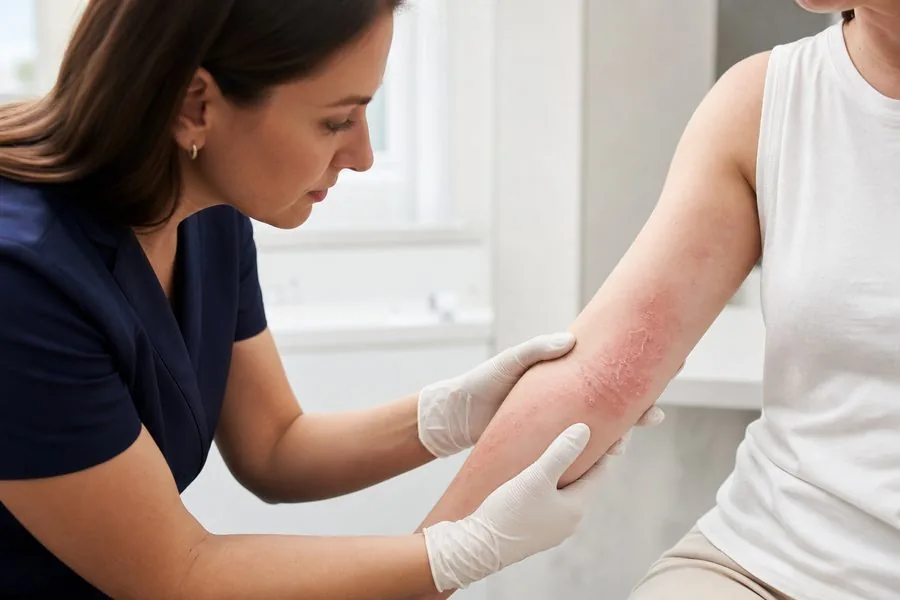
Eczema is a common inflammatory skin condition that leaves the skin dry, itchy, red or sore — flaring up at times and settling at others.
It happens because the skin's natural barrier doesn't hold moisture or keep out irritants as well as it should, so the skin becomes dry and easily inflamed. Eczema isn't contagious, and while it tends to be a long-term condition, most people can keep it well controlled with the right routine and treatment — especially when the triggers are identified and a clear plan is in place.
Symptoms of eczema.
Eczema tends to come and go in flares, and it can look different on different skin tones.
Why it happens.
Eczema usually comes from a combination of a sensitive skin barrier and triggers in your environment. It often runs in families and can flare for no obvious reason — but knowing your triggers helps you stay in control.
Don't wait for it to settle.
Early assessment helps you get the right treatment sooner. See a specialist if:
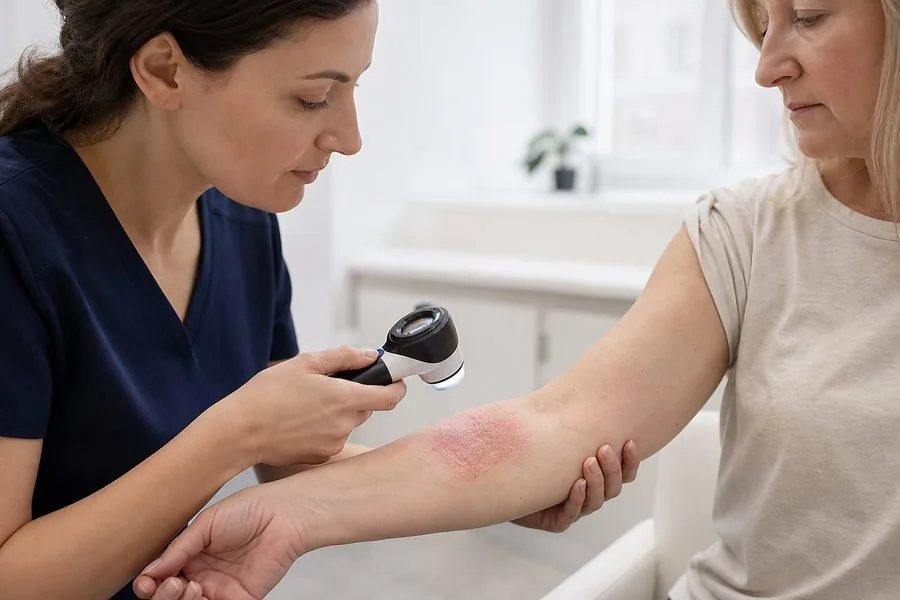

Diagnosed by a careful skin examination.
Eczema is usually diagnosed by a consultant dermatologist examining your skin and talking through your history, triggers and how the condition affects you — scans and blood tests aren't normally needed.
How eczema is treated.
There's no single cure for eczema, but it can be controlled well — and we start with the gentlest approach that keeps your skin comfortable.
The foundation of eczema care: the right moisturisers and a daily routine to repair and protect the skin barrier, plus advice on avoiding the triggers that set off flares.
Prescription creams and ointments to calm inflammation during a flare, with clear guidance on how and when to use them safely.
A personalised plan to keep eczema under control between flares, with follow-up to adjust treatment as your skin changes.
Seen in days — not months on a list.
A named specialist, not a junior — all the way through.
Every price published and confirmed in writing.
Seen privately, without the wait.
We bill major UK insurers directly.

Can eczema be cured? +
There's no cure, but eczema can usually be kept well controlled. With the right skincare routine, treatment for flares and an understanding of your triggers, most people are able to keep their skin comfortable and reduce how often flares happen.
Is eczema contagious? +
No. Eczema is an inflammatory skin condition, not an infection, so you can't catch it from someone else or pass it on. Skin that's been scratched can occasionally become infected, which is worth getting treated promptly.
How much does a dermatology appointment cost? +
An initial consultation with the consultant dermatologist is £200, or £250 for a child. If any further investigations are needed, the cost is confirmed individually after your assessment.
Related reading
Don't put up with it.
Book an assessment with a consultant and get a clear picture — and a plan.