
Nerve Conduction Study & EMG in Rossett
A nerve conduction study & EMG measure how well your nerves and muscles are working, helping to pin down the cause of numbness, tingling, weakness or pain — performed and read on-site by Dr Arvin Rodrigues, Consultant Clinical Neurophysiologist.
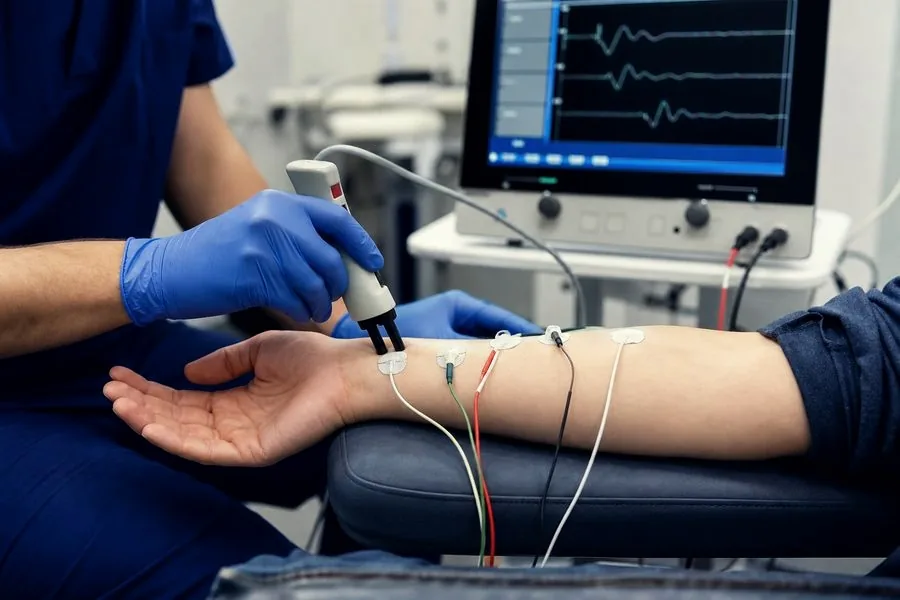
A nerve conduction study (NCS) and EMG (electromyography) are diagnostic tests — they look for the cause of your symptoms rather than treat them. The nerve conduction study sends small electrical pulses through sensors on the skin to measure how quickly and strongly your nerves carry signals; the EMG uses a fine needle to record the electrical activity inside a muscle.
Used together, they help to diagnose and confirm conditions such as carpal tunnel syndrome, other nerve entrapments like cubital tunnel, peripheral neuropathy, trapped nerves in the spine (radiculopathy) and muscle disorders. At Bridge House Clinic in Rossett the test is carried out and interpreted by Dr Arvin Rodrigues, an experienced Consultant Clinical Neurophysiologist.
Your clinician will confirm the most suitable method at your appointment.
Wash and dry the area being tested and skip moisturiser, lotion or oil on the day — products stop the surface sensors making good contact with the skin.
Choose clothes that let us reach your arms or legs easily, or be ready to change into a gown, so the limbs being studied are simple to access.
Let the clinic know if you take blood thinners, have a pacemaker or other implanted device, lymphoedema or a skin infection in the area, as this can affect how the test is done.
Why have your nerve study here

Dr Rodrigues goes over your symptoms and history and examines the area, so the study can be tailored to the question that needs answering.
Small sensors are placed on the skin and brief electrical pulses are used to measure how well your nerves carry signals. The pulses feel like a quick tap or tingle and are well tolerated.
Where needed, a fine needle is placed into one or more muscles to record their electrical activity at rest and as they work. This causes mild, brief discomfort only.
Because the same consultant performs and interprets the test, the findings are discussed with you and a written report follows, with the right treatment or onward referral arranged from there.
What it diagnoses
A nerve conduction study and EMG confirm conditions such as carpal tunnel syndrome by testing how the nerves are working. Read more about carpal tunnel and its symptoms.
Learn about carpal tunnel syndrome →
Know the cost before you book.
Every price is fixed and published upfront. A £50 deposit secures your appointment and comes off the total.
Book now→How much does a nerve conduction study & EMG cost? +
An upper-limb study is £450, a lower-limb study is £500, and a combined upper & lower limb study is £550. Each fee includes the test and Dr Rodrigues's specialist report.
Is this a treatment or a test? +
It is a diagnostic test, not a treatment. A nerve conduction study & EMG are used to find and confirm the cause of your symptoms; based on what they show, Dr Rodrigues can then arrange the right treatment or an onward referral.
Do I need a GP referral first? +
No. You can arrange the study with us directly. Many people bring a letter from a GP or specialist, and if you have one it helps focus the report, but it is not a requirement.
Does the test hurt? +
There is mild discomfort only. The nerve conduction pulses feel like a quick tap or tingle, and the EMG needle causes a brief, mild ache as it records the muscle. Most people tolerate the test well.
Which study do I need? +
It depends on where your symptoms are. Hand and arm symptoms such as suspected carpal tunnel usually need the upper-limb study, leg and foot symptoms the lower-limb study, and more widespread symptoms the combined study. Dr Rodrigues will confirm the right one on the day.
Book nerve conduction study & emg.
From £450, published upfront — with no GP referral needed.