
Hidradenitis Suppurativa
Painful, recurring lumps and abscesses in the skin folds — what hidradenitis suppurativa is, why it keeps coming back, and how a consultant dermatologist can help you get it under control.

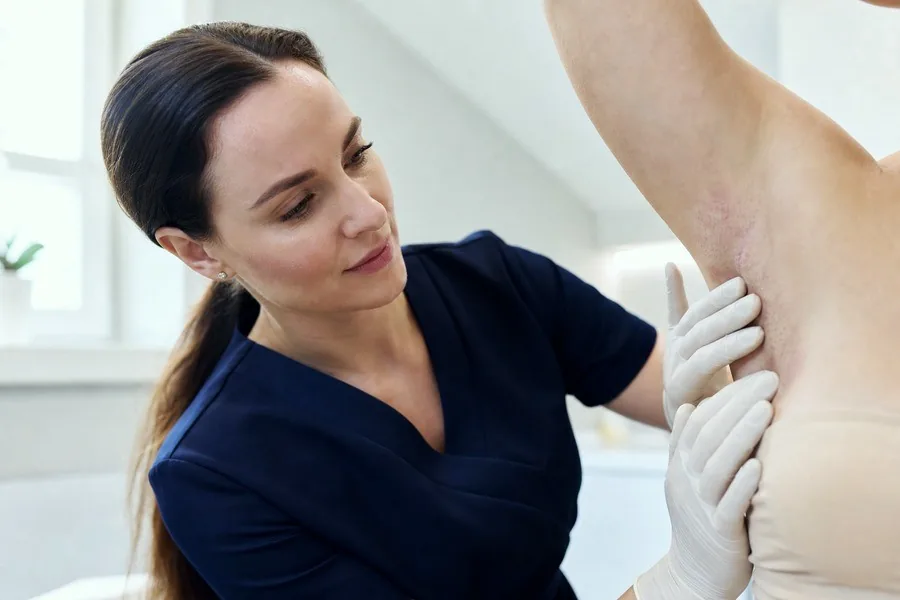
Hidradenitis suppurativa (HS) is a long-term inflammatory skin condition. It causes painful lumps, abscesses and, over time, tunnels and scarring.
It typically appears where skin rubs together, such as the armpits, groin, buttocks and under the breasts. HS tends to flare and settle in cycles, and it is often misread as ordinary recurrent boils for years before the right diagnosis is made. It cannot be cured outright, but with an accurate diagnosis and a tailored plan most people can reduce how often flares happen and how much they hurt. The earlier it is recognised, the more can be done to limit lasting scarring.
Symptoms of hidradenitis suppurativa.
HS is graded by how far it has progressed — from occasional single lumps to widespread tunnels and scarring — and symptoms can differ a lot between people.
Why it happens.
HS is driven by inflammation around blocked hair follicles in the skin folds — it is not an infection you have caught, and it is not caused by being unclean. Several factors make it more likely or set off flares.
Don't wait for it to settle.
Early assessment helps you get the right treatment sooner. See a specialist if:
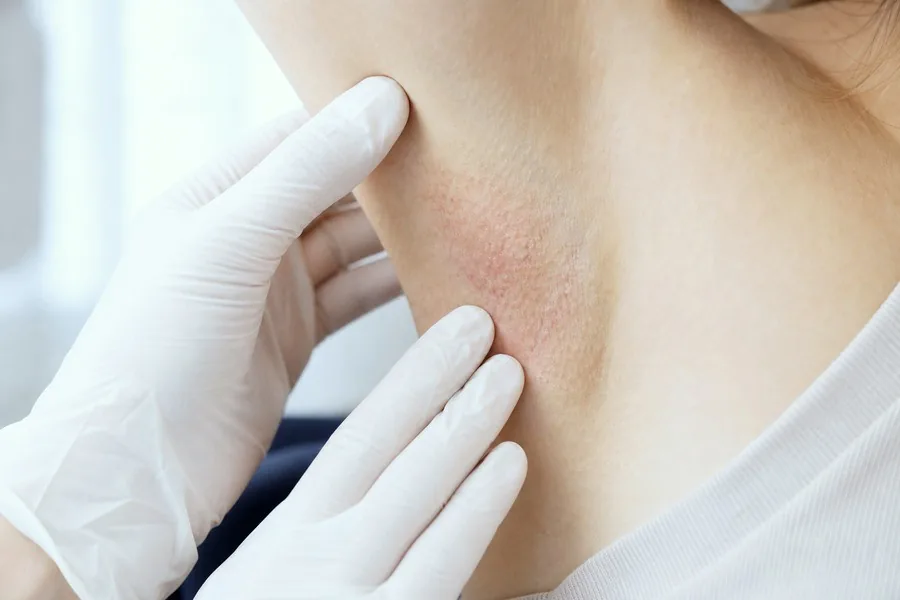

Diagnosed by examining the skin and its pattern.
HS is usually diagnosed clinically — there is no single blood test for it. Dr Dalia Alsaadi, Consultant Dermatologist, will examine the affected areas, ask about how often flares happen and where, and judge the stage you are at. She will rule out conditions that can mimic HS, such as ordinary boils or an infected cyst, and where a sample is helpful a small punch biopsy can be taken in clinic to confirm the picture before agreeing a plan with you.
How hidradenitis suppurativa is treated.
There is no one-size-fits-all treatment — the right approach depends on how advanced your HS is and how it affects you, and the plan is agreed with you at your consultation.
A full skin examination to confirm the diagnosis, gauge the stage of your HS and discuss everyday measures — such as stopping smoking and reducing friction — that genuinely help.
A small skin sample taken in clinic to confirm the diagnosis or rule out look-alike conditions, sent for laboratory analysis.
Prescribed treatment tailored to your HS — which may include topical or oral antibiotic courses, anti-inflammatory or hormonal options — agreed at your consultation, with the most suitable approach chosen for the stage you are at.
Reviewing how your skin is responding and adjusting the plan over time, so flares are managed for the longer term rather than treated one by one.
Seen in days — not months on a list.
A named specialist, not a junior — all the way through.
Every price published and confirmed in writing.
Seen privately, without the wait.
We bill major UK insurers directly.

Could my recurring boils actually be HS? +
Quite possibly. Boils that keep returning in the same skin folds — especially the armpits or groin — are the classic sign of HS, which is often mistaken for ordinary boils for years. A consultant dermatologist can confirm whether it is HS and explain what that means for treatment.
Can I book directly, or do I need my GP to send me? +
You can arrange to see Dr Dalia Alsaadi yourself — a letter from your GP isn't required. Bringing any history of previous flares or treatments along helps make the most of the appointment.
Is HS contagious, and is it caused by poor hygiene? +
No on both counts. HS is an inflammatory condition linked to blocked hair follicles — it isn't an infection you can pass on, and it has nothing to do with how clean you are. A diagnosis helps put those worries to rest and focus on what actually helps.
What will the assessment and treatment cost? +
An initial consultation with the consultant dermatologist is £200, and a follow-up is £120. A punch biopsy, if needed, is £100. Any prescribed treatment is tailored to you, and any further fees are confirmed clearly before you go ahead.
Will treatment make my HS go away for good? +
HS is a long-term condition that can't be cured outright, but it can usually be brought under much better control. Rather than promise it will disappear, the focus is on reducing how often flares come, easing the pain and limiting scarring — and reviewing your plan as your skin responds.
Don't put up with it.
Book an assessment with a consultant and get a clear picture — and a plan.