
EEG (Electroencephalography) near Chester & Wrexham
An EEG records the brain's electrical rhythms through small sensors placed on the scalp, giving your neurophysiologist an objective window onto how the brain is firing.
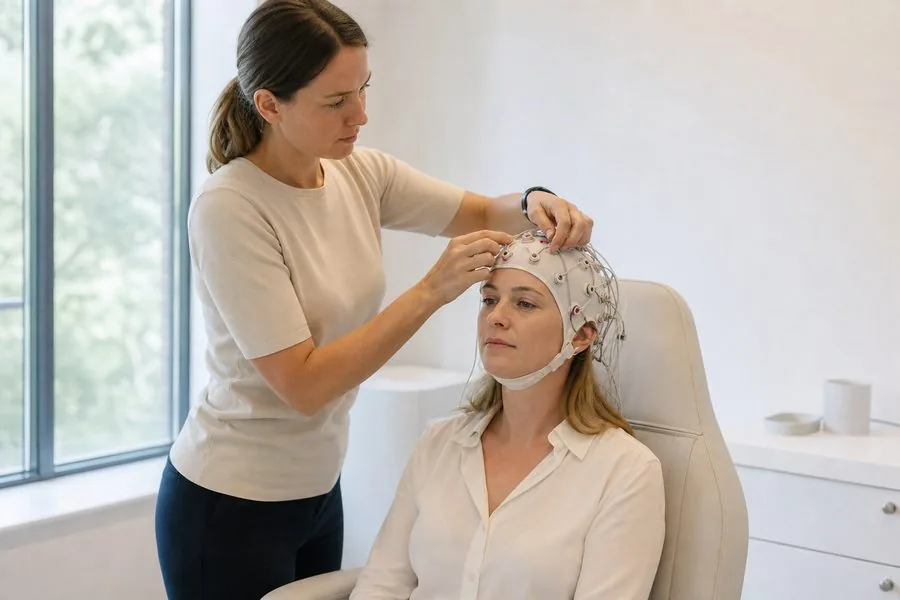
Electroencephalography (EEG) is a non-invasive recording of the tiny electrical signals produced by brain cells. A set of soft electrodes is positioned across the scalp and the pattern of activity is captured while you rest, breathe deeply and respond to bright light.
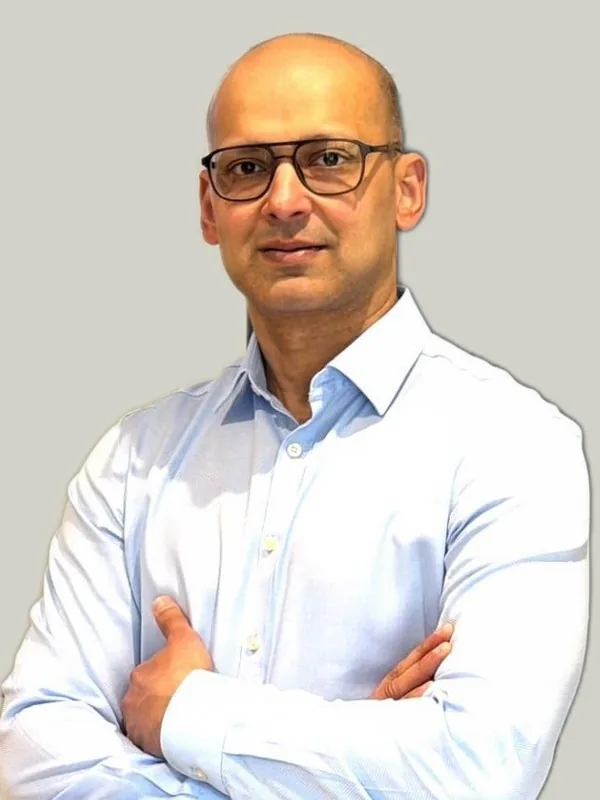
It is one of the most established tests for investigating blackouts, seizures, episodes of altered awareness and unexplained funny turns, and it carries no radiation and no injections. At Bridge House Clinic in Rossett the recording is read by Dr Arvin Rodrigues, a Consultant Clinical Neurophysiologist, so the trace and its interpretation come from the same specialist.
Wash your hair the night before or that morning, but skip oils, gel, wax, mousse or hairspray — product stops the scalp sensors making good contact.
Have a normal meal beforehand, as a low blood sugar can alter the trace. Don't suddenly cut out your usual tea or coffee unless we ask you to.
Let the clinic know if you have epilepsy, recent seizures or photosensitivity, and ask whether you should reduce sleep beforehand — some referrals call for a sleep-deprived recording.
Carry on with prescribed anti-seizure and other medicines as normal, and bring a note of what you take so it can be recorded alongside the trace.
Where you have your EEG matters

Your scalp is measured and marked, then a set of small electrodes is fixed in position with a mild paste. There are no needles and the placement itself does not hurt.
You sit or lie comfortably with your eyes opening and closing on request while the baseline rhythm of your brain is recorded.
You will be asked to breathe deeply for a few minutes and to look towards a flashing light. These tasks gently provoke patterns that can reveal a tendency to abnormal activity.
The electrodes lift off and the paste washes out of your hair easily at home. Dr Rodrigues reviews the trace and issues a written report for you and, with your consent, your referring clinician.
Know the cost before you book.
Every price is fixed and published upfront. A £50 deposit secures your appointment and comes off the total.
Book now→How much does an EEG cost at Bridge House Clinic? +
An EEG, including the recording and Dr Rodrigues's written report, is £550.
Do I have to be referred by my GP first? +
No. You can arrange an EEG with us directly. Many people do bring a letter from a GP or neurologist, and if you have one it helps us focus the report, but it is not a requirement.
Will the EEG hurt or give me an electric shock? +
No. The electrodes only listen to the activity your own brain produces; nothing passes any current into you, and there are no needles or radiation involved.
What is an EEG actually used to look for? +
It is mainly used to investigate seizures and suspected epilepsy, blackouts, episodes of confusion or altered awareness and other unexplained neurological events, by showing how your brain's electrical rhythms behave.
Can I drive home and get back to my day afterwards? +
For a standard recording, yes — there is no sedation, so you can wash the paste out at home and carry on as normal. If you were asked to come in sleep-deprived, arrange for someone else to drive.
Book eeg (electroencephalography).
From £550, published upfront — with no GP referral needed.