What a normal mole looks like
Moles are very common, and most of us have somewhere between 10 and 40 of them. A typical mole is small, round or oval, with a smooth, even edge and a single, fairly uniform colour — usually brown, tan or pink. Many appear in childhood and the teenage years, and it's normal for them to darken a little with sun exposure or during pregnancy.
Reassuringly, the great majority of moles never cause any trouble. The point of knowing what's normal is simply so you notice when one of yours starts to behave differently from the others — not so you scrutinise every spot with worry.
The ABCDE guide — a prompt, not a diagnosis
Dermatologists often share a simple memory aid called ABCDE. It's a helpful prompt for deciding whether a mole is worth showing to a professional — but it is not a way to diagnose yourself, and a mole doesn't have to tick every box to be worth checking.
The five points are Asymmetry, Border, Colour, Diameter and Evolving — in other words, a mole where one half doesn't match the other, the edges look ragged, the colour is uneven, it's grown larger than about 6mm, or it has been changing over weeks or months. Smaller moles can change too, so the last point matters most. Use it gently: if one or more of these applies, that's a good reason to book a check, not a reason to assume the worst.
Changes that are worth a closer look
The single most useful thing to pay attention to is change. A mole that has stayed the same for years is far less of a concern than one that has started to look or feel different recently. Trust your instinct — if a spot keeps drawing your eye, that's worth acting on.
It also helps to know what's genuinely normal. Moles can itch occasionally or be knocked and heal, and that alone isn't a cause for alarm. What's more telling is a clear, ongoing change rather than a one-off.
When to seek urgent advice
Most mole concerns are not urgent, and booking a routine appointment is the right pace. But a few signs deserve quicker attention. If a mole or any skin lesion is bleeding repeatedly, weeping, or has an open area that won't heal, contact your GP or call NHS 111 for advice on how soon to be seen.
If you ever feel genuinely unwell alongside a skin change, or you're simply unsure how worried to be, it's always reasonable to ask. Seeking advice early is sensible, not an overreaction — and getting a clear picture usually brings real peace of mind.
Why an in-person check matters
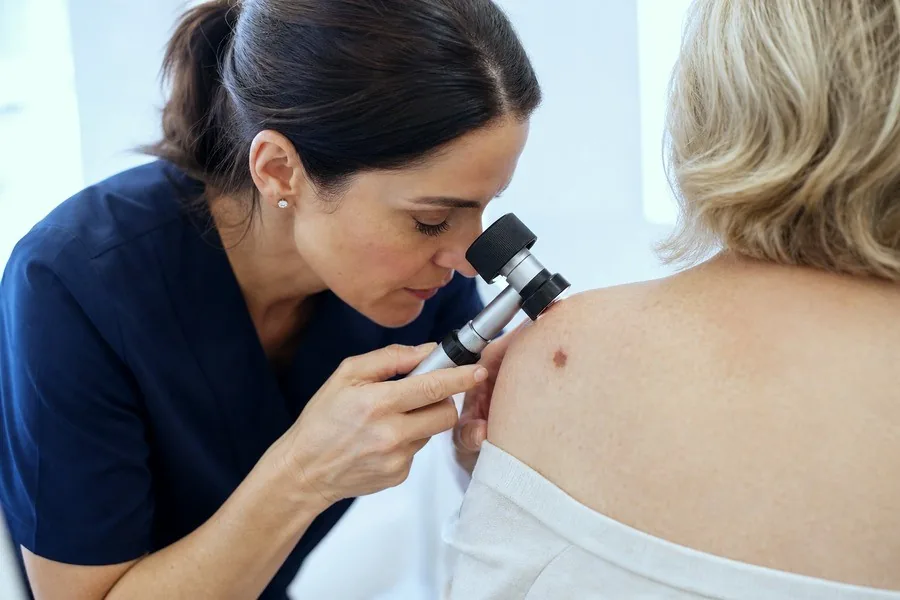
A photo on a phone — or an online tool — can't reliably tell a harmless mole from one that needs treating. A proper assessment means examining the mole closely, often with a dermatoscope, and looking at it in the context of your skin and history. That's why we won't diagnose from an image, and why an in-person appointment is the dependable next step.
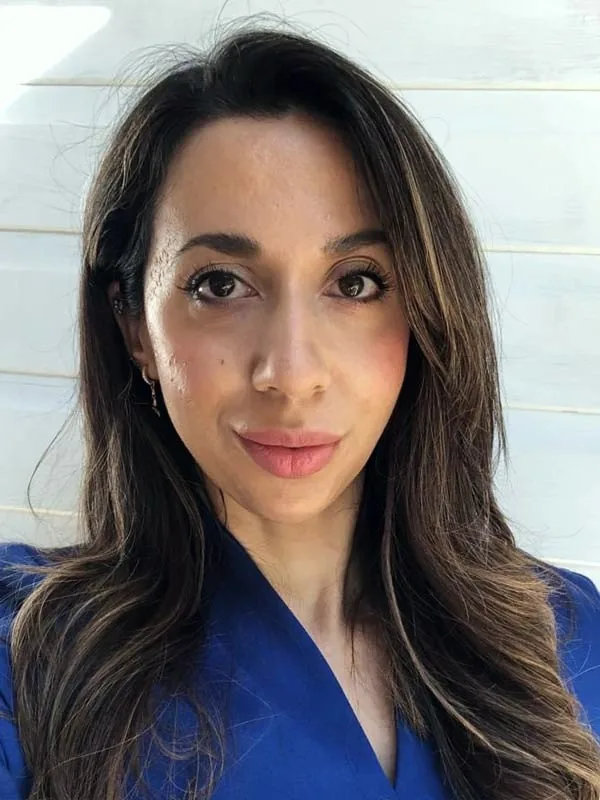
At Bridge House Clinic in Rossett, a mole check is carried out by Dr Dalia Alsaadi, Consultant Dermatologist. If a lesion looks suspicious, she can arrange to remove it and send it for laboratory analysis (histology), so you get a clear picture rather than ongoing uncertainty. You'll leave with an explanation in plain language and a plan you can act on.
Common questions
Can you tell if a mole is dangerous from a photo? +
No — a photo or an online checker can't reliably distinguish a harmless mole from one that needs treating. A proper assessment involves examining the mole closely in person, often with a dermatoscope, alongside your skin history. That's why we ask you to come in for an examination rather than sending an image, so any decision is based on a thorough look.
What happens if my mole needs removing? +
If Dr Alsaadi feels a lesion looks suspicious, she can arrange to remove it (excision) and send the tissue to a laboratory for histology, which gives a clear picture. At Bridge House Clinic, excision of a mole with histology is £850, and excision of a lesion suspected to be a skin cancer (SCC/BCC) is £950 — both include the histology, your follow-up and wound care, so the price is clear from the start.
How quickly can I be seen? +
We know that worrying about a mole is stressful, so we aim to see you without the long waits associated with NHS dermatology — usually the same or the following week. Your appointment is with a named Consultant Dermatologist, not a nurse or aesthetician, and the initial skin consultation is £200.