
Gout — Symptoms, Causes & Treatment
A joint that turns hot, red and agonising almost overnight — often the big toe. What gout is, why it keeps coming back, and how a rheumatologist can help you stop the attacks.
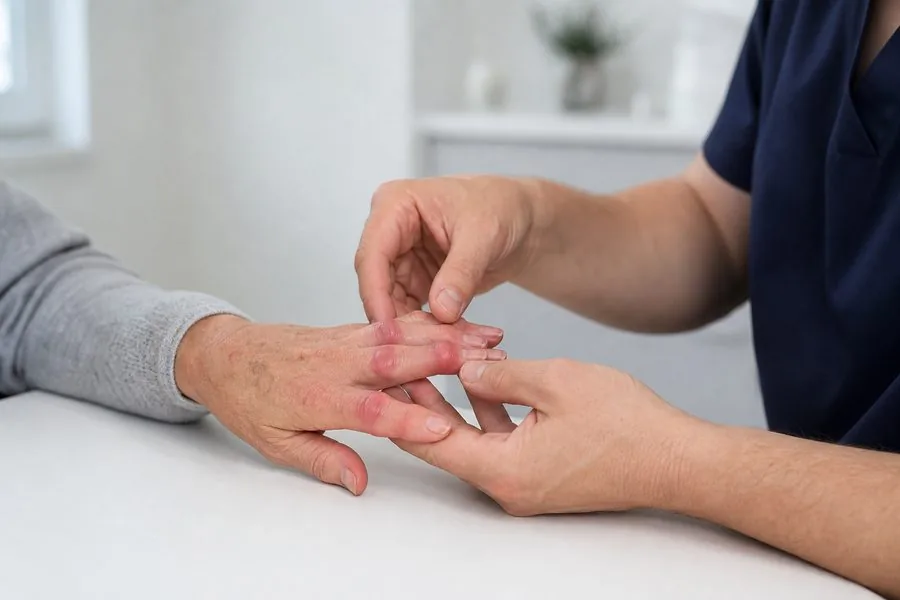
Gout is a type of inflammatory arthritis caused by too much uric acid in the blood, which can form needle-like crystals inside a joint and trigger sudden, intense inflammation.
An attack (a flare) usually builds over a few hours and settles within one to two weeks, but gout tends to return if the uric acid level stays high. Treated properly, flares can be calmed quickly and future attacks — and lasting joint damage — largely prevented.
Symptoms of gout.
Attacks often start at night or in the early hours, and the first one is usually in a single joint.
Why it happens.
Gout happens when uric acid builds up faster than the kidneys can clear it. Some things raise the level or make crystals more likely to form.
Don't wait for it to settle.
Early assessment helps you get the right treatment sooner. See a specialist if:
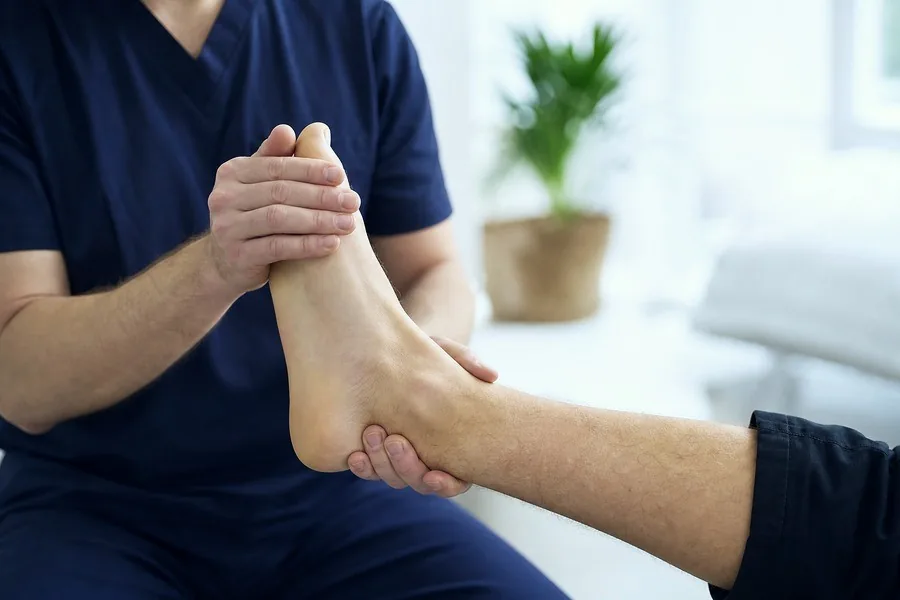

Confirmed by a consultant rheumatologist.
Dr Raghuvanshi takes a careful history of your attacks, examines the affected joints and checks for tophi. A blood test for uric acid, along with kidney function, is the usual next step, and further tests are arranged when the picture isn't clear-cut. Getting the diagnosis right is the foundation for choosing between treating flares and preventing them.
How gout is treated.
Treatment has two jobs: calm the current flare, then stop the next one.
Diagnosis, a plan for managing flares and a decision on long-term uric-acid-lowering treatment, with advice on diet, alcohol and weight.
A steroid injection into a single inflamed joint, such as a toe or finger joint, to settle a flare when tablets aren't suitable or aren't working.
For a flare in a bigger joint such as the knee or ankle; the exact fee depends on the joint.
Gout care led by Dr Raghuvanshi, clinical lead for rheumatology at Wrexham Maelor Hospital.
A plan for the attack in front of you and for keeping uric acid down long term.
A steroid injection into an inflamed joint can be arranged without waiting for another referral.
Book the consultation yourself; bring any blood results you already have.
Consultation £220; small-joint injection £350, larger joints from £450.

What is gout? +
Gout is a form of arthritis caused by a build-up of uric acid in the blood. When the level stays high, crystals can form in and around a joint, and the body reacts with sudden, painful inflammation — a gout flare.
What causes gout? +
Uric acid is made when the body breaks down substances called purines, found in our own cells and in foods such as red meat, offal and some seafood. Gout develops when the kidneys don't clear uric acid quickly enough or the body makes too much. Genes, alcohol (especially beer), sugary drinks, extra weight, kidney problems and some water tablets all play a part.
What does gout feel like? +
Most people describe a sudden, crushing or burning pain in one joint, often waking them at night. The joint swells, turns red and is so tender that even light pressure hurts. The big toe is the most common place, but gout can also affect the ankle, knee, wrist, fingers and elbow.
How long does a gout attack last? +
A flare is usually at its worst in the first day or two and settles over about a week, sometimes up to two weeks. Starting treatment early in a flare shortens it. Without long-term treatment, attacks tend to come back and can become more frequent.
Can gout affect women? +
Yes. Gout is more common in men, but women's risk rises after the menopause, when oestrogen's protective effect on uric acid levels falls. Women with kidney disease or who take certain diuretics are also at higher risk.
Can gout be cured? +
There's no one-off cure, but gout is one of the most controllable forms of arthritis. Keeping uric acid below the target level — usually with a daily medicine plus lifestyle changes — dissolves crystals over time and can stop flares altogether.
Don't put up with it.
Book an assessment with a consultant and get a clear picture — and a plan.