
Plantar Fasciitis — Symptoms, Causes & Treatment
Sharp heel pain with your first steps in the morning that eases as you get going, then returns after standing. What plantar fasciitis is and how physiotherapy gets you walking comfortably again.
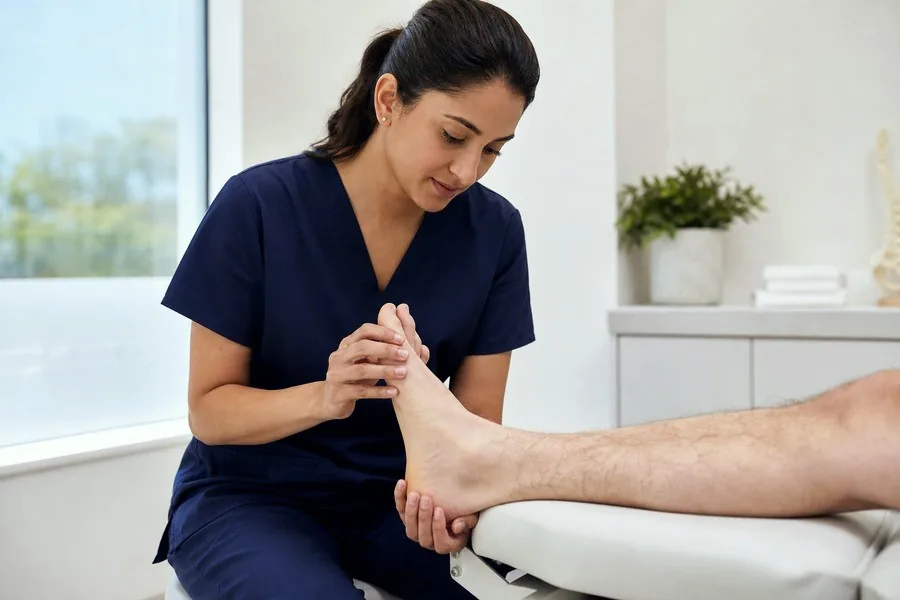
Plantar fasciitis is irritation of the plantar fascia — the thick band of tissue that runs along the sole from the heel to the toes and supports the arch of the foot.
It's the most common cause of heel pain in adults. The fascia becomes overloaded and sore where it attaches to the heel bone. Most people recover fully with simple measures and targeted exercise, although it can take several months.
Symptoms of plantar fasciitis.
The classic sign is pain that's worst with the first steps out of bed.
Why it happens.
Plantar fasciitis is usually a load problem: the fascia is asked to absorb more stress than it can cope with.
Don't wait for it to settle.
Early assessment helps you get the right treatment sooner. See a specialist if:
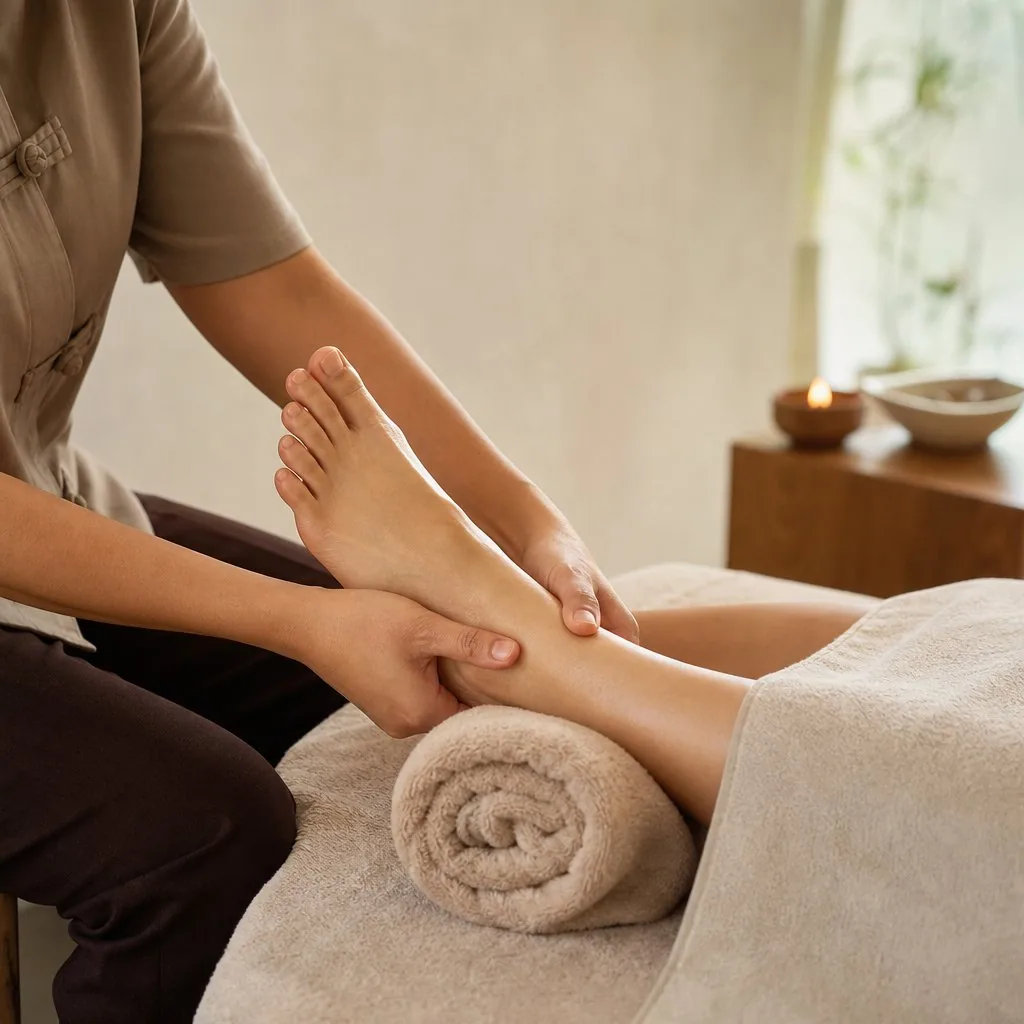

Diagnosed by a physiotherapy assessment.
Your physiotherapist asks when the pain is worst and what you do on your feet, examines the heel and arch, and checks calf flexibility, foot posture and the way you walk. Plantar fasciitis is a clinical diagnosis — scans are rarely needed unless the picture is unusual.
How plantar fasciitis is treated.
Most people improve with a few months of the right exercise and changes to daily load.
Assessment, hands-on treatment and a clear plan for reducing strain on the heel. 30, 45 or 60 minutes.
Progressive rehabilitation over several weeks, adjusting the plan as your foot improves.
Calf and plantar fascia stretches plus strengthening for the foot and lower leg, done at home.
Supportive taping to offload the fascia, and practical guidance on shoes and activity.
Your physio looks at calves, footwear and training load to find what's driving the pain.
A short, progressive programme built around your day.
Supportive taping to ease pain while the fascia settles.
Book physiotherapy directly with our chartered team.
Sessions £40–£60; courses of five £180–£250.


What is plantar fasciitis? +
It's pain and irritation of the plantar fascia, the strong band of tissue under the foot that supports your arch. Overload leads to soreness where it attaches to the heel bone, which is why the heel hurts most.
What causes plantar fasciitis? +
Usually a combination of load and tightness: long hours standing, a jump in running or walking, tight calf muscles, unsupportive shoes or extra body weight. Often there isn't one single cause.
How long does plantar fasciitis last? +
Most people improve over several months with simple measures and exercise. It can last a year or longer if the underlying load isn't addressed, which is why a structured plan helps.
Can plantar fasciitis be cured in one week? +
Unfortunately not. The tissue needs time to adapt, so quick fixes rarely work. Pain can ease noticeably within a few weeks once you reduce strain and start the right exercises, but full recovery usually takes longer.
Can I keep running with plantar fasciitis? +
Sometimes, with changes. Reducing distance and intensity, avoiding hills and speed work, and building back gradually may let you keep going. If running makes the pain worse the next morning, it's a sign to cut back — your physiotherapist can plan a safe return.
What does plantar fasciitis feel like? +
A sharp, stabbing or deep bruise-like pain under the heel, worst on the first steps in the morning or after sitting, easing as you move and returning after long periods on your feet.
Don't put up with it.
Book an assessment with a consultant and get a clear picture — and a plan.