
Tennis Elbow — Symptoms, Causes & Treatment
Pain on the outside of the elbow that flares when you grip, lift a kettle or turn a door handle. What tennis elbow is, how long it lasts, and how physiotherapy helps it heal.
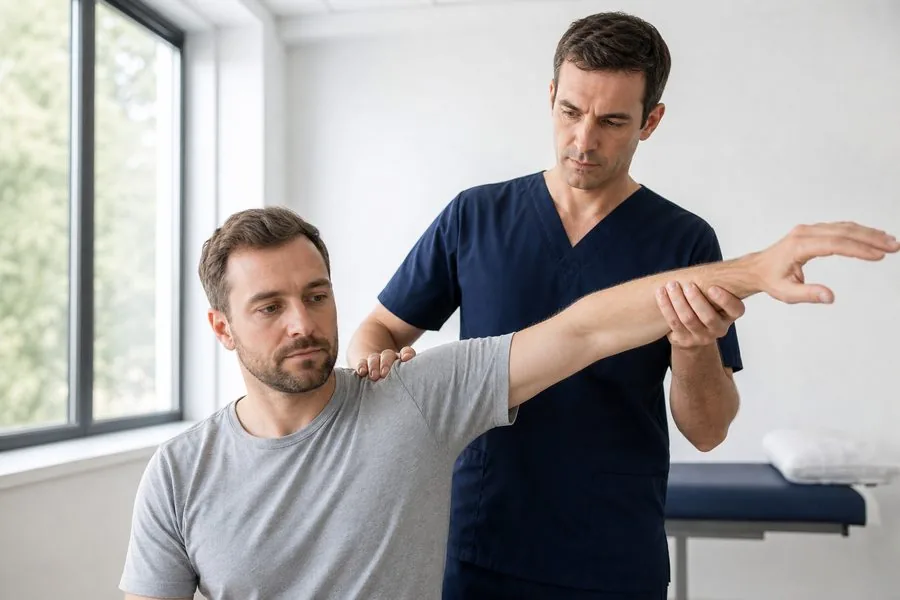
Tennis elbow is an overload injury of the tendons that attach the forearm muscles to the bony bump on the outside of the elbow (the lateral epicondyle).
Despite the name, most people who get it don't play tennis — any repeated gripping or wrist movement can strain the tendon faster than it can repair. It usually gets better with the right mix of rest from aggravating tasks and gradually loading the tendon again.
Symptoms of tennis elbow.
The pain usually builds gradually over weeks rather than starting with a single injury.
Why it happens.
Tennis elbow develops when the forearm tendons are asked to do more than they're used to, repeatedly.
Don't wait for it to settle.
Early assessment helps you get the right treatment sooner. See a specialist if:
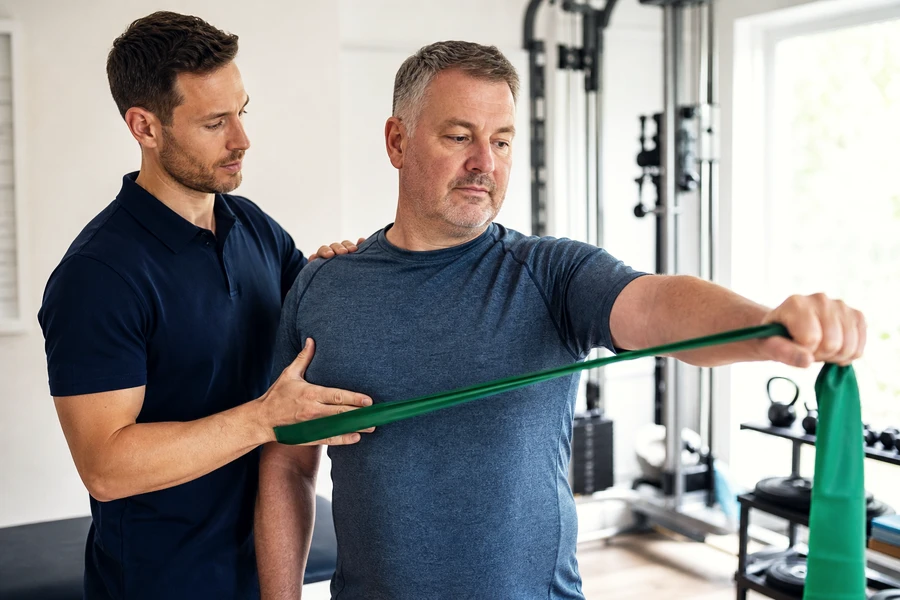

Diagnosed by a physiotherapy assessment.
Your physiotherapist asks about your work, sport and symptoms, then examines the elbow, presses on the tendon and tests your grip and wrist movements against resistance. Tennis elbow is diagnosed clinically — scans are rarely needed. The assessment also checks your neck and shoulder, which can contribute to arm pain.
How tennis elbow is treated.
Treatment aims to calm the tendon down, then make it stronger than before.
Assessment and hands-on treatment, with advice on adjusting the tasks that aggravate the tendon. 30, 45 or 60 minutes.
A block of sessions for progressive rehabilitation — the most reliable way to build tendon strength back up.
A home programme of gradually heavier forearm and grip exercises, reviewed and progressed at each visit.
Offered within a session where your physiotherapist thinks they'll help settle pain.
Naveen Ramakrishnan has more than 13 years in musculoskeletal physiotherapy.
A loading plan that moves forward as your tendon gets stronger.
Manual therapy, taping and dry needling where they help.
No GP referral needed for physiotherapy.
Sessions £40–£60; courses of five £180–£250.


What is tennis elbow? +
Tennis elbow, or lateral epicondylitis, is pain where the forearm tendons attach to the outside of the elbow. Repeated strain causes small changes in the tendon, so gripping and lifting become painful. It's very common and affects far more non-players than tennis players.
How long does tennis elbow last? +
Many cases settle within a few months, but it can drag on for a year or more if the tendon keeps being overloaded. A structured exercise programme and changing the activities that aggravate it usually shorten recovery.
How do you treat tennis elbow? +
The mainstay is relative rest from painful tasks plus exercises that gradually load the tendon until it's strong enough for your work or sport. Physiotherapy adds hands-on treatment, advice on grip and technique, and can include taping or dry needling. Simple pain relief and ice can ease flare-ups.
What causes tennis elbow? +
Repeating the same gripping or wrist-extending movement — using tools, typing, gardening, playing racket sports — strains the tendon faster than it can recover. A sudden jump in activity, such as a few days of decorating, is a common trigger.
Should I wear a tennis elbow brace? +
A forearm strap worn just below the elbow can take some strain off the tendon and ease pain during activity. It helps some people but isn't a treatment on its own; your physiotherapist can show you how and when to use one.
Do I need a GP referral for physiotherapy? +
No — you can book directly. Sessions are £40 for 30 minutes, £50 for 45 minutes or £60 for 60 minutes.
Don't put up with it.
Book an assessment with a consultant and get a clear picture — and a plan.