
Nasal Polyps — Symptoms, Causes & Treatment
A blocked nose that never clears and a sense of smell that's slowly disappeared can be caused by nasal polyps. What they are, how they're found, and the treatments that shrink them.
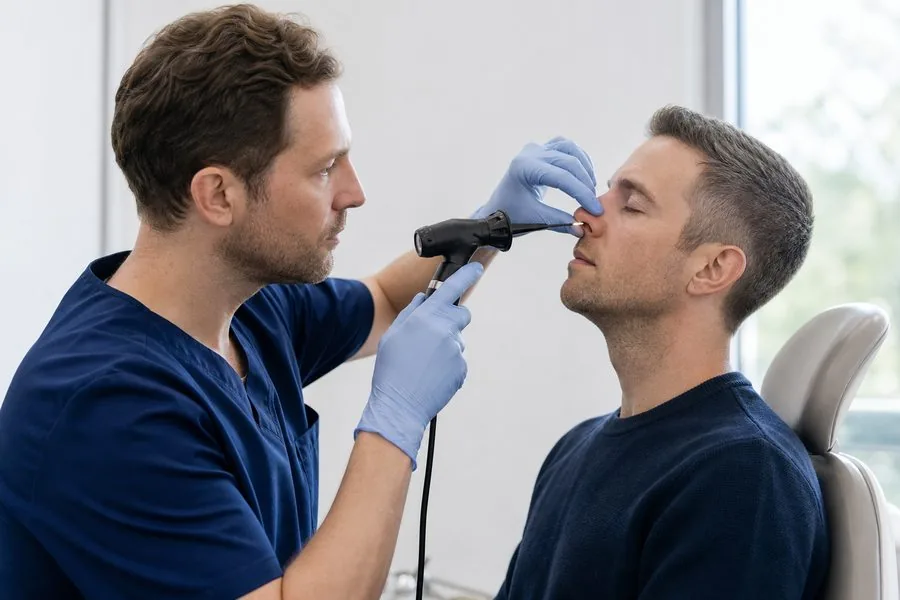
Nasal polyps are soft, painless, non-cancerous swellings that grow from the lining of the nose and sinuses, usually on both sides, as a result of long-term inflammation.
They're closely linked to chronic sinusitis, asthma and some allergies. Small polyps may cause no trouble, but larger ones block the nose and dull the sense of smell. Steroid sprays or drops shrink them in many people; surgery is reserved for those who don't respond.
Symptoms of nasal polyps.
Symptoms build slowly, so many people don't notice how blocked they've become.
Why it happens.
Polyps grow where the nasal lining has been inflamed for a long time. Several conditions make this more likely.
Don't wait for it to settle.
Early assessment helps you get the right treatment sooner. See a specialist if:
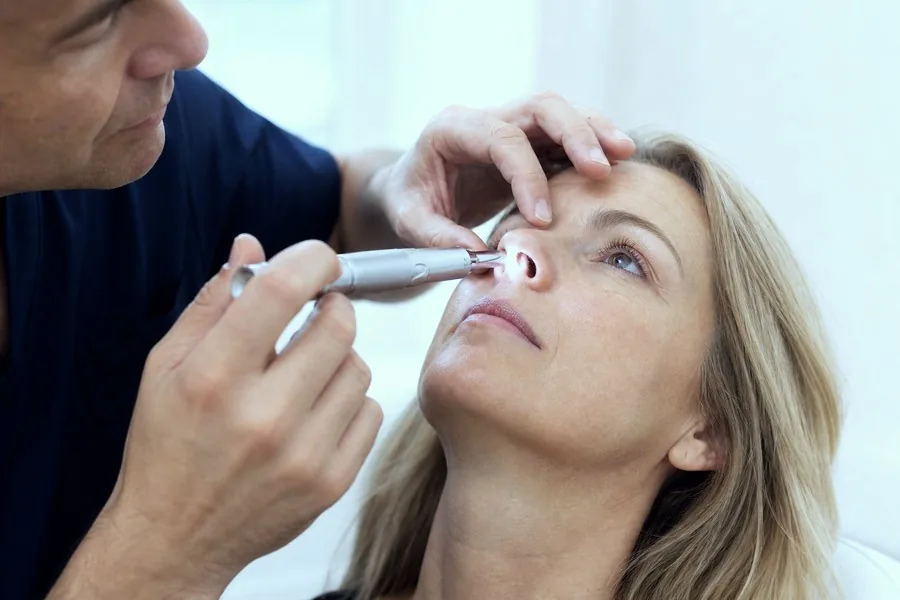

Seen directly with nasal endoscopy.
Mr Jones examines the inside of your nose and, where it's needed, passes a slim camera (nasal endoscopy) to see polyps that sit too far back to view otherwise. This shows how large they are and how much of the nose they block, which guides treatment. A scan is arranged only if surgery is being considered or the picture is unclear.
How nasal polyps is treated.
Most polyps are treated with medicines first; surgery is considered only if those don't work.
A full assessment of your nasal symptoms, smell and any asthma or allergy history, with a treatment plan.
A camera examination of the nose and sinuses at your visit, to see the polyps and their size.
Steroid nasal sprays or drops, saline rinses and sometimes a short course of steroid tablets to shrink the polyps — tailored at your consultation.
If polyps don't shrink with medical treatment, Mr Jones discusses endoscopic sinus surgery and where it can be done; it isn't carried out at the clinic.
Mr Huw Jones assesses your nose himself, adults and children alike.
Nasal endoscopy can be done at the same appointment when it's needed.
A clear trial of sprays or drops first, with surgery discussed only if they fail.
Book an ENT consultation yourself.
Consultation £200, endoscopic examination £390.

What are nasal polyps? +
Nasal polyps are soft, fleshy, teardrop-shaped swellings that grow from the inflamed lining of the nose and sinuses. They're not cancerous and usually affect both sides. They can be as small as a pea or large enough to block the nose completely.
What causes nasal polyps? +
They result from long-standing inflammation of the nasal lining. They're more common in people with chronic sinusitis, asthma, hay fever or sensitivity to aspirin and similar painkillers, but often there's no single identifiable trigger.
How do I know if I have nasal polyps? +
A blocked nose on both sides that doesn't clear, a fading sense of smell, a constant drip down the back of the throat and snoring are the typical signs. Only an examination can confirm them — larger polyps may be visible at the nostril, but most are seen with a nasal endoscope.
Are nasal polyps dangerous or cancerous? +
Nasal polyps themselves are benign. A swelling on only one side of the nose, or one that bleeds, is less likely to be a simple polyp and should be checked promptly by an ENT surgeon.
Do nasal polyps go away on their own? +
They rarely disappear without treatment, but steroid sprays or drops shrink them in many people. Polyps can come back, even after surgery, so ongoing use of a steroid spray is often recommended.
Can I remove nasal polyps myself? +
No — please don't try. Pulling or cutting at the inside of the nose can cause bleeding and infection, and what looks like a polyp may be something else. Effective treatments are available through an ENT specialist.
Don't put up with it.
Book an assessment with a consultant and get a clear picture — and a plan.