
Palpitations
A racing, pounding, fluttering or skipping heartbeat — what palpitations are, why they happen, and how a consultant cardiologist can find out whether your heart rhythm needs attention.
Palpitations are when you suddenly become aware of your own heartbeat — it may feel as though it is racing, pounding, fluttering or skipping a beat.
They are very common and often harmless, triggered by things like caffeine, stress or exercise. Sometimes they point to a heart rhythm problem that is worth treating. If palpitations come with chest pain, severe breathlessness, fainting or feeling very unwell, call 999 — do not wait for a private appointment.
Symptoms of palpitations.
Palpitations can last seconds or longer, and may come and go. With chest pain, fainting or severe breathlessness, call 999.
Why it happens.
Most palpitations have an everyday trigger. Less often, they come from a heart rhythm problem that needs a closer look.
Don't wait for it to settle.
Early assessment helps you get the right treatment sooner. See a specialist if:


Catching the rhythm behind your palpitations.
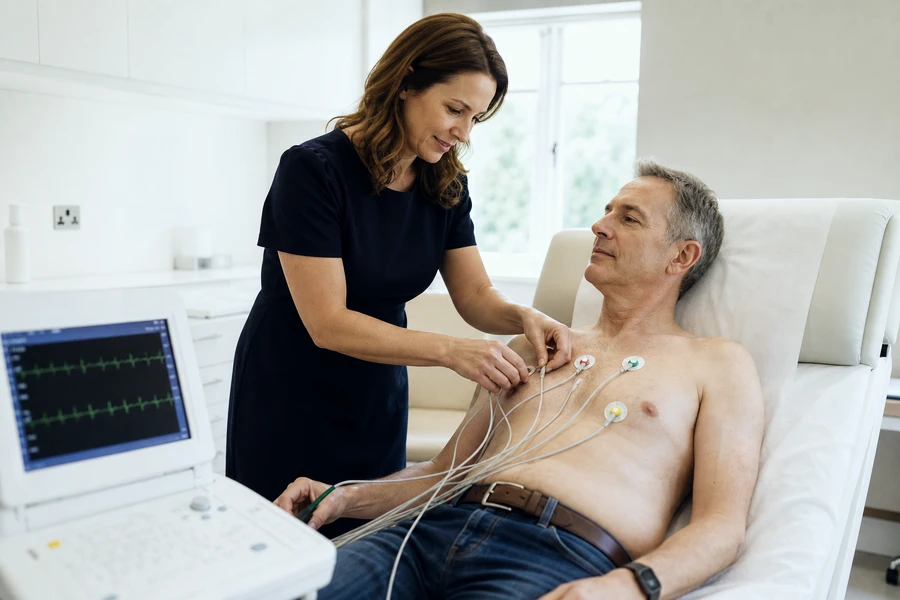
Dr Khalid Khan starts with a full consultation about when your palpitations happen and how they feel, plus an examination. Because palpitations often come and go, an ECG (heart trace) and ambulatory monitoring — wearing a small recorder for a day or longer — may be arranged as part of your care, with an echocardiogram (ultrasound of the heart) where it's helpful. The fee for any test is confirmed at your consultation before you go ahead.
What an ECG involves →How palpitations is treated.
Treatment depends on the cause — many people need reassurance and simple changes; others need medication or further investigation.
A full assessment with Dr Khalid Khan of your symptoms, triggers and heart risk, with a clear explanation and a plan — £250.
Tests chosen for your symptoms and arranged as part of your care, so the rhythm can be captured when it happens. The fee for each test is confirmed at your consultation.
A review of your results and the plan — lifestyle changes, medication where it's needed, or referral for further investigation — £190.
Seen in days — not months on a list.
A named specialist, not a junior — all the way through.
Every price published and confirmed in writing.
Seen privately, without the wait.
We bill major UK insurers directly.

Do I need a referral? +
No — you can book a cardiology consultation directly, without a GP referral.
Can you do the tests on the same day? +
Tests such as an ECG, echocardiogram or monitoring are arranged as part of your care, based on what the consultation finds. If you'd like to know what may be possible on the day, please ask when you book and we'll confirm.
Will you write to my GP? +
Yes — with your consent, we write to your GP with the findings and the plan, so your care is joined up.
What does it cost? +
A new-patient consultation with Dr Khalid Khan is £250 (40 minutes) and a follow-up is £190 (20 minutes). The fee for any test is confirmed at your consultation before you go ahead.
Don't put up with it.
Book an assessment with a consultant and get a clear picture — and a plan.