Do carpal tunnel exercises work?
Carpal tunnel syndrome happens when the median nerve is squeezed as it passes through a narrow channel at the front of the wrist. Exercises cannot widen that channel, but they may help the nerve and the tendons beside it move more freely, and they encourage you to break up long spells of gripping or holding the wrist bent.
For people with mild, on-and-off tingling, that can be enough to take the edge off symptoms, particularly when combined with a splint at night and a few changes to how the hands are used. Studies of these exercises have been small and their results mixed, so it is fair to call them a sensible, low-risk thing to try rather than a proven treatment.
What exercises will not do is undo significant compression. When the nerve has been under pressure for a long time, persisting with stretches for months can simply delay a treatment that would actually relieve it.
Five carpal tunnel stretches and hand exercises to try
These movements should feel like a mild stretch, never a sharp pull. Move slowly, breathe normally and keep your shoulders relaxed. If you already have a diagnosis from a clinician, follow any specific advice they have given you first.
How often to do exercises for carpal tunnel, and when to stop
Little and often tends to work better than one long session. A common approach is five to ten repetitions of each glide, two or three times a day, plus a short stretch during breaks from typing or gripping. Give it four to six weeks before judging whether it is making a difference.
Stop an exercise if it brings on more tingling, numbness or pain, or if symptoms are worse afterwards rather than better. Nerve gliding is meant to be gentle; pushing harder does not speed things up and can irritate an already sensitive nerve.
Keep a simple note of how often you wake at night and how your fingers feel in the morning. That gives you, and anyone who later assesses you, a clearer picture than memory alone.
Desk, keyboard and mouse habits that take pressure off the wrist
Exercises do most good when the rest of the day is not working against them. Sustained bending of the wrist, either up or down, raises pressure inside the carpal tunnel, so the aim is to keep the wrist roughly straight for as much of the time as possible.
Where physiotherapy fits in
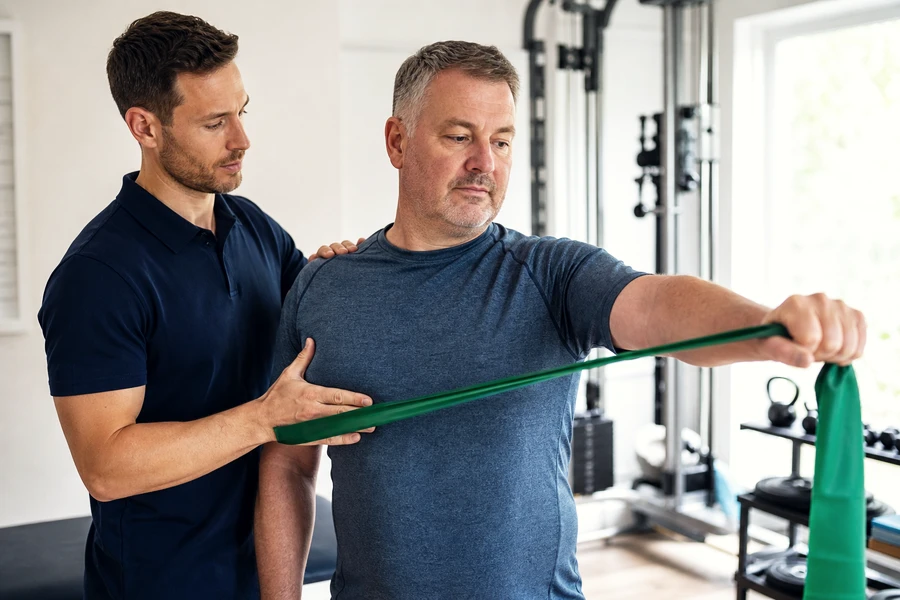
If you are unsure whether you are doing the exercises correctly, or symptoms are not settling, a physiotherapist can check your technique, look at your neck, shoulder and posture, and tailor a programme to your work and hobbies. They can also advise on night splints and on how to pace activities that set off symptoms.
At Bridge House Clinic, physiotherapy is provided by HCPC-registered physiotherapists, with sessions from £40. Physiotherapy suits mild symptoms and recovery after carpal tunnel surgery; it is not a substitute for testing when there are signs of more significant nerve compression.
When exercises are not enough
Some symptoms suggest the nerve needs more than stretching. Constant numbness rather than tingling that comes and goes, dropping things, difficulty with buttons or pinching, and visible thinning of the muscle at the base of the thumb are all reasons to stop relying on exercises and get the nerve measured. A nerve conduction study with Dr Arvin Rodrigues, Consultant Clinical Neurophysiologist, shows how severe the compression is, and that guides whether a splint, an injection or a release operation is the right next step.
This article is general information and not a diagnosis. If your hand symptoms are getting worse, see your GP or call NHS 111. Call 999 straight away for sudden weakness or numbness of the face, arm or leg, slurred speech or confusion, as these can be signs of a stroke.
Common questions
Is there a carpal tunnel syndrome workout? +
There is no special workout. Heavy gripping, weights and push-ups on a bent wrist can make symptoms worse. Gentle gliding exercises and stretches spread through the day are more helpful than one hard session.
Can carpal tunnel stretches make it worse? +
They can if they are done too forcefully or held too long. A stretch should feel mild. If tingling or numbness increases during or after an exercise, stop it and seek advice.
How long do exercises for carpal tunnel take to help? +
If they are going to help, most people notice a change within four to six weeks, usually alongside a night splint. If nothing has improved by then, a nerve conduction study is a sensible next step.
Should I do carpal tunnel hand exercises after surgery? +
Gentle finger movement is usually encouraged soon after a release, but follow the instructions from your surgeon and hand therapist about what to do and when.
How much is physiotherapy at the clinic? +
Physiotherapy sessions are from £40, with HCPC-registered physiotherapists. You do not need a GP referral to book.