How medical expert witness fees in the UK are set
There is no national scale for private expert fees. Each expert sets their own, usually reflecting the specialty, the volume of records, whether an examination and tests are needed, and the complexity of the questions.
Publishing fees helps solicitors and claims handlers budget and compare at the outset. The figures below are the clinic's fees for neurophysiology reports by Dr Arvin Rodrigues.
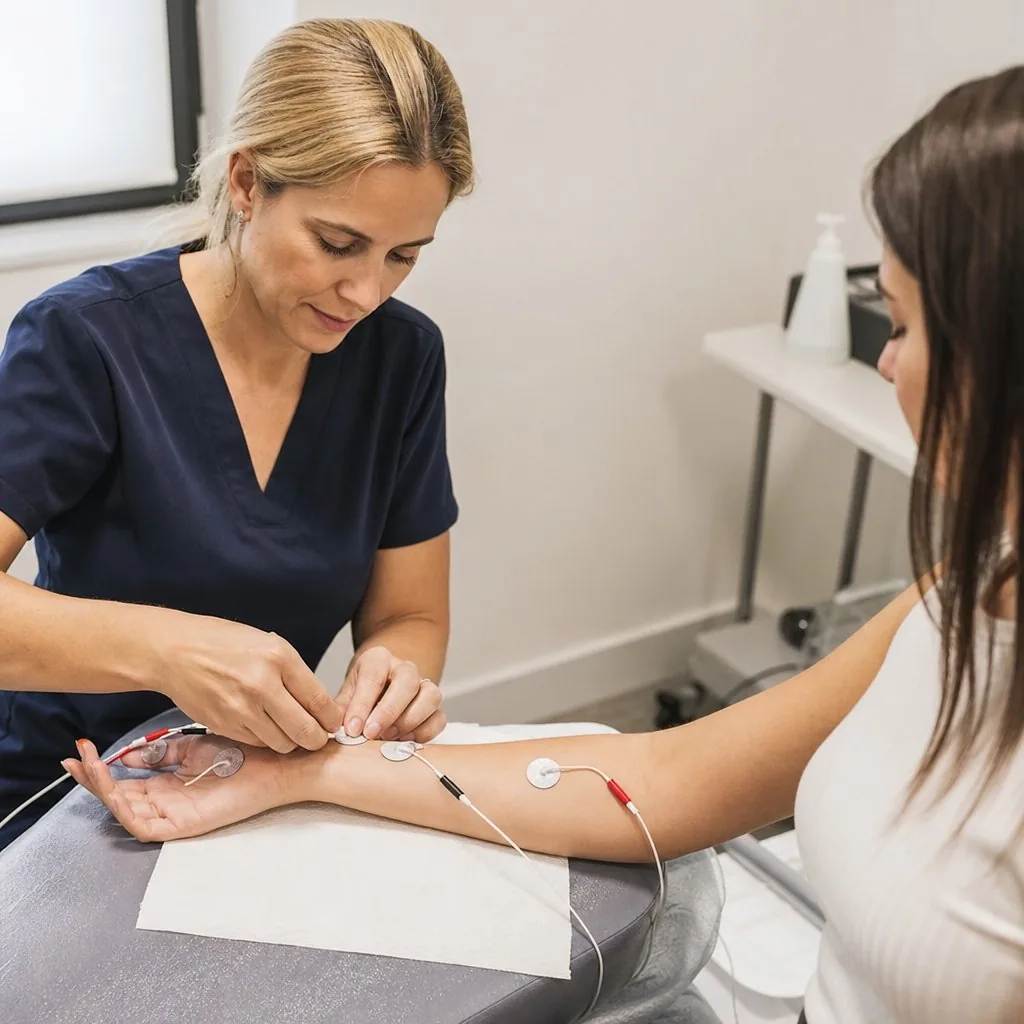
A neurophysiology report fee also reflects that the claimant is examined and tested in clinic, which takes consulting room time and equipment, and that the report sets out the full measured data alongside the opinion.
How much does a medical expert witness cost?
These are the fees as published. Anything outside them is agreed in writing before work begins.
If the records are extensive, it is worth mentioning their likely volume when you enquire, since review beyond the included two hours is charged by the hour.
Who pays expert witness fees?
The party that instructs the expert is responsible for paying them under the fee agreement. Where an expert is instructed as a single joint expert, the fee is usually shared between the parties in the way they agree or the court directs.
Whether one side can recover the cost from the other at the end of the case is a matter of legal costs, decided under the court's rules. Claimants who are unsure how their own case is funded should ask their solicitor, who will explain the funding arrangements that apply.
The fee is for the work done, not for any particular conclusion. That independence follows from the Part 35 duty to the court and applies to claimant and defendant instructions alike.
What the report fee includes
The report fee covers the core work: two hours' review of the medical records, the appointment in Rossett with history and examination, nerve conduction studies and EMG where relevant, and the written report with its statement of truth and Part 35 declaration.
The examination and the tests are carried out by the same consultant who writes the report, so there is no separate charge for a second clinician to perform the study.
The written report includes the full nerve conduction and EMG measurements with the reference values used, so the figures behind the opinion are available to every reader without a separate request.
A desktop (records-only) report involves no examination or testing. It is priced at £2,000 and includes two hours of records review; any additional time spent reviewing clinical records is invoiced at £400 per hour.
What costs extra
Some work depends on how the case develops and cannot be priced in advance. Records review beyond the included two hours is charged at £400 per hour. Conferences with counsel are charged as listed above. Other later work, such as written questions going beyond clarification, joint statements with the other side's expert, or court attendance, is charged as set out in the fee agreement.
Joint statements and expert discussions are often directed by the court where both sides have instructed experts in the same specialty. The time they take depends on how far apart the reports are, which is why they are priced in the fee agreement rather than in a fixed list.
For a conference in person, first-class rail travel is added to the daily fee. Telephone conferences are charged by the hour, which often suits shorter discussions.
Cancellation and payment terms
An appointment reserved for a claimant cannot easily be refilled at short notice, so cancellation fees apply. Payment timing and any other terms are agreed in writing before the instruction is accepted. The tier depends on how much notice the clinic receives, so contacting the clinic as early as possible keeps the charge lower and allows the appointment to be rebooked.
This article is general information and not legal or financial advice. Claimants with new or worsening symptoms should see their GP or call NHS 111, and call 999 for sudden weakness or numbness of the face, arm or leg, slurred speech or confusion.
Common questions
Are the fees the same for claimants and defendants? +
Yes. The published fees apply whichever side instructs.
Is the nerve test charged separately? +
Not for a direct instruction: the examination and tests are part of the report. Agency-instructed NCS & EMG has its own listed fees.
When is payment due? +
Payment timing is agreed in the fee agreement before instruction.
Who pays for a single joint expert? +
Usually the parties share the fee, in the proportions they agree or the court directs, as set out in the letter of instruction.
Are hand and wrist surgical reports covered by these fees? +
No. Hand and wrist injury expert reports by Miss Kasia Studnicka-Perkin are priced separately, with fees on request.
Can a claimant pay the fee directly? +
Instructions normally come through a solicitor or agency. Claimants should ask their solicitor how the funding arrangements in their case work.