Medico-legal reporting in a nerve or muscle case
A report in a nerve injury case has a narrower task than a general medical summary. It has to answer specific questions about whether a nerve or muscle is affected, where, how severely and since when, and it has to show its working so that a judge, the other side and their expert can follow the reasoning.
Our separate article on what a medico-legal report is covers who writes them and why they are needed. This one looks inside the document itself and at the timeline, which are the two questions solicitors and claims handlers most often ask before instructing.
The structure of an expert witness report
Expert witness reports vary in length, but a neurophysiology report usually follows a consistent order. Each heading has a purpose, and the order lets a reader move from the evidence to the conclusions without gaps.
The history records the claimant's own account and is kept separate from the records summary, so that any differences between the two are visible rather than smoothed over. The opinion section then explains which findings support each conclusion and which point the other way.
Why the raw nerve conduction and EMG data are included
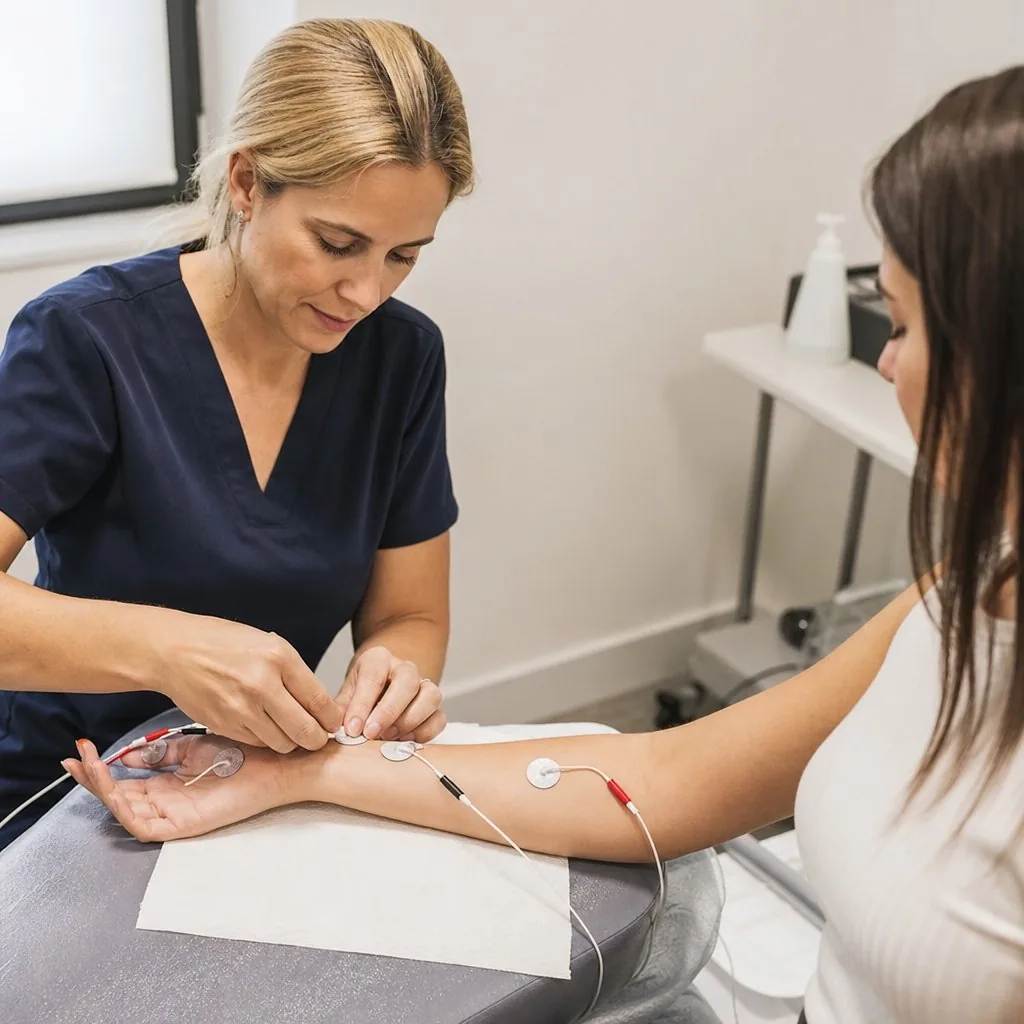
A conclusion such as 'moderate median nerve compression at the wrist' is only as useful as the figures behind it. Including the measured latencies, amplitudes and conduction velocities, alongside the reference values used, lets another neurophysiologist check the interpretation rather than take it on trust.
It also helps where the case turns on change over time. If an earlier study exists, the two sets of figures can be compared directly. Where the experts disagree, having the data in the report makes it easier to identify whether the disagreement is about the numbers or about what they mean.
How long does an expert witness report take?
At Bridge House Clinic the claimant is seen in Rossett, and the history, examination and nerve tests are carried out by Dr Arvin Rodrigues, the same consultant who then writes the report. The report usually follows within 6–8 weeks of the appointment.
The overall timetable for the case is set by the court's directions, so it helps to tell the clinic about any date you are working to when you first enquire. Allow time before the appointment for the fee agreement and for the records to be gathered and sent.
Once the report is ready it is sent to the instructing party; for a single joint expert, it goes to both parties at the same time.
What can slow a report down
Most delays come from missing information rather than from the writing. An opinion on causation or onset may depend on a GP entry or an operation note, and the report cannot responsibly be finalised without it.
Sending a complete, paginated bundle at the time of instruction is the most useful thing an instructing party can do to keep the report on schedule. If something important is missing, the clinic will say so promptly rather than wait until the report is due.
After the report: questions, corrections and joint statements
Once a report has been served, the other side may put written questions to clarify it, and the expert answers them within the same duty to the court. A report can be amended to correct factual errors or to reflect new evidence, but not to change an opinion because it is unwelcome to the instructing party.
Where each side has its own expert, the court often directs the experts to discuss the issues and prepare a joint statement setting out where they agree and disagree, with reasons. A conference with counsel may also be arranged. All of this is described in the fee agreement before the work starts.
This article is general information and not legal advice or a diagnosis. Claimants whose symptoms change while a claim is under way should see their GP or call NHS 111, and call 999 for sudden facial, arm or leg weakness or numbness, slurred speech or confusion, which may mean a stroke.
Common questions
Is a neurologist medico legal report the same as a neurophysiology report? +
Not quite. A neurologist's report usually focuses on diagnosis and management of neurological disease, while a neurophysiology report is built around measured nerve and muscle function. Some cases use both.
Can the instructing solicitor ask for changes to the report? +
Factual corrections and clarifications are appropriate. The opinion itself belongs to the expert and is only revised if the evidence supports a different view.
Does the report cover future treatment? +
Where it falls within neurophysiology, yes, for example the likely course of a nerve injury. Questions outside that expertise are identified as such so that the right specialist can address them.
Are nerve tests always part of the report? +
In most nerve injury instructions they are central, because they give objective measurements. A desktop records-only report is possible where an examination is not required or not possible.
Why does the report include a range of opinion? +
Where reasonable experts could reach different conclusions on the same evidence, the court needs to know that. The report sets out the range and explains where within it the expert's own view sits, and why.
Who receives the finished report? +
It is sent to the instructing party, or to both parties for a single joint expert. Disclosure to the court and the other side follows the court's directions.