Do cubital tunnel exercises work?
For mild cubital tunnel syndrome, where tingling comes and goes and strength is normal, a combination of nerve gliding, posture changes and avoiding pressure often helps symptoms settle over weeks to a few months. The exercises are thought to help the nerve move more freely through the elbow and reduce its sensitivity.
It is worth being honest about the limits. There is no good evidence that exercises undo nerve damage that is already established, and they are not a replacement for testing when symptoms are constant or the hand is weakening. Think of them as one part of a package, with the changes to sleeping and daily habits doing much of the work.
Ulnar nerve entrapment exercises: gentle nerve glides
Nerve gliding, sometimes called flossing, moves the nerve gently back and forth along its path without stretching it hard. The aim is a mild pulling sensation at most, never strong tingling. Do each movement slowly, a few times in a row, once or twice a day, and stop if symptoms build.
Start with the arm by your side and the elbow straight, palm facing forward. Slowly bend the wrist back and then forward again, keeping the elbow straight. If that is comfortable, add a gentle tilt of the head away from the arm and then back towards it, so that the nerve slides rather than tightens.
Exercises for ulnar nerve compression: the 'OK sign' glide
This glide is often taught by physiotherapists, but it is progressed only if the simpler glides are comfortable. Make an 'OK' sign by touching the tip of your thumb to the tip of your index finger. Turn the hand over and bring it up towards your face, so that the circle made by your fingers sits around your eye like a mask, with the fingers resting along your cheek and the elbow pointing out to the side.
Hold for a second or two, then lower the arm. This position bends the elbow and wrist together, so it puts more load on the nerve than the first exercise. If it brings on tingling, go back to the easier glides and ask a physiotherapist to adjust the programme.
Sleeping, splints and elbow supports
Most people sleep with their elbows tightly bent, often with a hand under the pillow or cheek. That posture, held for hours, is a common reason for waking with a numb little finger. Keeping the elbow straighter overnight gives the nerve a break.
A simple first step is to wrap a towel loosely around the front of the elbow and secure it with tape, so that bending fully becomes awkward. A soft padded elbow splint does the same job more comfortably. Elbow supports worn during the day can protect against leaning, but rigid braces are rarely needed.
Small changes at work and at home
Daytime habits keep the nerve irritated even when exercises are done faithfully. Look for times when the elbow is bent for long periods or resting on a hard edge.
When to stop exercising and get tested
Exercises are a reasonable first approach for mild, intermittent symptoms, but some signs mean the nerve should be measured rather than managed blindly. A nerve conduction study shows how badly the ulnar nerve is affected and whether conservative care is still the right path.
Physiotherapy at the clinic, and when to seek urgent help
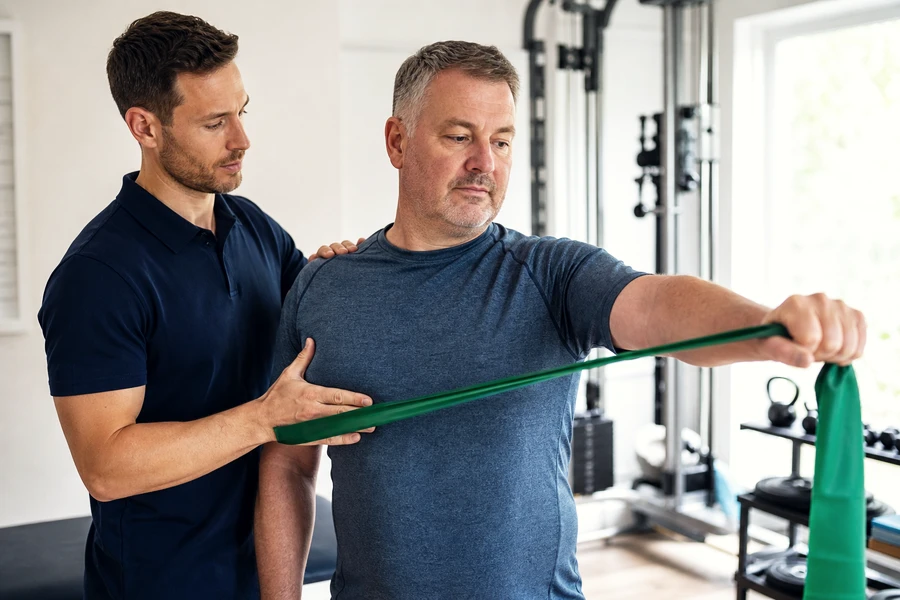
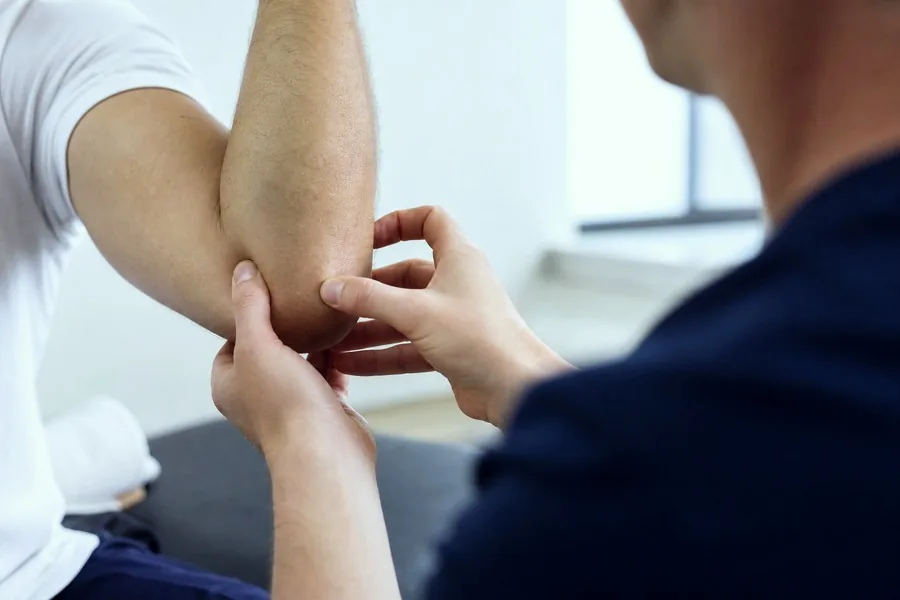
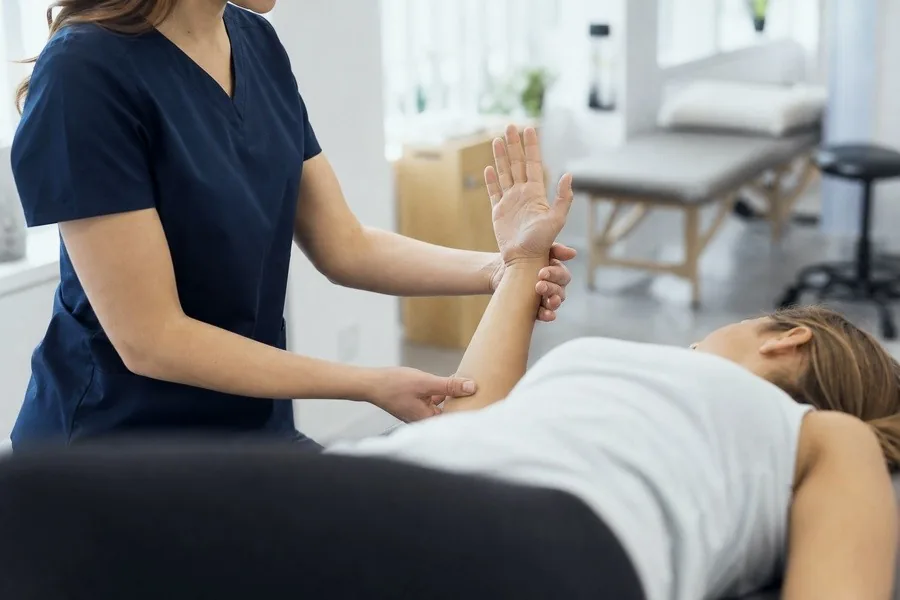
The clinic's HCPC-registered physiotherapists can check your technique, tailor the glides to how irritable your nerve is, and look at posture and workstation set-up. Physiotherapy sessions from £40. If testing is needed, Dr Arvin Rodrigues can carry out a nerve conduction study in the same building.
This article is general information and not a diagnosis. If your symptoms are worsening, see your GP or call NHS 111. Call 999 straight away for sudden weakness or numbness of the face, arm or leg, slurred speech or confusion, as these can be signs of a stroke.
Common questions
What is nerve gliding? +
Nerve gliding is a set of slow, controlled movements that slide a nerve along its path through the joints. It aims to reduce sensitivity and improve movement without stretching the nerve hard.
Should I wear a splint for cubital tunnel during the day? +
Usually night use is the priority, as that is when the elbow stays bent for longest. A padded elbow support in the day can help if you tend to lean on the elbow.
Can cubital tunnel exercises make it worse? +
They can irritate the nerve if done too forcefully or too often. Keep movements gentle, stop if tingling builds, and ask a physiotherapist to adjust them.
Do cubital tunnel splints need to be custom-made? +
Usually not. A soft padded splint or a towel wrapped around the elbow is enough for most people. A physiotherapist can advise if a standard option does not fit.
How long should I try exercises before getting tested? +
If there is no clear improvement after about six weeks, or numbness becomes constant or the hand weakens, a nerve conduction study is sensible.