When is a nerve conduction test on the legs and feet needed?
Testing is usually suggested when symptoms point to a nerve rather than a joint or circulation problem. The feet are often where nerve problems show first, because the nerves to the toes are the longest in the body.
A doctor's examination often narrows the question, and the test then confirms or rules out the suspected cause.
Neuropathy symptoms in feet and legs
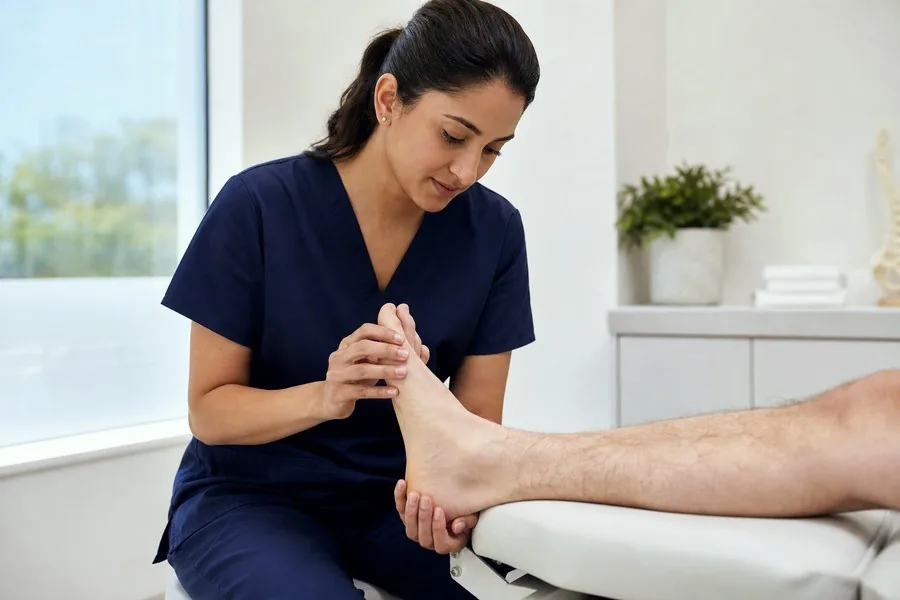
Peripheral neuropathy usually starts in the toes of both feet and slowly spreads up towards the ankles and shins. People describe numbness, feeling as though they are walking on cotton wool or pebbles, burning at night, or cold feet that are not cold to touch. Balance can become less steady in the dark, when the eyes cannot make up for reduced feeling.
Symptoms on one side only, or a sudden change, point more towards a single nerve or a nerve root, and the test pattern is then quite different.
EMG test on legs: what is measured
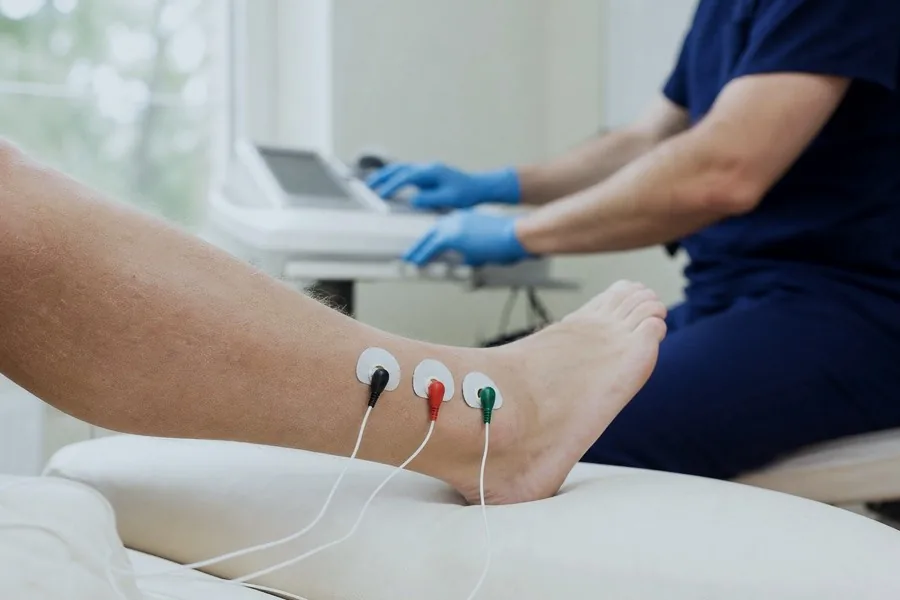
The nerve study usually includes the peroneal nerve, which runs around the outside of the knee and lifts the foot; the tibial nerve, which runs behind the knee to the sole; and the sural nerve, a sensory nerve along the outer side of the foot that is often the first to show a neuropathy.
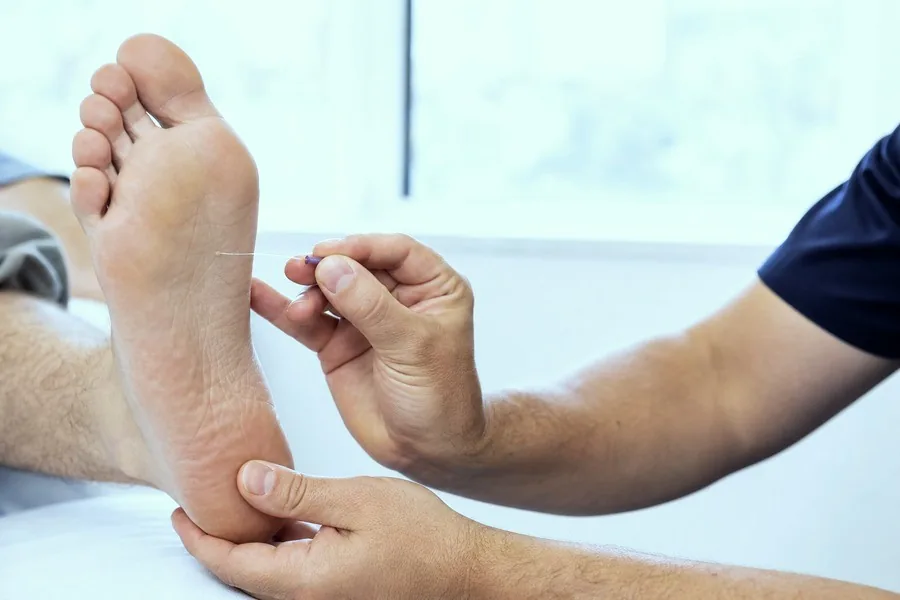
EMG uses a fine needle to sample a few leg muscles, for example in the shin and calf. Comparing muscles supplied by different nerves and roots helps show whether the problem lies at the knee, the ankle, the lower back or throughout the nerves.
How it feels, how long it takes and how to prepare
The pulses feel like brief taps or flicks along the leg and foot, and the EMG needle causes a sharp scratch and a mild ache. Testing usually takes between 30 minutes and an hour, after a short consultation and examination.
Cold feet slow nerve signals and can make results look worse than they are, so keep your feet warm on the way and arrive a little early on a cold day. Avoid creams or lotion on the legs and feet, and wear loose trousers that roll up above the knee or bring shorts. Tell the clinic beforehand if you take blood-thinning medication or have swelling or a skin problem in the legs.
What the results show, and their limits
The report describes whether there is a nerve problem, whether it is a single trapped nerve, a nerve root or a widespread neuropathy, and how severe it appears. It also shows whether the neuropathy mainly affects the insulating coating of the nerves or the fibres themselves, which helps your GP or specialist look for the cause.
The test has limits. Small-fibre neuropathy, which affects the very thin fibres carrying pain and temperature, can cause burning feet while standard nerve conduction results are normal. A normal result in that situation does not dismiss the symptoms; other tests may be considered.
Consultation + nerve conduction study & EMG — upper limbs £450, lower limbs £500, upper and lower limbs £550. Many people with foot symptoms have the legs tested; both are tested together when the arms are also affected.
Getting help quickly
This article is general information and not a diagnosis. If leg or foot symptoms are getting worse, see your GP or call NHS 111. People with diabetes and numb feet should keep up regular foot checks, as small injuries may go unnoticed.
Call 999 or go to A&E for new numbness around the saddle area, loss of bladder or bowel control, or weakness in both legs, which can signal pressure on the nerves at the base of the spine. Call 999 too for sudden weakness or numbness of the face, arm or leg with slurred speech or confusion, which may be a stroke.
Common questions
Can a nerve test show if sciatica is coming from the back? +
EMG can help show whether a nerve root in the lower back is affected and which one. Scans show the disc and the space around the nerve; EMG shows how the nerve is working. The two are often considered together.
Is the EMG test on the legs painful? +
Most people find it uncomfortable rather than painful: a sharp scratch as the fine needle goes in and an ache while it is in the muscle, settling once it is removed.
Can a nerve conduction test be normal with neuropathy? +
Yes. Small-fibre neuropathy affects nerve fibres too thin for standard nerve conduction studies to measure, so results can be normal even when feet burn. Your doctor may suggest other tests.
How much is a nerve conduction test on the legs? +
Consultation + nerve conduction study & EMG for the lower limbs is £500, or £550 for upper and lower limbs together. No GP referral is needed.
What causes nerve damage in the legs? +
Common causes include diabetes, B12 deficiency, heavy alcohol use, pressure on a nerve at the knee or ankle, and a nerve root irritated in the lower back. Sometimes no cause is found.