What is an EEG?
Brain cells communicate using tiny electrical signals. Together, millions of them produce rhythms that can be detected on the surface of the scalp. An EEG, short for electroencephalogram, records these rhythms as wavy lines that a specialist can read.
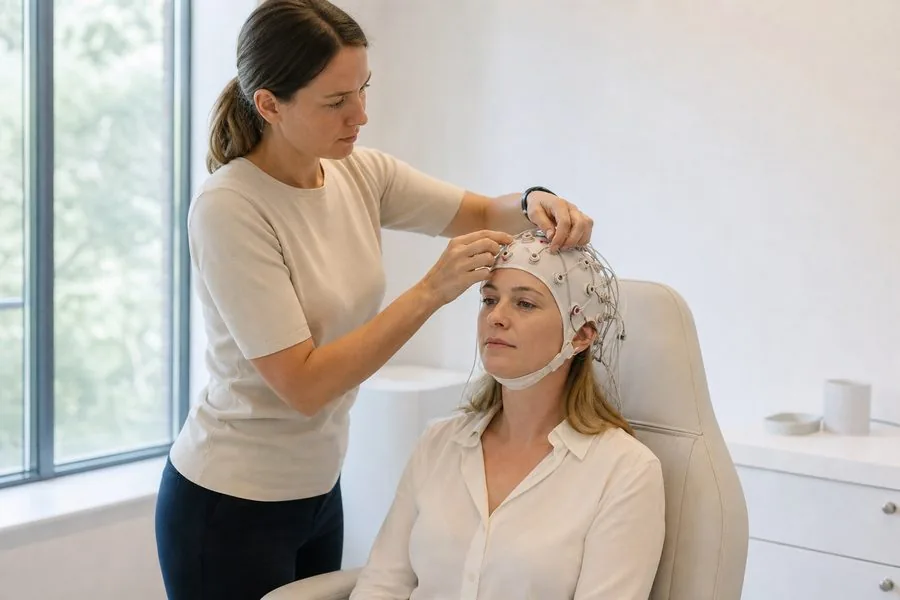
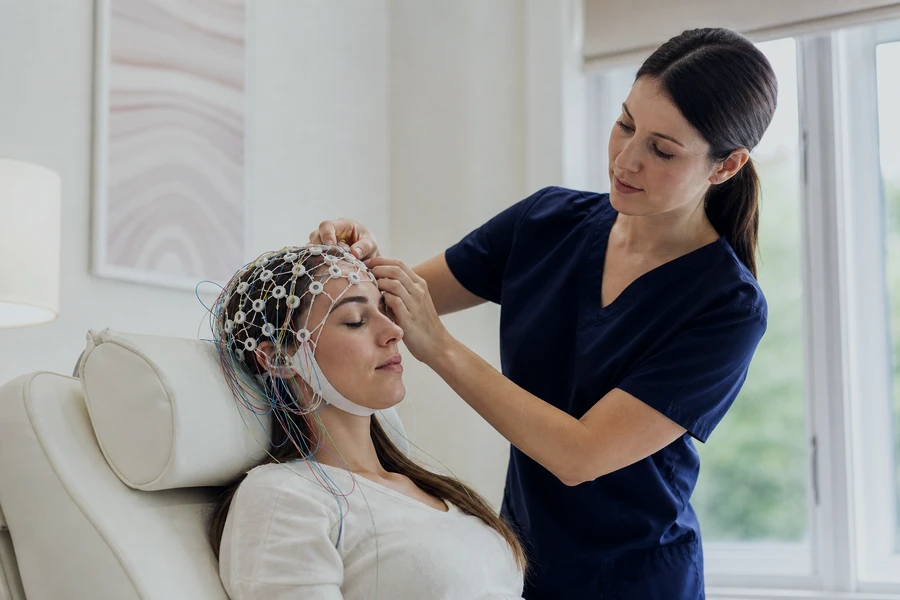
The test only listens. Small metal discs called electrodes rest on the scalp and pick up the signals; nothing is passed into your head, there are no needles and there is no radiation. It is one of the longest-established tests in neurology and is commonly used alongside a doctor's assessment and, where needed, a brain scan.
What is an EEG test used for?
An EEG is mainly used to help investigate episodes where something seems to happen to the brain's activity for a short time. It can show patterns that support a diagnosis, help tell different types of episode apart, and guide your doctor's next steps.
It is important to know that a normal EEG does not rule out every condition, because unusual activity may not happen during the short recording. Equally, some minor findings are seen in healthy people. That is why an EEG is always interpreted alongside your history and your doctor's assessment.
How long does an EEG take?
A routine EEG appointment usually lasts around an hour. Placing the electrodes takes a while, because the head is measured so that each sensor sits in a standard position. The recording itself often lasts 20 to 40 minutes, and removing the sensors takes a few minutes at the end.
Some EEGs are set up differently. A sleep-deprived EEG, for example, asks you to have less sleep the night before and allows time for you to doze during the recording, so it can take longer. The clinic will tell you in advance if your referral calls for this.
What happens during the test
You sit in a comfortable chair or lie on a couch. The electrodes are attached with a mild paste or gel, and you may be asked to keep still and relax with your eyes closed for much of the time.
Two simple tasks are usually included, because they can bring out patterns that might not otherwise appear. You will be told before each one, and either can be stopped if it is not suitable for you.
How to prepare
Wash your hair the night before or on the morning of the test, and leave it clean and dry, with no oil, gel, wax or hairspray, as these stop the electrodes making good contact. Remove hair extensions or tight braids if you can, or mention them when booking.
Eat normal meals beforehand, as low blood sugar can affect the recording. Keep taking your usual medicines unless the doctor who requested the test has told you otherwise, and bring a list of everything you take.
If you have had a seizure or blackout, UK driving rules may mean you should not drive until you have been advised by a doctor, so arrange a lift. The same applies after a sleep-deprived recording.
Results, waiting times and when to get help
The recording is reviewed by Dr Arvin Rodrigues, Consultant Clinical Neurophysiologist, who writes a report. With your consent, the report is sent to the doctor who asked for the test or to your GP, who will explain what it means for you alongside your other findings and arrange any next steps.
NHS waits for an EEG can often be months. A private EEG at Bridge House Clinic in Rossett, near Chester and Wrexham, costs £550 and can be booked without a GP referral. It is a test, not ongoing treatment, so it sits alongside care from your GP or specialist.
This article is general information and not a diagnosis. Call 999 if someone has a seizure lasting more than five minutes, has one seizure after another, is injured, or has trouble breathing, or for sudden weakness, facial drooping or slurred speech. For a first suspected seizure or new blackouts, see your GP promptly or call NHS 111.
Common questions
What is an EEG test? +
An EEG records the brain's natural electrical activity using small sensors on the scalp. Nothing is injected and no electricity is put into the brain. It is used to help investigate seizures, blackouts and unexplained episodes.
How long does an EEG take? +
A routine EEG usually takes about an hour in total. The recording itself often lasts 20 to 40 minutes, with time before and after to place and remove the sensors. Sleep-deprived recordings can take longer.
Does an EEG hurt? +
Most people find it comfortable. The sensors rest on the scalp with a mild paste and there are no needles. The paste washes out of your hair at home.
Can an EEG show nothing even if I have had a seizure? +
Yes. A routine EEG captures only a short period, and unusual activity may not appear during it. A normal result does not rule out a seizure disorder, which is why it is always considered alongside your history.
Who gets the results? +
Dr Rodrigues writes a report, which with your consent is sent to the doctor who requested the test or to your GP. They will talk you through what it means and any next steps.
Do I need a referral for a private EEG? +
No GP referral is needed to book. If you have a letter from your GP or specialist, bring it, as it helps focus the report. A private EEG costs £550.