What is pulsed radiofrequency neuromodulation?
Stimpod therapy is a form of pulsed radiofrequency (PRF) neuromodulation. In plain terms, it uses short bursts of radiofrequency energy, delivered in pulses rather than continuously, aimed at a nerve that is thought to be causing pain. The idea is to change how that nerve sends pain signals, rather than to damage or block it.
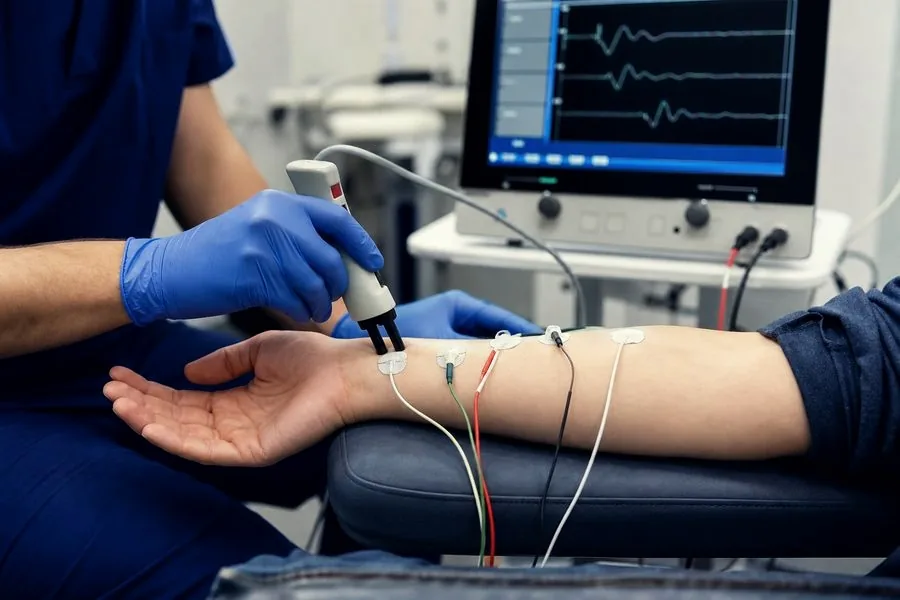
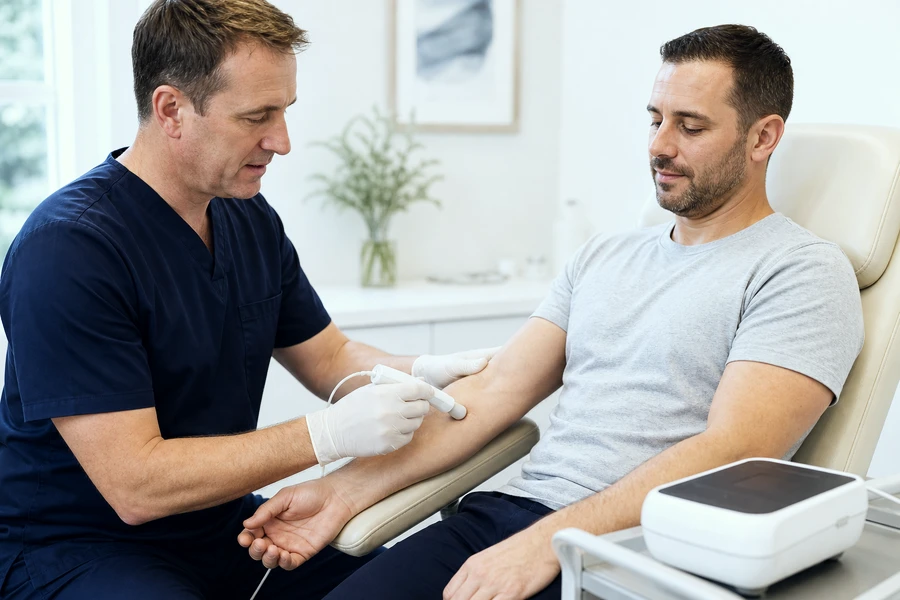
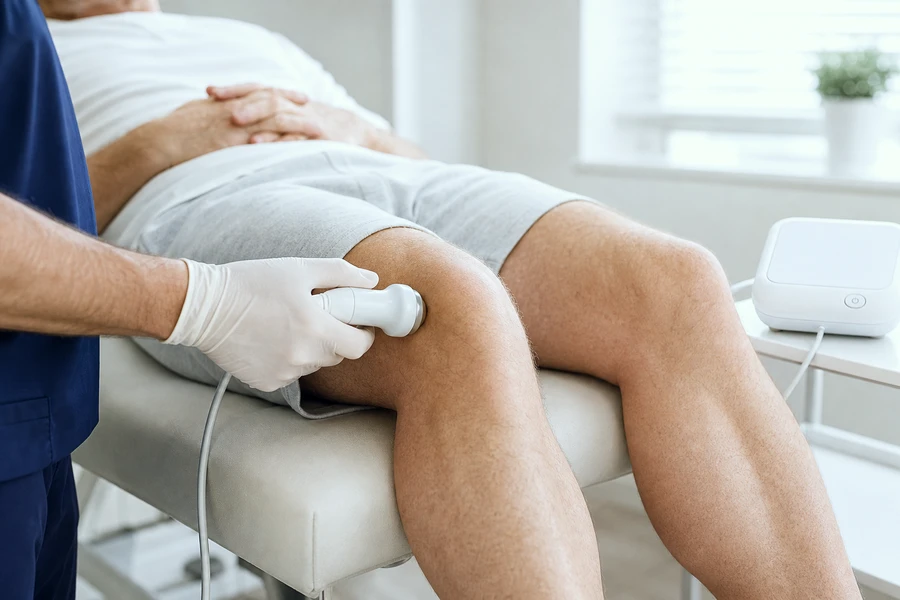
At Bridge House Clinic it is given with the Stimpod NMS 460, made by Algiamed. The energy is delivered through a small handheld probe held on the skin over the nerve. There is no needle, no injection and no anaesthetic, and you stay awake and dressed throughout — usually a sleeve or trouser leg is simply rolled up.
The device is FDA-cleared (2017) and CE-marked for use in chronic intractable pain, post-surgical pain, post-traumatic acute pain and pain control during rehabilitation, and a 2026 US clearance added diabetic peripheral neuropathy of the lower limbs. Clearance means it is permitted for these uses; it is not, on its own, proof of how well it will work for any one person.
How is it different from a TENS machine or an injection?
A TENS machine and Stimpod both use electrical pulses delivered through the skin, so it is easy to confuse the two. A TENS unit is usually used at home, with sticky pads placed over a general area of pain. Stimpod delivers a pulsed radiofrequency waveform aimed at a specific nerve, which is first located with the device, and it is given in clinic by the clinician.
An injection, such as a nerve block, places medicine around a nerve with a needle. Stimpod does not involve a needle or any medicine — the probe stays on the surface of the skin — so you can carry on with your normal day straight afterwards. The two are different approaches, and which is more suitable depends on your pain and what is causing it.
What does a session involve?
The first visit starts with an assessment: your history, and an examination of strength, sensation and reflexes, to judge whether the pain is coming from a nerve and which nerve is likely to be involved. The device also has a nerve-locating mode, in which short pulses are used to find the exact point on the nerve before treatment.
During treatment the probe is held over that point. Most people feel tapping or tingling under the probe, and sometimes a small muscle twitch. Most find it comfortable. Follow-up sessions last around 20 minutes, with about 15 to 20 minutes of treatment.
Who is it used for?
Stimpod is used for a range of pain where a nerve is involved, or where pain is holding back recovery. These include:
What does the evidence say?
The evidence for pulsed radiofrequency treatment through the skin is still developing. Some people notice a clear change in their pain, others notice a smaller change, and some do not notice a difference. It is not possible to say in advance how any one person will respond.
For that reason, treatment is usually given as a course — typically 4 to 8 sessions — and the response is reviewed after each session. If it is not helping, the honest step is to stop and look at other options rather than carry on.
Who should tell us before treatment?
Please let us know beforehand if any of the following apply to you, so we can decide whether the treatment is suitable:
How does it fit with a nerve conduction study?
A nerve conduction study and EMG is a separate diagnostic test that measures how well nerves and muscles are working. You do not need one before Stimpod therapy, and it is not included in the treatment.
At Bridge House Clinic, Stimpod therapy is carried out by Dr Arvin Rodrigues, Consultant Clinical Neurophysiologist. Because he specialises in diagnosing nerve problems, he first assesses whether your pain is a nerve problem at all and which nerve is involved. If the picture suggests something Stimpod will not help, he will say so and suggest the right next step, which may include a nerve conduction study on site.
What does it cost at Bridge House Clinic?
Prices are set out before you book, and no GP referral is needed:
Common questions
Does Stimpod therapy involve a needle? +
No. The treatment is delivered through a small probe held on the skin, with no needle, no injection and no anaesthetic. You stay awake and dressed.
What does a session feel like? +
Most people feel tapping or tingling under the probe, and sometimes a small muscle twitch. Most find it comfortable.
How many sessions will I need? +
A typical course is 4 to 8 sessions, but it varies between people. The response is reviewed after each session, and if it is not helping, Dr Rodrigues will say so rather than continue.
Do I need a GP referral? +
No. You can book directly. The first visit includes an assessment to decide whether Stimpod is suitable for you, and the first session if it is.