How solicitors find expert witnesses
There is no single official route. Many firms keep their own list of experts they have used before, built up over years of cases. Others ask colleagues or counsel for names, approach a consultant directly, or work through a medico-legal agency that arranges the instruction, the appointment and the paperwork on their behalf.
Professional bodies and specialist societies can also help identify who practises in a narrow field such as clinical neurophysiology. Whatever the source, the starting point is the same question: is this the right specialty for the issues in the case?
Using an expert witness directory or register
Several commercial and membership-based registers and directories list expert witnesses by specialty and region. A UK register of expert witnesses can be a quick way to see who is available, and some vet their members or collect feedback from instructing lawyers.
Being listed is useful, but it is not a qualification in itself. A directory entry tells you the expert offers the work; the checks below tell you whether they are suitable for your case.
Agencies work a little differently. They act as an intermediary, arranging the appointment and collecting the records, and some fees for agency work are set separately from direct instructions. Agencies can instruct nerve conduction studies and EMG on their own (£1,000 upper limb, £1,500 lower limb, £2,000 both); a full CPR Part 35 expert report is priced separately.
What to check before you instruct
A few minutes of checking at the outset can avoid difficulty later, particularly if the other side's expert is of a different specialty or the issues shift as the case develops.
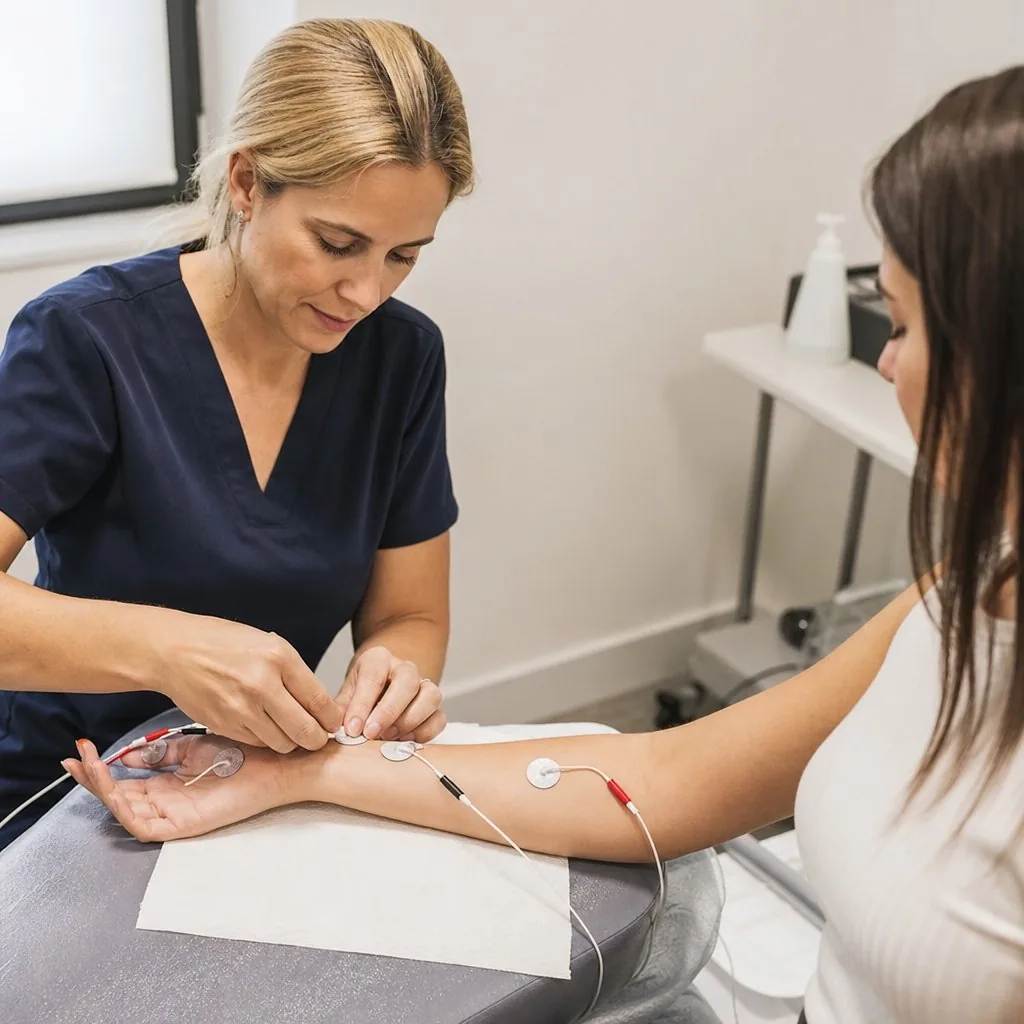
It is also worth asking who will perform the tests. At this clinic the consultant who examines and tests the claimant also writes the report.
What a letter of instruction should contain
The letter of instruction frames the whole report. Vague instructions tend to produce a report that answers the wrong question, while precise ones save time for everyone. Because the expert's duty is to the court, the letter should set out the issues fairly rather than suggest an answer.
If the questions change as the case develops, for example after the other side serves its own report, a short supplementary letter keeps the record clear about what the expert was asked and when.
What the clinic needs from you
The opinion can only be as complete as the evidence. For a neurophysiology report, the most useful documents are the GP records and hospital records covering the period before and after the injury, any operation notes, imaging reports and any earlier nerve conduction or EMG results.
A witness statement from the claimant, if one is available, helps the history taken at the appointment to be checked against what has already been said. Records can be sent in a paginated bundle so that the report can refer to them precisely.
Questions about hand and wrist injuries from a surgical point of view can also be addressed at the clinic: Miss Kasia Studnicka-Perkin, Consultant Hand & Wrist Surgeon, holds the Cardiff University Bond Solon Expert Witness Certificate and prepares hand and wrist injury expert reports, with fees on request.
The pathway from enquiry to report
The steps at Bridge House Clinic are deliberately simple, so that solicitors and claims handlers know what happens and when.
This article is general information for those instructing experts and is not legal advice. Claimants who notice symptoms getting worse while waiting for an appointment should see their GP or call NHS 111; for sudden weakness or numbness of the face, arm or leg, slurred speech or confusion, call 999.
Common questions
How to find an expert witness in clinical neurophysiology? +
Directories, agencies, recommendations and professional bodies all work. Whichever route you use, confirm specialist registration in clinical neurophysiology and current practice in nerve conduction studies and EMG.
Is being on a UK register of expert witnesses essential? +
A register is a way of finding and comparing experts rather than a qualification. Suitability for a particular case is shown by specialist registration, relevant clinical experience and an understanding of the expert's duties.
Can we instruct through a medico-legal agency? +
Yes. Agencies can instruct the nerve conduction studies and EMG on their own, priced at £1,000 upper limb, £1,500 lower limb, £2,000 both. A full CPR Part 35 expert report is priced separately.
Can Dr Rodrigues be instructed as a single joint expert? +
Yes, where the parties agree. The letter of instruction should make this clear, with the agreed questions and how the fee is shared.
What if the case also needs a hand surgeon's opinion? +
Hand and wrist injury expert reports are available at the clinic from Miss Kasia Studnicka-Perkin, with fees on request.