What nerve injury compensation evidence from neurophysiology can show
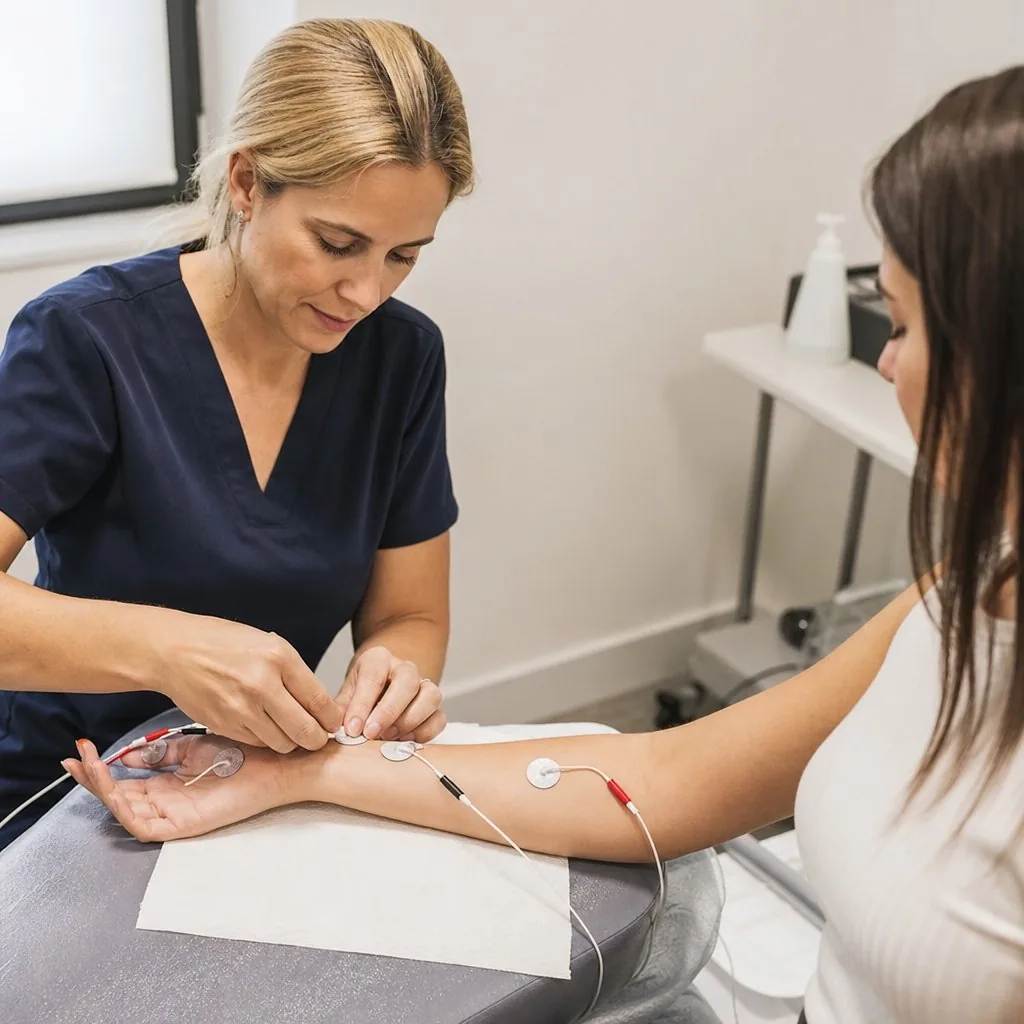
When a claim alleges that a nerve was damaged, the medical questions are usually practical ones. Is there a nerve injury at all? Which nerve, and at what point along it? Is it partial or complete? Is it recovering? Nerve conduction studies measure the speed and size of signals along the nerve, and EMG records activity in the muscles it supplies, so together they can address each of these.
The tests describe function, which complements imaging that shows structure. A report brings the measurements together with the history and examination to give an opinion, with reasons, on what the pattern most likely means.
Why the test is objective
A common question is whether you can fake a nerve conduction test. The core measurements are recorded by stimulating the nerve and timing the response, so they do not depend on effort or on how symptoms are reported. That is a large part of why this evidence is valued in disputed claims.
Nerve conduction test results interpretation still needs care. Skin temperature, age and height affect the values, and a skilled examiner controls for them. Some EMG findings do involve the claimant gently contracting a muscle, and the expert takes account of that when weighing them.
There are also limits. A normal study does not exclude every nerve problem: small-fibre neuropathy, for example, affects fibres too small to be measured by standard nerve conduction tests. A good report says what the test can and cannot show.
Timing: when to test after an injury
Timing affects what the tests can show. Immediately after a nerve is cut or crushed, the part beyond the injury can still conduct for a while, and the characteristic EMG changes of nerve damage usually take around 2–3 weeks to appear. A study done too early may underestimate the injury.
In some cases serial studies, repeated months apart, are more informative than a single one, because they show whether the nerve is recovering. Where earlier results exist from treating clinicians, comparing them with a later study can help date an injury or show its course.
Brachial plexus and other traumatic nerve injuries
The brachial plexus is the network of nerves running from the neck into the arm, and it can be stretched or torn in road traffic collisions, falls and other accidents. In a brachial plexus injury claim, the tests can help show which parts of the plexus are involved, how severely, and whether there are signs of recovery.
The same principles apply to other traumatic nerve injuries, such as damage to the radial nerve after a fracture of the upper arm, or to a nerve near a wound. The neurophysiology evidence describes the injury; questions about how it was caused in a legal sense, and about compensation, are matters for the lawyers and the court.
Where an injury lies close to the spinal cord, the combination of sensory and motor results can help indicate whether nerve roots have been pulled away from the cord, which affects the outlook. Imaging and a surgical opinion are usually considered alongside.
Foot drop after surgery
Foot drop is weakness in lifting the front of the foot. When it follows an operation, such as a hip replacement, the tests can often localise the problem to the sciatic nerve or the common peroneal nerve, distinguish it from a nerve root problem in the lower back, and estimate when the injury most likely occurred. EMG of muscles supplied by different branches helps here, because the pattern of affected and spared muscles narrows down where along the nerve the problem lies.
Whether the care given was negligent is a separate question. It falls to the expert in the relevant surgical or anaesthetic specialty, and ultimately to the court, not to the neurophysiologist.
Separating pre-existing conditions from the injury
Many claimants had a nerve condition before the event in question, such as carpal tunnel syndrome or a generalised neuropathy. The expert looks at the records for earlier symptoms or tests, compares the two sides, and examines whether the pattern fits a long-standing process, a new injury, or one added to the other. The opinion is expressed in hedged, balanced terms, with a range where reasonable experts could differ.
Where an earlier condition and a new injury involve the same nerve, the expert may be asked how far the symptoms and findings are more likely to reflect each. That is answered in medical terms, from the records and the test pattern, leaving the legal consequences to the court.
Dr Arvin Rodrigues performs and interprets these tests himself, consistent with his Part 35 duty to the court whichever side instructs him. This article is general information, not legal advice or a diagnosis. Claimants with worsening numbness or weakness should see their GP or call NHS 111, and call 999 for sudden weakness or numbness of the face, arm or leg, slurred speech or confusion.
Common questions
Can I sue for nerve damage from a blood draw? +
That is a legal question for a solicitor. A neurophysiology expert can document whether there is a nerve injury and whether its location is consistent with the site of the needle.
Can you fake a nerve conduction test? +
The main nerve conduction measurements do not depend on effort or reporting, so they are hard to influence. The expert also checks findings for consistency across nerves and sides.
Does a normal result mean there is no nerve injury? +
Not always. It makes a significant injury to the nerves tested less likely, but some conditions, such as small-fibre problems, are not detected by standard tests.
How soon after an injury should the tests be done? +
EMG changes usually take around 2–3 weeks to develop, so testing too early can underestimate damage. The right time depends on the questions in the case, and repeat studies are sometimes helpful.
What does agency-instructed testing cost? +
Agency-instructed NCS & EMG costs £1,000 upper limb, £1,500 lower limb, £2,000 both.