How epilepsy diagnosis works in practice
Epilepsy is diagnosed mainly from the story of the events. A specialist wants to know what you were doing beforehand, whether there was any warning, what a witness saw, how long it lasted and how you were afterwards. Several other conditions can look similar, including faints, heart rhythm problems, panic attacks and some sleep disorders, so this detail is what allows them to be told apart.
Tests then help to confirm the picture or to look for a cause. An ECG checks the heart's rhythm, a brain scan looks at structure, and an EEG looks at the brain's electrical activity. None of them replaces a careful history. If you can, write things down while they are fresh.
How many seizures before an epilepsy diagnosis?
The usual working rule is two or more unprovoked seizures occurring more than 24 hours apart. Unprovoked means there was no immediate trigger such as a very low blood sugar, a high fever in a young child or a recent head injury.
A diagnosis can sometimes be made after a single seizure, if the specialist judges that the risk of another is high. EEG findings, a brain scan or the type of seizure can all feed into that judgement. It is a specialist decision, made with you, rather than something a single test result settles.
EEG testing for epilepsy: what it adds
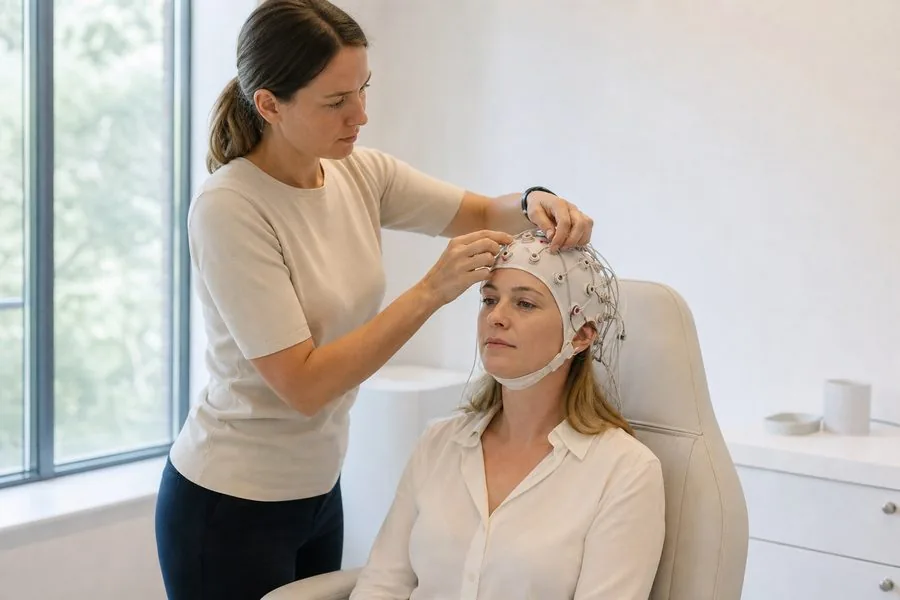
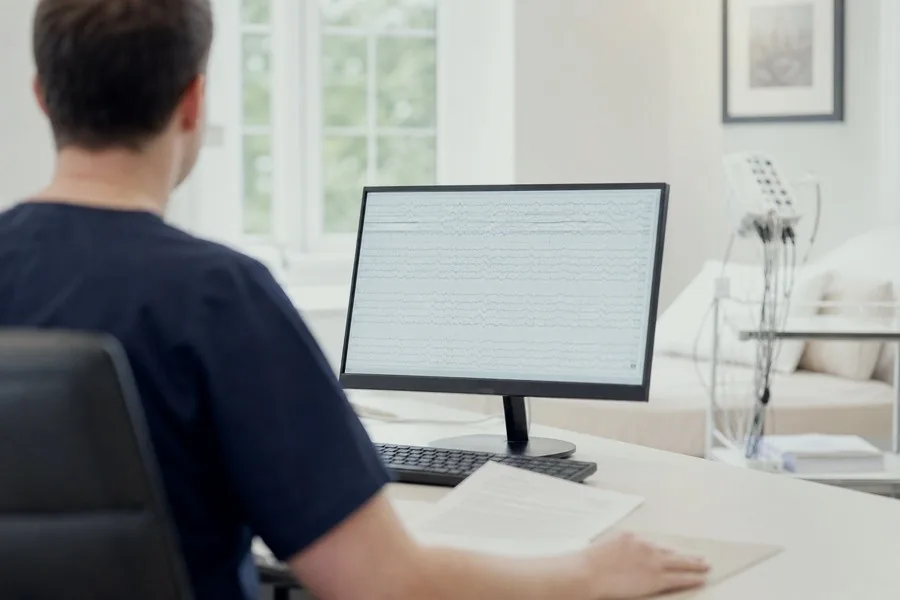
An EEG is usually recorded between seizures, so it is looking for a tendency rather than catching an event. Some people with epilepsy show brief bursts known as spikes or sharp waves even when they feel well. When present, these can help a specialist decide whether seizures start in one area of the brain or involve both sides from the outset, which influences which treatment is chosen.
There are two limits worth knowing. A normal EEG does not exclude epilepsy, because many people with the condition have normal recordings between seizures. And an abnormal EEG alone does not prove it, because a small number of people have unusual patterns without ever having a seizure. The result always has to be read alongside the history.
What makes a recording more likely to help
Because a routine EEG samples a short period, several things can raise the chance of a useful result. Your specialist will decide which, if any, are needed.
The first seizure pathway in the UK
After a first seizure, people are usually seen in A&E or by their GP and then referred to a first-seizure clinic, where a specialist takes the history and decides which tests are needed. If you have not been seen by a doctor yet, that is the place to start.
You must stop driving and tell the DVLA after a seizure. This is a legal duty, not a choice, and your doctor will explain what applies to your situation. Until you have been assessed, it is also wise to avoid swimming alone, bathing without someone nearby and working at heights.
If your specialist asks for an EEG, you can have it privately at Bridge House Clinic. Dr Rodrigues, who holds an MSc in epilepsy from King's College Hospital, London, records and reports it, and the report goes to you and, with consent, your referring doctor. The clinic has no neurologist, so the diagnosis itself remains with the specialist looking after you.
When a seizure is an emergency
This article is general information and not a diagnosis. For questions about possible seizures, speak to your GP or call NHS 111. Call 999 if a seizure lasts more than five minutes, if one seizure follows another without the person recovering, if they are badly injured, if they have difficulty breathing afterwards, or if it is their first seizure. Sudden facial droop, weakness in an arm or leg, or slurred speech needs 999 too, as it may be a stroke.
Common questions
Can an EEG detect epilepsy without a seizure? +
It can show a tendency to seizures between events, as most recordings are made when you feel well. But a normal EEG does not rule epilepsy out, and an abnormal one alone does not diagnose it.
What does an EEG show in absence seizures? +
Absence seizures in children often produce a typical pattern, and it frequently appears during the deep breathing part of the test. A brief staring spell may happen during the recording, which helps confirm the type.
Does a normal EEG mean I don't have epilepsy? +
No. Many people with epilepsy have normal recordings between seizures. Your specialist will weigh the result against the description of what happened.
Who makes the diagnosis after a private EEG? +
Your referring doctor or neurologist. Dr Rodrigues provides the recording and a written report; the clinic has no neurologist, so the diagnosis is made by the specialist looking after you.
Do I have to stop driving after one seizure? +
Yes. You must stop driving and tell the DVLA after a seizure. Your doctor will explain what applies in your case.