Difference between EEG and ECG at a glance
Both tests record tiny electrical signals the body makes naturally. Neither sends electricity into you, and both use sensors on the skin. The key difference is where they listen.
What an EEG shows
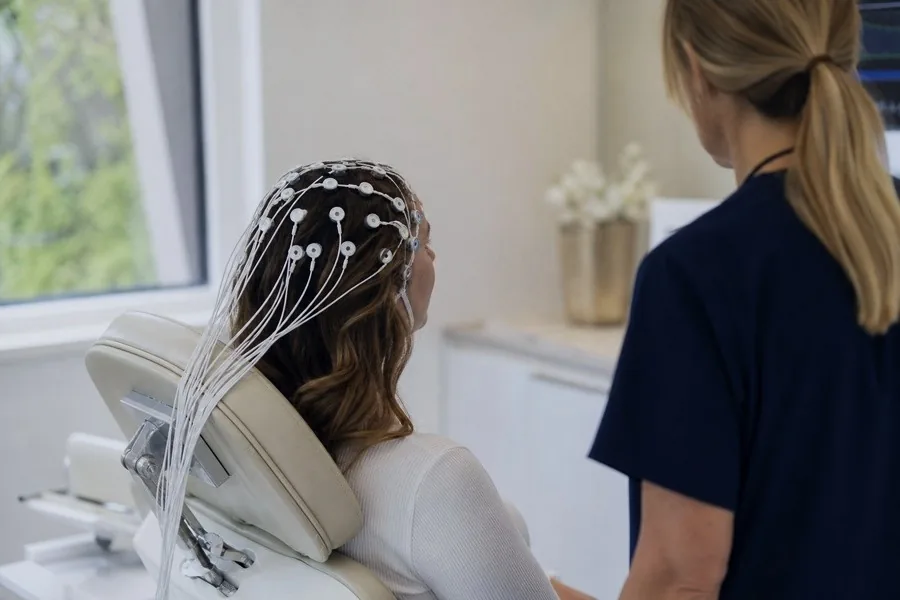
Brain cells communicate through electrical activity, and an EEG picks up its rhythms from the surface of the scalp. A consultant reading the trace looks for patterns that suggest a tendency to seizures, and for changes in background activity.
During a routine recording you sit or lie quietly while you are asked to open and close your eyes, breathe deeply for a few minutes and look at a flashing light. These steps can bring out changes that do not appear at rest. Where the referral calls for it, a sleep-deprived recording may be arranged.
An EEG is used for seizures, blackouts and episodes of altered awareness, such as staring spells. A normal EEG does not exclude epilepsy, because changes are not always present between episodes, so results are always read alongside your history.
What an ECG shows
The heart has its own electrical system that sets each beat. An ECG traces that system and shows the rate and rhythm, along with signs of strain or reduced blood supply to the heart muscle.
It is used for palpitations, chest pain, breathlessness, dizziness and fainting. A standard ECG captures only a short window, so if symptoms come and go, a longer recording over a day or more may be suggested. An ECG is also available at Bridge House Clinic, recorded by a nurse. A report by a consultant cardiologist can be added for a £50 fee.
Blackouts: heart test, brain test, or both?
A blackout can come from the heart, the brain or a simple faint, and from the outside they can look surprisingly alike. A faint caused by a heart rhythm problem can produce brief jerking, while a seizure can look like collapse. Witnesses often cannot tell the difference.
For that reason, doctors usually start with a careful account of what happened before, during and after the episode, and an ECG is commonly one of the first tests. An EEG is added when the description suggests a seizure, or when the cause remains unclear. Doing one test does not rule out needing the other.
Other checks may run alongside, such as a blood pressure reading lying and standing, blood tests, or a longer heart rhythm recording. If the episodes are frequent, a video taken on a phone by a family member can be more revealing than any single test, so it is worth bringing one to your appointment if it is safe to record.
What having each test is like
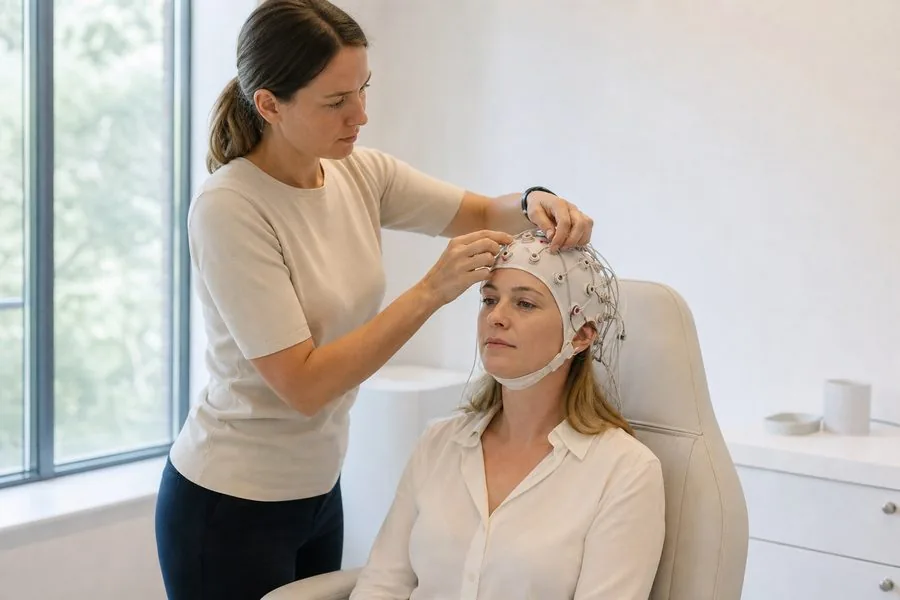
For an EEG, small electrodes are attached to the scalp with a washable paste. There are no needles. You will need to wash your hair afterwards, and you should arrive with clean, dry hair with no oils or styling products.
For an ECG, sticky pads go on the chest, wrists and ankles while you lie still. Neither test hurts, and neither uses radiation, so both can be repeated safely when needed.
EEG at Bridge House Clinic, and when to get urgent help
EEG £550, including the recording and a written report from Dr Arvin Rodrigues, a Consultant Clinical Neurophysiologist with an MSc in epilepsy from King's College Hospital, London. No GP referral is needed, and there is no NHS waiting list.
This article is general information and not a diagnosis. After any unexplained blackout, see your GP or call NHS 111. Call 999 if a blackout comes with chest pain, happens during exercise, causes an injury, or if someone has a first seizure or a seizure lasting more than 5 minutes. Call 999 for sudden weakness or numbness of the face, arm or leg, slurred speech or confusion (stroke).
Common questions
Is EKG the same as ECG? +
Yes. EKG is the US spelling of the same heart test. In the UK it is called an ECG.
Which test do I need for a blackout? +
Often an ECG first, because heart rhythm causes need ruling out, with an EEG if a seizure is suspected or the cause is unclear. Your GP or specialist will guide which is needed.
Does either test hurt? +
No. Both record signals from sensors on the skin. Removing the stickers or washing out EEG paste is the only minor nuisance.
How long does each test take? +
A resting ECG takes a few minutes. A routine EEG usually takes about an hour, including setting up the electrodes.
Can an EEG diagnose epilepsy on its own? +
Not on its own. An EEG can support a diagnosis by showing patterns linked to seizures, but a normal recording does not exclude epilepsy. The diagnosis rests mainly on a careful description of the episodes.
Do I need a referral for an EEG at the clinic? +
No. You can book directly. A letter from your GP or specialist is helpful if you have one, as it explains what the recording needs to look for.