Why a sleep-deprived EEG is sometimes requested
A routine EEG captures a short window of brain activity. Between seizures that window can look entirely normal, even in someone who does have epilepsy. Lack of sleep, and the drowsy stage as you fall asleep, can bring out abnormal activity in people who are prone to it, so a recording made in that state has a better chance of showing something useful.
Doctors usually ask for this type of recording when a routine EEG has been normal but the story still suggests seizures, or when the events described tend to happen on waking or after a poor night. It is a decision for the clinician who refers you, which is why the clinic will ask whether a sleep-deprived recording is what your doctor wants.
How to prepare for an EEG test after a short night
The clinic will give you specific instructions when you book, and those take priority over anything general. The aim is to arrive tired enough to fall asleep in the chair, without making the night before unsafe.
If your work, caring responsibilities or a health condition make staying up difficult or risky, talk to the clinic before the appointment rather than adjusting the plan on your own.
What the sleep EEG recording involves
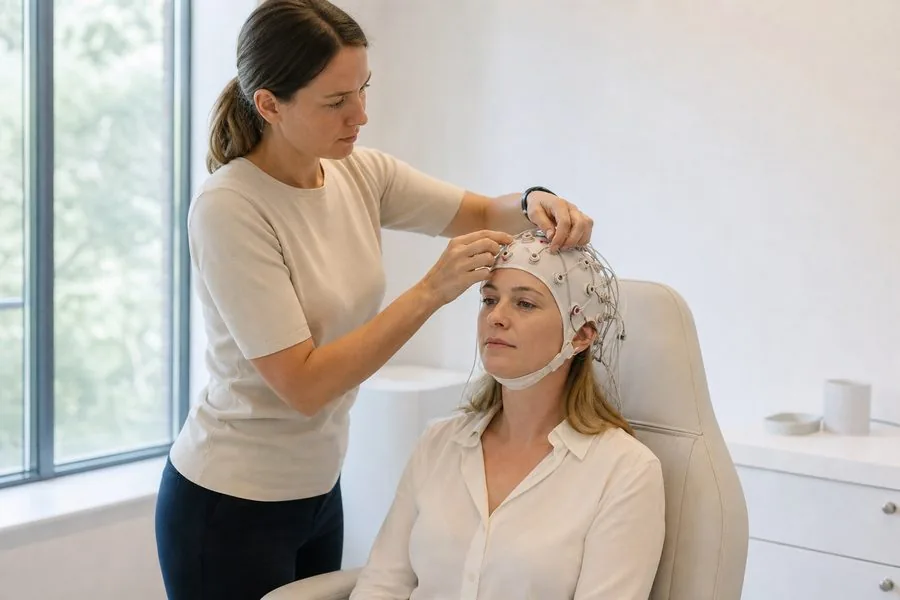
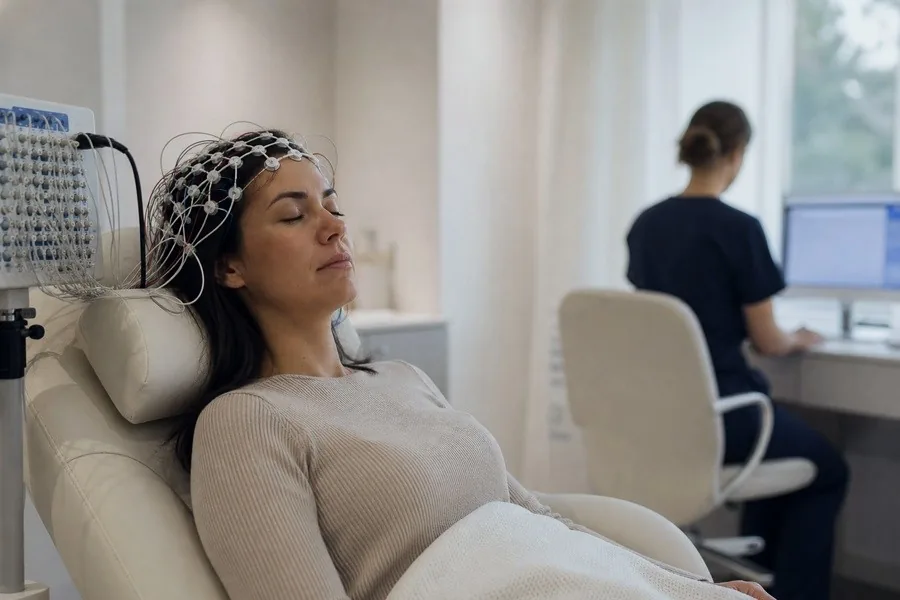
Setting up is the same as for any EEG: the scalp is measured and small electrodes are fixed with a mild paste, as described in our guide to what an EEG test is. The difference is what happens next. The lights are lowered, you are asked to settle back and relax, and if you fall asleep that is exactly what the recording is for.
Deep breathing and a flashing light may also be used, usually while you are still awake. Because the aim is to capture drowsiness and light sleep, a sleep EEG generally takes longer than a routine one, and the clinic will tell you how much time to allow. Try not to nap on the journey in, as that can use up the sleepiness the test relies on.
Does an EEG hurt, and are there side effects?
No needles are used and nothing is passed into your head; the electrodes only listen. The paste can leave the scalp feeling slightly itchy or irritated in places, and it washes out with ordinary shampoo, sometimes needing two goes.
Deep breathing can make you light-headed or cause tingling around the lips and fingers for a short time. In people who are already prone to seizures, deep breathing and the flashing light can occasionally trigger one. That is rare, and it is one reason the test is done in a supervised clinical setting where it can be stopped straight away and you can be looked after.
The main after-effect of a sleep-deprived EEG is simply tiredness. Most people want to go home and sleep, and that is sensible.
Getting home safely, and your results
Do not drive yourself to or from the appointment if you have been up all night. Tiredness slows reactions in anyone, and a short night can also make a seizure more likely in someone prone to them. Arrange for a friend or relative to bring you and take you home, or travel by public transport with someone else.
Dr Rodrigues reviews the whole recording, including any sleep captured, and writes a report. It is sent to you and, with your consent, to the clinician who referred you, who will explain what the findings mean for you.
Booking a sleep-deprived recording, and when to get help
When you book, mention that a sleep-deprived EEG has been suggested and bring the referral letter if you have one. Availability depends on the clinic diary, so do not plan your night without first agreeing the appointment and the instructions.
This article is general information and not a diagnosis. If you are worried about new or changing symptoms, see your GP or call NHS 111. Call 999 if a seizure lasts longer than five minutes, if seizures repeat without the person coming round, if there is a serious injury or breathing problems, or if there is sudden weakness on one side of the body, slurred speech or confusion.
Common questions
Does an EEG hurt? +
No. There are no needles, and the electrodes only record. Some people find the paste a little itchy, and lying still after a short night is the hardest part for most.
What are the side effects of an EEG test? +
Usually only mild scalp irritation from the paste and tiredness after sleep deprivation. Rarely, deep breathing or flashing light can trigger a seizure in someone prone to them, which is why the test is supervised.
How much sleep should I have before a sleep-deprived EEG? +
Follow the clinic's instructions. Often you are asked to stay awake for all or most of the night, but the exact plan is given when you book and should not be changed without asking.
What if I fall asleep during the test? +
That is the aim. Activity during drowsiness and light sleep is part of what the recording is looking for, so there is no need to fight it.
Can I drive after a sleep-deprived EEG? +
You should not drive if you have been awake all night. Arrange a lift or travel with someone, and rest when you get home.
Can I have a coffee before the test? +
Follow the clinic's instructions: for a sleep-deprived recording you may be asked to skip it that morning, because caffeine can keep you from falling asleep in the chair. Water and your usual food are fine.