Tingling in hands and feet: why it points to the nerves as a whole
A single trapped nerve affects one area: a few fingers, or part of a foot. When tingling turns up in both hands and both feet, it is much less likely that four nerves have been squeezed at once. More often, a condition is affecting the nerves throughout the body. Doctors call this a peripheral neuropathy, or polyneuropathy.
The term covers many different conditions with different causes. Some mainly affect sensation, causing tingling, numbness or burning. Others also involve the nerves to the muscles, causing weakness, cramps or unsteadiness. Finding out which type you have, and why, is what guides the next steps.
Glove and stocking: why the feet usually go first
Many neuropathies affect the longest nerve fibres first. The nerves to the toes are the longest in the body, so symptoms usually begin there, often as numbness in the soles, a feeling of walking on cotton wool, or tingling at night. Over months or years the change can creep up the legs.
By the time it has reached roughly mid-shin, the fingertips, whose nerves are of a similar length, often start to tingle as well. This produces the classic 'glove and stocking' pattern. Tingling that begins in the hands first, or affects only one side, is less typical and may point to a different cause.
Numbness in hands and feet can also affect balance, because the brain relies on feedback from the soles to keep you steady. Some people notice they are more unsteady in the dark or when they close their eyes in the shower.
What causes tingling in hands and feet?
Many causes are possible, and in some people more than one is at work. The more common ones in the UK are listed below. In some people no cause is found despite thorough testing; this is called idiopathic neuropathy, and it often changes only slowly over years.
Blood tests with your GP come first
Because so many causes show up in the blood, your GP is usually the right place to start. Typical tests check blood sugar, B12 and folate, thyroid and kidney function, and a full blood count. Your GP will also review any prescription medicines you take and ask about alcohol and family history.
Some causes, such as B12 deficiency, are treatable, and catching them early gives the nerves more chance to recover. B12 replacement prescribed by your GP, or better control of blood sugar, can prevent symptoms getting worse and sometimes improve them.
What a nerve conduction study adds
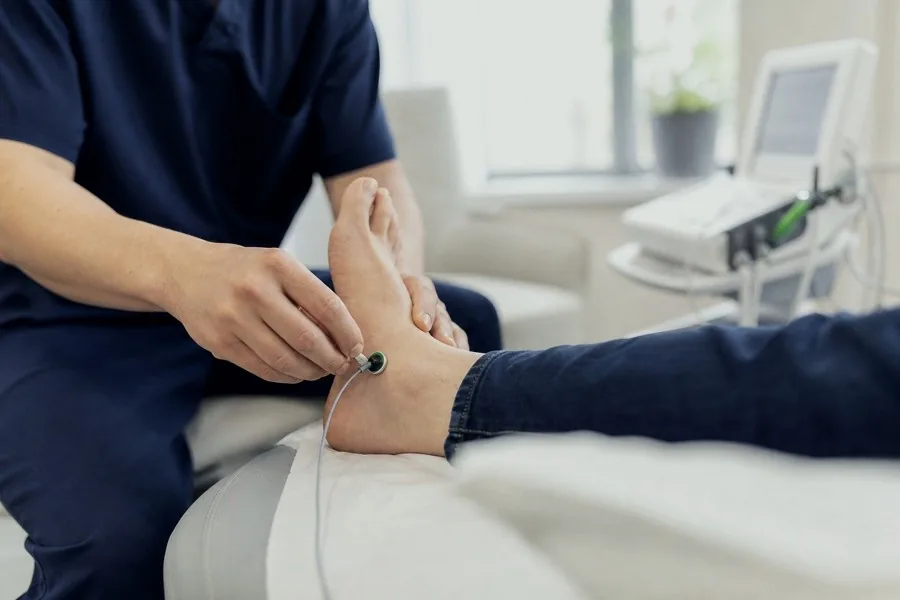
Blood tests look for a cause; a nerve conduction study looks at the nerves themselves. It confirms whether a neuropathy is present, which matters when symptoms are mild or unusual. It also shows the type: whether the problem lies mainly in the insulating coating of the nerves or in the nerve fibres, and whether sensory nerves, motor nerves or both are involved.
The study measures how severe the neuropathy is, giving a baseline to compare against if symptoms change. It can also pick up an entrapment such as carpal tunnel syndrome alongside a neuropathy, which is common in people with diabetes and may be treated separately.
Dr Arvin Rodrigues, Consultant Clinical Neurophysiologist, carries out and interprets the study in one visit. For tingling in both hands and both feet, the upper and lower limbs are usually tested together.
When it is not neuropathy, and warning signs
Not every tingling sensation in feet and hands is a neuropathy. Carpal tunnel syndrome in both wrists and a separate problem in the legs, such as a nerve root in the lower back causing sciatica, can coincide and mimic it. A nerve study is good at separating these, because entrapments slow a nerve at one point, while a neuropathy affects the nerves more evenly.
Tingling in the hands, feet and around the mouth that comes in waves with anxiety, a racing heart or light-headedness is often caused by over-breathing. It settles within minutes as breathing calms and does not damage the nerves. Narrowing of the spinal canal in the neck can also produce tingling in all four limbs, often with clumsy hands and stiff legs.
This article is general information and not a diagnosis. Seek urgent help through NHS 111 or A&E if tingling and weakness spread up the legs and arms over hours or days, or if walking, breathing or swallowing becomes difficult, as some neuropathies progress quickly. Call 999 for sudden numbness or weakness of the face, arm or leg, slurred speech or confusion. For slowly developing tingling, see your GP.
Common questions
Is numbness in hands and feet always diabetes? +
No. Diabetes is a common cause, but B12 deficiency, thyroid and kidney problems, alcohol, some prescription medicines and inherited conditions can all do the same. Sometimes no cause is found.
Can peripheral neuropathy be reversed? +
It depends on the cause. When a treatable cause is found and addressed early, symptoms may stabilise or improve. In other cases the aim is to prevent it getting worse and to manage the symptoms.
Which tests will I need? +
Usually blood tests with your GP first, and a nerve conduction study to confirm the neuropathy, its type and its severity. Further tests depend on the results.
Should I look after my feet differently? +
If your feet are numb, check them daily for cuts or blisters you may not feel, wear well-fitting shoes, and test bath water with your hand or elbow. People with diabetes should follow their GP's foot-care advice.
How much does a nerve conduction study of arms and legs cost? +
Consultation + nerve conduction study & EMG — upper limbs £450, lower limbs £500, upper and lower limbs £550. No GP referral is needed.