What is the brachial plexus?
The brachial plexus is a network formed by five nerve roots leaving the spinal cord in the lower neck and upper chest, known as C5 to T1. These roots join, split and regroup in the space between the neck and the armpit, before forming the main nerves of the arm, including the median, ulnar and radial nerves.
Because the network carries every signal to and from the arm, an injury to the brachial plexus can affect the shoulder, elbow, wrist or hand, depending on which part is involved. Some injuries affect only a few fibres; others affect the whole arm.
Causes of injury to the brachial plexus in adults
Most adult injuries happen when the head and shoulder are forced apart, stretching the network. The severity ranges from a brief stretch to roots being torn from the spinal cord.
Brachial plexus symptoms by part affected
Injuries to the upper part of the plexus, from the C5 and C6 roots, mainly weaken the shoulder and the ability to bend the elbow, with numbness over the outer arm and thumb. Injuries to the lower part, from C8 and T1, mainly affect the hand: grip, fine finger movement and feeling along the little finger side.
Burning or crushing pain in a numb arm is common after more severe injuries. A drooping upper eyelid with a smaller pupil on the same side can be a sign that the lowest roots have been torn from the spinal cord. That is a serious injury and needs urgent specialist assessment.
How to diagnose a brachial plexus injury
Diagnosis starts with a careful examination, testing each muscle group and area of skin to map which parts of the network are involved. MRI can show the plexus and the nerve roots, including signs that a root may have been pulled away from the spinal cord.
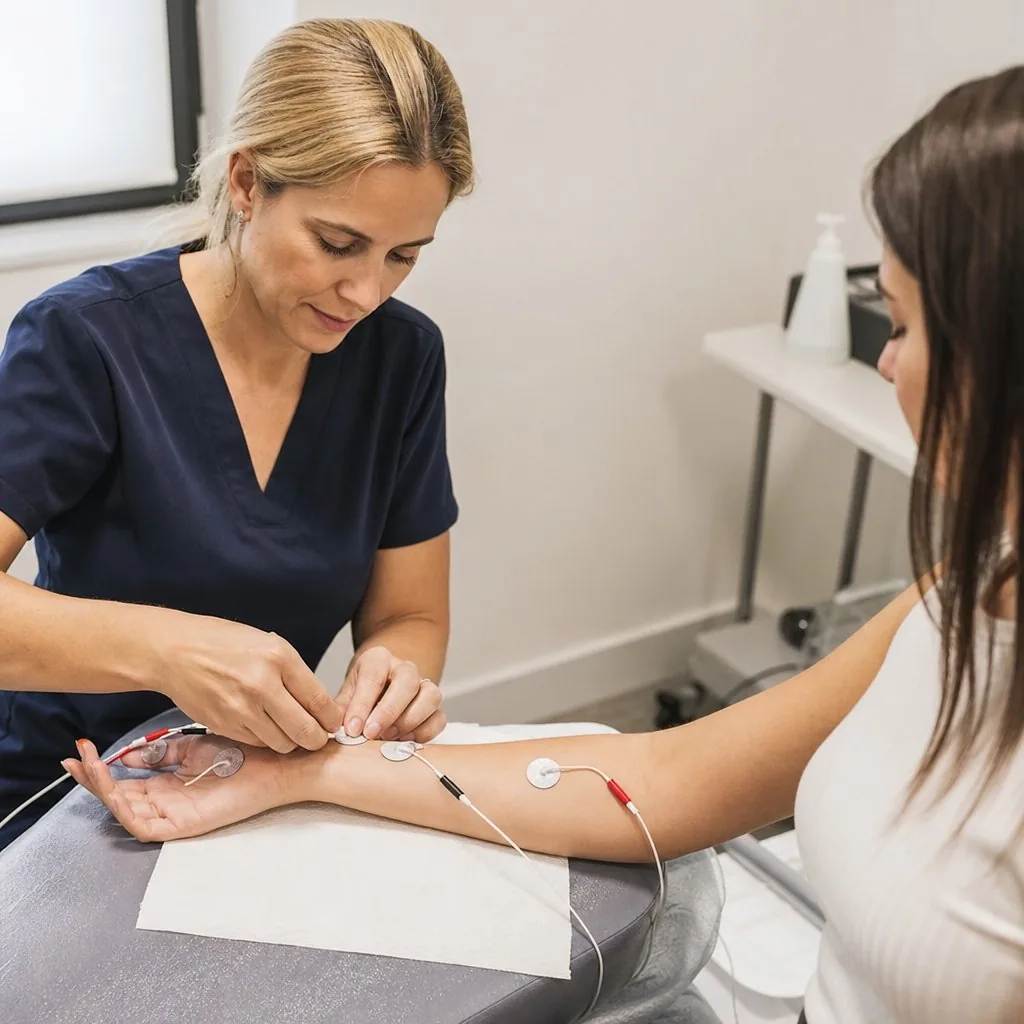
Nerve conduction studies with EMG measure how the network is working. One useful finding concerns where along the root the damage sits. If the injury is close to the spinal cord, before the small cluster of sensory nerve cells beside the spine, the sensory signals measured in the arm can remain normal even though the arm is numb. If the injury is further out, those signals fall. This helps the specialist team judge the outlook and plan treatment.
EMG is most informative from about three weeks after the injury, and repeating it months later shows whether muscles are being reconnected, sometimes before movement returns.
How long does a brachial plexus injury take to heal?
It depends on how badly the fibres are damaged. Mild stretch injuries, including most sports stingers, often settle over days to weeks, and many moderate stretch injuries recover over a few months. Where fibres have been broken, they must regrow from the injury point, and this is slow, so recovery reaching the hand can take a year or more.
Severe injuries, particularly where roots are torn from the spinal cord, may not recover on their own, and some people are offered surgery such as nerve grafts or nerve transfers. Timing matters for these operations, which is why serial EMG is used to tell whether recovery is happening. The NHS has specialist brachial plexus units, and your GP or hospital team can refer you to one. Outcomes vary widely between people, and your specialist team is the right source for your own outlook.
Keeping the arm moving, and red flags
While the nerves recover, physiotherapy keeps the shoulder, elbow and hand joints supple and prevents stiffness, so that the limb is ready to use when muscle power returns. Physiotherapists also advise on supporting the shoulder and on managing a weak or numb hand safely.
This article is general information and not a diagnosis. After an arm or shoulder injury with weakness or numbness, see your GP, call NHS 111 or attend A&E. Call 999 for sudden weakness or numbness of the face, arm or leg, slurred speech or confusion, which can signal a stroke, and after any serious road traffic collision or fall.
Common questions
What is a 'stinger' in sport? +
A brief burning or electric pain shooting down one arm after a tackle or fall, caused by stretching or compressing the upper brachial plexus. It usually settles within minutes. Symptoms that last, recur or involve both arms need medical assessment before returning to sport.
Can a brachial plexus injury heal on its own? +
Many stretch injuries do recover without surgery over weeks to months. Severe injuries, especially torn roots, often do not, and a specialist team may discuss surgical options.
When should EMG be done after a brachial plexus injury? +
Usually from about three weeks after the injury, when the test can show which muscles have lost their nerve supply. Repeat tests over the following months help show whether recovery is happening.
Do I need a referral for a nerve conduction study? +
Not privately. Dr Arvin Rodrigues has a special interest in traumatic nerve injuries. Consultation + nerve conduction study & EMG — upper limbs £450, lower limbs £500, upper and lower limbs £550.