Myopathy meaning: muscle, not nerve
The word comes from "myo", meaning muscle, and "pathy", meaning disease. In a myopathy the muscle fibres do not contract properly, even though the nerve signals reaching them are normal. That is the opposite of a neuropathy, where the nerve is at fault and the muscle weakens because it is not being told to work.
The difference matters because the causes, tests and treatment are quite different. Weakness can feel similar in both, so doctors rely on the pattern of symptoms and on specific tests to tell them apart.
Myopathy symptoms
Weakness is the main symptom, and it is usually symmetrical, affecting both sides of the body in a similar way. It tends to build over weeks, months or years depending on the cause. Many people first notice it during everyday tasks rather than as a single event.
Sensation is normally preserved. Numbness, pins and needles or burning point more towards a nerve problem, although the two can occasionally coexist.
Proximal myopathy: why the hips and shoulders
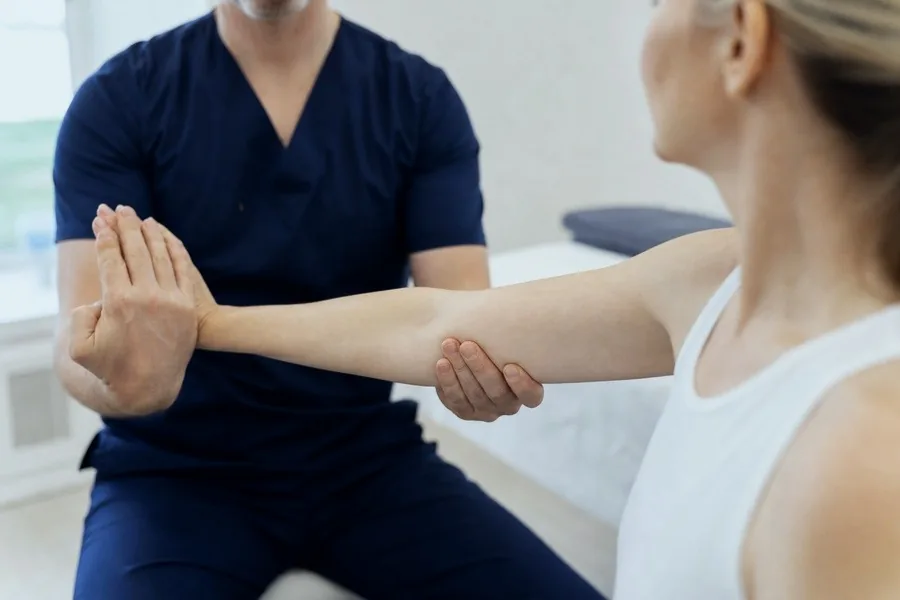
Proximal means close to the centre of the body. Most myopathies affect the proximal muscles first: the thighs, buttocks, upper arms and shoulder girdle. These large muscles do much of the heavy lifting in daily life, so weakness there shows up quickly in tasks like standing from sitting.
This is a useful contrast with many nerve conditions, which tend to start furthest from the centre, in the feet and hands. When weakness is mainly around the hips and shoulders and sensation is normal, a muscle cause moves higher up the list.
What causes myopathy?
There are many causes, and they are usually grouped by type. Some are treatable once identified, which is why getting a diagnosis is worthwhile.
How myopathy is diagnosed
Blood tests often come first. Creatine kinase, an enzyme that leaks out of damaged muscle, is commonly raised in myopathy, and thyroid tests and other checks look for treatable causes.
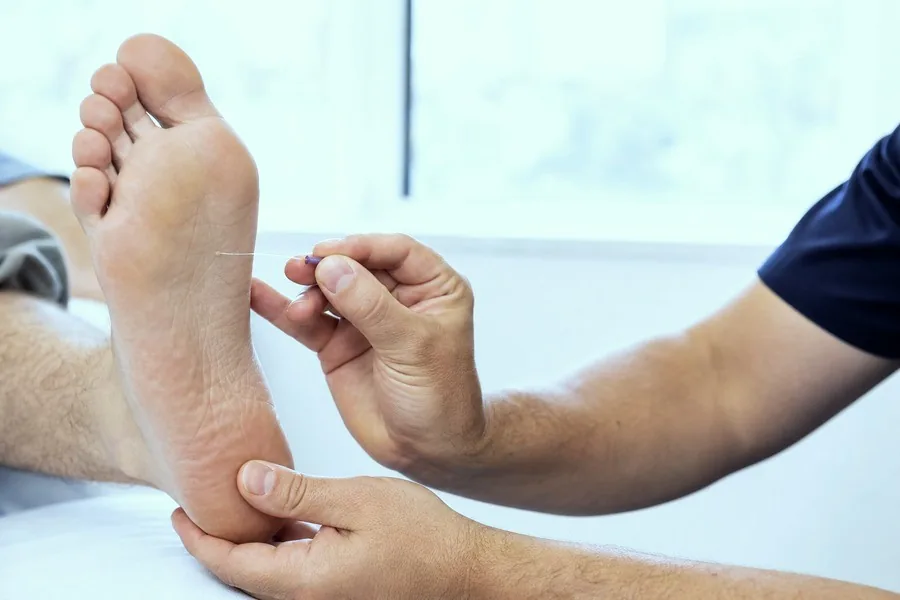
EMG is central. A fine recording needle placed in a few muscles shows a characteristic myopathic pattern when the muscle itself is diseased, which looks different from the pattern of nerve damage. The nerve conduction study is usually normal in a myopathy, and that normal result is itself an important clue.
Depending on the findings, a specialist may arrange an MRI of the muscles, a muscle biopsy, in which a small sample is examined under the microscope, or genetic testing when an inherited condition is suspected. EMG can help choose the right muscle to sample.
Myopathy treatment
Treatment depends on the cause. That may mean correcting a thyroid problem, reviewing medicines with your GP, or specialist care for muscle inflammation. Physiotherapy helps maintain strength, flexibility and safe movement for most types.
Who looks after myopathy, and red flags
Myopathy is usually managed by a neurologist, and inflammatory types often by a rheumatologist as well. At Bridge House Clinic, Dr Arvin Rodrigues, a Consultant Clinical Neurophysiologist, performs and interprets the EMG and nerve conduction study, and his written report can go to your GP or specialist. Consultation + nerve conduction study & EMG — upper limbs £450, lower limbs £500, upper and lower limbs £550.
This article is general information and not a diagnosis. If you notice new or worsening weakness, see your GP or call NHS 111. Weakness that spreads over hours or days, difficulty swallowing or breathing, or dark, cola-coloured urine after exertion with muscle pain needs urgent care: call 999 or go to A&E. Call 999 for sudden weakness or numbness of the face, arm or leg, slurred speech or confusion (stroke).
Common questions
What does myopathy mean? +
It means disease of the muscle. The muscle fibres themselves do not work properly, even though the nerves supplying them are healthy.
What is critical illness myopathy? +
It is muscle weakness that develops during a stay in intensive care with a severe illness. Many people improve gradually over the following weeks and months with rehabilitation, and EMG can help confirm it.
Is myopathy the same as neuropathy? +
No. Myopathy affects the muscle, neuropathy affects the nerve. Neuropathy often causes numbness and tingling; myopathy usually does not. EMG and nerve conduction tests help separate the two.
Can myopathy affect only the legs? +
Weakness often appears first in the thighs, so problems with stairs and standing may be the earliest sign. Testing usually shows whether the arms are involved too.
Do I need a referral for EMG? +
No. You can book directly. If you have blood test results or a letter from your GP or specialist, bring them, as they help focus the test.